Are Cuisinart Stainless Steel Knives Good?
Cuisinart stainless steel knives can be a practical choice for everyday cooking, but steel alone doesn't tell you how well a knife will cut or hold its edge. Check the specific blade design, handle, intended task, and care instructions before choosing.
On this page (7 sections)
- Are Cuisinart stainless steel knives good?
- What does stainless steel tell you about a knife?
- What should you check before choosing a Cuisinart knife?
- Which alternatives help with different knife tasks?
- Are Cuisinart stainless steel knives easy to maintain?
- Are stainless steel knives better than Japanese-style knives?
- How can you tell if a Cuisinart stainless steel knife is right for you?
Cuisinart stainless steel knives can be a practical choice for everyday cooking, but “stainless steel” alone doesn't tell you how sharp a knife is or how long its edge will last. Compare the specific blade shape, handle, intended use, and care directions before deciding.
A knife's performance depends on more than its steel. The blade geometry, edge angle, construction, and upkeep all affect how it feels at the cutting board.
Are Cuisinart stainless steel knives good?
They may be a good fit if the specific knife suits your tasks and you can maintain its edge. The brand name and steel label don't provide enough detail to judge every Cuisinart knife as a group.
Look at the knife's intended use first. A chef's knife handles broad prep, a paring knife suits small produce, and a boning knife is shaped for working around bones.
Then check the blade length and shape, handle comfort, construction, and cleaning instructions. For a broader overview of types of kitchen knives, match the knife style to the cuts you make most often.
What does stainless steel tell you about a knife?
Stainless steel indicates a material family, not a complete measure of cutting performance. Steel composition and heat treatment affect hardness, corrosion resistance, and edge retention, while blade shape and sharpening affect how it cuts.
The word “stainless” also doesn't mean rustproof. Drying a knife after washing and storing it where the edge won't scrape against other tools are sensible habits.
If you want to compare steel types, our guide to stainless steel for knife blades explains the tradeoffs to consider. Don't assume that a higher-sounding steel label automatically means a better knife for your kitchen.
What should you check before choosing a Cuisinart knife?
Check the knife's job, blade, handle, and care needs as a set. These details help you decide whether it fits your cooking habits better than a different style or material.
Does the knife match the task?
A chef's knife is a versatile choice for many prep jobs, while a paring knife gives you more control for smaller items. A curved, narrow blade is useful for trimming meat close to bone.
For a more focused comparison, see nakiri vs chef knife. If most of your prep is vegetables, blade shape and cutting motion may matter more than the word “stainless.”
Is the handle comfortable and secure?
A handle should feel steady in your grip and suit the way you hold a knife. Consider its material, shape, and how it may feel when wet.
The product details for a knife can help you compare construction and handle material, but they can't tell you how it will feel in your hand. If possible, hold a similar style before you commit.
How will you care for the edge?
Plan to keep the blade clean, dry, and sharp. Use a cutting surface that won't needlessly dull the edge, and store the knife so it doesn't knock against other blades.
A honing rod can help maintain alignment between sharpenings. Learn how to use a knife sharpener rod before using one, since technique and tool compatibility matter.
Which alternatives help with different knife tasks?
A Cuisinart knife isn't the only way to cover everyday cutting jobs. These options illustrate different uses: boning, sharpening, and small produce prep.
The Victorinox Fibrox Pro is a 6-inch boning knife with a curved, semi-stiff stainless steel blade and a non-slip thermoplastic rubber handle. Its shape is intended for trimming meat close to bone.
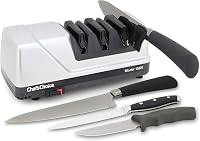
Chef's Choice 15XV is an electric sharpener designed for straight-edge and serrated knives, with three stages and diamond abrasives. Follow the knife and sharpener instructions to confirm the edge style is suitable.
RADA's Paring Knife Galore set includes 3 paring knives with T420 high-carbon stainless steel blades and brushed aluminum handles. The set is intended for tasks such as paring fruit and trimming vegetables.
Are Cuisinart stainless steel knives easy to maintain?
They can be straightforward to care for when you follow the instructions for the specific knife. Clean the blade after use, dry it promptly, and store it in a way that protects its edge.
Avoid leaving a knife wet in a sink or loose in a drawer. Contact with other utensils can nick or dull the edge, and moisture can leave marks on steel.
Sharpening needs depend on use and the blade's condition. For electric and manual options, compare our guides to best stainless steel kitchen knives and best stainless steel chef knives.
Are stainless steel knives better than Japanese-style knives?
Neither label guarantees a better knife; compare the individual blade and how you plan to use it. Japanese-style knives include varied shapes and steels, while stainless steel describes a material category that can appear across many knife styles.
Consider the blade profile, edge, handle, upkeep, and your preferred cutting motion. Our guide to best Japanese stainless steel knives covers options that combine a Japanese style with stainless steel.
For table use, also decide whether you want a serrated steak knife. This guide to steak knives, serrated or not explains how the edge style changes the cut.
How can you tell if a Cuisinart stainless steel knife is right for you?
Choose based on the job you do most, then check the exact knife's construction and care needs. A stainless steel chef's knife may suit general prep, while a paring or specialty knife is a better match for a narrower task.
If you want to compare materials and blade styles, use our guides to stainless steel for knife blades and types of kitchen knives. Pick a Cuisinart knife when its shape, handle, and upkeep fit your routine, rather than relying on the steel label alone.
Frequently asked questions
Are Cuisinart stainless steel knives good for everyday cooking?
They can suit everyday cooking if the knife's shape, handle, and upkeep match your needs. Stainless steel describes a broad material family, not a guarantee of sharpness or edge life.
Check the specific knife's blade style, care directions, and intended tasks before buying.
Do stainless steel knives rust?
Stainless steel resists corrosion, but it isn't immune to rust or stains. Food residue, moisture, and rough storage can affect a blade over time.
Wash and dry knives promptly, then store them so the edges don't rub against other utensils.
How often should you sharpen a Cuisinart knife?
There isn't one schedule for every knife. It depends on how often you use it, what you cut, and the condition of the edge.
Hone or sharpen when the blade no longer cuts cleanly, and follow Cuisinart's care guidance for the specific knife.
Can you put Cuisinart stainless steel knives in the dishwasher?
Check the care directions for your exact knife, since handles and construction can differ. Hand washing and drying promptly help limit moisture exposure and prevent blades from knocking against other items.
Store the knife safely after it's dry.