Nakiri vs Chef Knife: Which Should You Choose? (November 2026)
Choose a nakiri for repeated vegetable prep and a chef knife for one versatile kitchen blade. A nakiri’s straight edge suits up-and-down chopping, while a pointed chef knife handles a wider mix of tasks.
On this page (7 sections)
- Nakiri vs chef knife: what is the main difference?
- Which knife is easier for chopping vegetables?
- Which knife is more versatile?
- Which blade should you choose for meat and fruit?
- How should you choose a blade length and handle?
- How do you keep either knife sharp?
- Is a nakiri vs chef knife the right comparison for you?
Choose a nakiri if you mostly chop vegetables; choose a chef knife if you want one blade for a wider range of kitchen tasks. In the nakiri vs chef knife choice, blade shape changes how the edge meets the board and what feels comfortable during repeated cuts.
A nakiri has a broad, rectangular profile and a straight edge. A chef knife has a pointed tip and a curved edge that supports several cutting motions.
Neither knife wins for every cook. Think about what you prepare most, how you move the blade and whether you want a specialist or a general-purpose knife.
 Best for one all-purpose knife
Victorinox Fibrox Pro 8 Inch Chef’s Knife

Nakiri vs chef knife: what is the main difference?
A nakiri is shaped for vegetable prep, while a chef knife is shaped to cover more kinds of prep. Their blade profiles encourage different motions at the cutting board.
The nakiri’s straight edge can contact the board across more of the blade during a vertical chop. Its broad shape also gives you room to guide food with the side of the blade.
A chef knife’s curved edge can rock through herbs or other ingredients, and its tip helps with detailed cuts. That shape makes it a common choice when you want a single knife for chopping, mincing, slicing and dicing.
For names used for different chef knife styles, see different chef knife types and names.
For a broader look at knife shapes and their roles, see our guide to types of kitchen knives.
Which knife is easier for chopping vegetables?
A nakiri suits cooks who make frequent, straight up-and-down cuts through vegetables. A chef knife works well too, especially if you already use a rocking or rolling motion.
With a nakiri, the straighter edge can make contact across the cut as you bring the blade down. This is useful for stacks of leafy greens, carrots, cabbage and other produce you cut into repeatable pieces.
A chef knife’s curved edge may leave the heel or tip in contact with the board as you rock it. That motion helps some cooks mince herbs or work through a pile without lifting the whole edge for every cut.
Your technique matters more than the label. If your chef knife already feels controlled and comfortable, switching to a nakiri may not change your results enough to justify another blade.
Does a nakiri knife cut vegetables better than a chef knife?
A nakiri may feel more direct for vertical chopping, but it does not automatically make vegetables easier to cut. Sharpness, board stability and your grip still affect control.
A straight edge is most noticeable when you prefer a chopping motion that brings the whole edge down. A chef knife may suit you better if you naturally rock the blade or use its tip for smaller cuts.
If vegetables are the main reason you're shopping, compare options in our guide to the best Japanese nakiri knife. For a chef blade focused on produce, see best chef knives for chopping vegetables.
Which knife is more versatile?
A chef knife is usually the more versatile single choice because its pointed tip and curved edge serve more prep tasks. If you are deciding between a chef knife and a smaller blade, see chef knife vs utility knife.
A nakiri can handle a range of slicing and chopping, but its shape leans toward vegetables.
The Victorinox Fibrox Pro 8 Inch Chef’s Knife is described for chopping, mincing, slicing and dicing. Its stainless steel blade is 8 in long, and the TPE handle is designed for a non-slip grip, even when wet.
A nakiri can still do more than chop produce. The HOSHANHO 7 Inch Nakiri Knife is described for vegetables, meat and fruit, with a 7 in high carbon stainless steel blade and pakkawood handle.
For a set that includes an 8 in chef knife alongside other shapes, the Astercook Knife Set has 13 pieces, including a santoku, utility and paring knife, plus 6 blade guards. It does not include a nakiri.
Which blade should you choose for meat and fruit?
Pick a chef knife for more varied cutting, and use a nakiri mainly for produce and boneless ingredients. Avoid using either knife to chop through bones.
A pointed chef knife can help with tasks that benefit from its tip, such as trimming around a small area or starting a cut. Its curved edge also supports slicing and rocking motions.
A nakiri can slice boneless meat and fruit, but its broad, straight profile may feel less nimble for detailed trimming. For meat and fish trimming, compare boning knives and fillet knives.
The PAUDIN Nakiri Knife is described for chopping, mincing, slicing and dicing, with a 7 in stainless steel blade and pakkawood handle.
If a broad blade and heavier chopping are what you have in mind, first learn how a cleaver differs from a nakiri. Our guide explains how to use a Chinese cleaver.
How should you choose a blade length and handle?
Choose a length and handle that let you guide the knife comfortably on your board. The 7 in nakiris here and the 8 in Victorinox chef knife offer a practical size comparison, but your hand and workspace matter.
A shorter blade may feel easier to control on a small board or during compact prep. A longer chef knife covers more food in a single stroke, but can feel less convenient if your board is crowded.
Grip the handle in a way that keeps your fingers clear of the edge and lets you guide the blade steadily. The Victorinox has a TPE handle designed for a non-slip grip, while both nakiris here have pakkawood handles.
A knife should not feel awkward simply because its shape is popular. If possible, handle the style before choosing, or buy from a seller with a return policy that works for you.
How do you keep either knife sharp?
Keep the edge sharp with a method suited to the knife, and follow the maker’s care instructions. A dull blade can require more force, which makes controlled cutting harder.
The Victorinox Fibrox Pro is described as dishwasher safe, but hand washing and drying promptly can help you keep a knife in good condition. Follow the care directions for the specific knife you choose, especially for its handle and blade material.
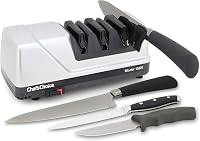
A pull-through sharpener may not suit every blade or edge angle. Read our guide on how to use a Chef’sChoice knife sharpener before using one, and check the sharpener’s instructions for compatible knives.
Store knives so their edges do not knock against other utensils. A guarded or secure storage spot also reduces the chance of reaching into a drawer and touching an exposed edge.
Is a nakiri vs chef knife the right comparison for you?
Choose a chef knife for one general-purpose blade, and choose a nakiri when vegetable chopping is your main priority. If you already own a comfortable chef knife, add a nakiri only when its straight chopping style would help your routine.
Pick the Victorinox Fibrox Pro if you want a chef knife described for several everyday tasks. If you're considering a nakiri, our Milk Street Nakiri Knife Review and best nakiri knife set guide can help with the next step.
If your main question is which chef blade works well for produce, compare the picks in best chef knives for chopping vegetables. For cooks comparing other pan shapes while outfitting a kitchen, see how a chef’s pan differs from a wok.
Choose the nakiri for frequent vertical vegetable prep; choose the chef knife for a broader mix of cuts and ingredients. The best fit is the blade whose shape matches the way you work.
Frequently asked questions
Is a nakiri better than a chef knife for vegetables?
A nakiri can feel more natural for repeated vegetable chopping because its straight edge meets the board along more of the blade. A chef knife also chops vegetables well and handles more varied tasks.
Choose based on the motion you prefer and whether vegetables make up most of your prep.
Can a nakiri cut meat?
A nakiri can cut boneless meat into smaller pieces, but its broad, straight blade is shaped mainly for chopping and slicing. A chef knife is usually the more flexible choice for trimming, portioning and handling varied ingredients.
Avoid using either knife to cut through bones.
Can a chef knife replace a nakiri?
Yes, a chef knife can handle most vegetable chopping, so many kitchens can use one as their only knife. A nakiri offers a different feel for straight up-and-down cuts and repeated vegetable prep.
The benefit depends on your cutting style, not on a rule that every cook needs both.
Is a nakiri the same as a Chinese cleaver?
No. Both have broad blades, but a nakiri is a vegetable knife with a relatively thin blade, while Chinese cleavers vary and some are built for heavier tasks.
Check the intended use before buying, and see our guide to how to use a Chinese cleaver for its distinct handling.