Steak Knives: Serrated or Not?
Choose serrated steak knives for an edge that can keep cutting without frequent sharpening; choose plain edges for a smoother cut and simpler sharpening. Your preference for cutting feel and willingness to maintain the edge matter most.
On this page (6 sections)
Serrated steak knives keep cutting with less frequent edge maintenance, while plain-edge knives offer a smoother cutting feel and are easier to sharpen. Choose the edge that fits your meals and the care routine you will actually follow.
Serrations can grip and saw through a crust or a tougher surface. A plain edge makes a continuous slice, which some diners prefer for a cleaner cut through tender meat.
The right choice is personal, so weigh cutting feel against upkeep. For broader advice on types of kitchen knives, start with the blade shape and task, then narrow in on the edge.
Are steak knives better serrated or plain?
Serrated and plain steak knives serve different preferences: serrations suit a sawing motion and can go longer between sharpening, while a plain edge favors a smooth slice and straightforward sharpening. Neither edge is best for every table.
| Edge | Cutting feel | Upkeep |
|---|---|---|
| Serrated | Teeth grip the food as you saw | Sharpen less often, but the teeth require a suitable method |
| Plain | Continuous slicing feel | Sharpen more regularly to keep it cutting well |
Consider the foods you usually serve. A serrated edge can help when the outside is firmer than the center, while a sharp plain edge can glide through tender cuts with less tearing.
Also think about who will use the knives. If several people share a set, choose an edge that feels comfortable and is simple for the household to maintain.
What does a serrated edge feel like on steak?
A serrated edge feels more like a controlled saw than a straight slicing edge. Its teeth catch the surface as you move the blade back and forth.
That motion can be useful when a steak has a browned crust or a firmer exterior. Pressing down hard is not the goal; use a steady sawing motion and let the edge do the work.
The trade-off is the cut surface. Teeth may leave more visible marks than a sharp plain blade, especially if you bear down or the knife is dull.
Serrations can postpone sharpening, but they don't remove the need for it. When they stop gripping cleanly, learn how to sharpen steak knives and confirm that your chosen method works with the specific edge.
What does a plain-edge steak knife feel like?
A plain-edge steak knife makes a continuous slice and gives you a smoother cutting feel when the blade is sharp. It suits diners who prefer slicing over sawing.
A plain edge can still need a back-and-forth motion on a crusty or tougher surface. The advantage is a simple blade line that most standard sharpening methods can address.
This edge needs attention more often than a serrated one. If you want to compare options built around a smooth edge, see our guide to best steak knives not serrated.
Choose plain if regular sharpening feels manageable and cut smoothness matters to you. If you would rather sharpen less often, consider best serrated steak knives.
How often do each kind of steak knife need care?
Plain edges usually need more frequent sharpening, while serrated edges can go longer between sharpenings. The timing depends on how often you use the knives and how you store and clean them.
Keep knives from knocking against one another in a drawer. A knife block, sheath or other edge-protective storage can reduce contact with hard items.
Hand washing and drying help limit unnecessary wear and reduce the chance of blades striking other utensils in a dishwasher. If dishwasher cleaning is a priority, compare best steak knives dishwasher safe and follow the care instructions for the specific knife.
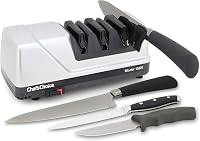
A sharpener's compatibility matters as much as its sharpening method. Chef'sChoice describes its 15XV EdgeSelect as working with straight-edge and serrated knives, with three stages for sharpening, honing and polishing.
For a closer look at its process, see how to use a Chef'sChoice knife sharpener.
Which details matter besides the edge?
Handle comfort, blade length, balance and cleaning needs all matter alongside serrations. Compare how the knife fits your hand and how it will be stored and cared for.
Try holding a knife if you can. A secure, comfortable grip helps you keep control during a meal, and balance affects how the knife feels as you cut.
A boning knife is for trimming meat close to bone, not for replacing a table steak knife. The Victorinox Fibrox Pro is a plain-edge boning knife with a curved, semi-stiff blade and a non-slip handle.
Paring knives have a different role as well. RADA's 3-piece set includes peeling, regular and heavy-duty paring knives for fruit, vegetables and trimming chicken.
A cleaver belongs to another part of the knife collection. Our guide to how to use a Chinese cleaver explains that tool's role in food prep, while what a steak knife is used for covers the table knife's job.
How do you choose the right steak knife edge?
Pick serrated knives if you value less frequent sharpening and don't mind a sawing feel; pick plain edges if you prefer a smooth slice and can maintain them. If possible, try both on a meal similar to what you serve most often.
Choose a serrated edge for steak with a firmer exterior or for a household that wants longer stretches between sharpening. Choose plain if you want a continuous slicing feel and straightforward sharpening.
If you're still unsure, start with the edge you find easier to use and maintain. For a plain edge, read how to sharpen steak knives before buying; for sharpening equipment, review the instructions for how to use a Chef'sChoice knife sharpener.
Frequently asked questions
Are serrated or plain steak knives better?
Serrated steak knives suit people who want an edge that can keep cutting without frequent sharpening. Plain edges suit people who prefer a smoother cutting feel and are willing to maintain the edge.
Choose based on how each feels on your food and how you plan to sharpen it.
Do serrated steak knives need sharpening?
Yes, serrated steak knives can need sharpening as their teeth wear down. Their edges take a different approach from a plain blade, so check that your sharpener supports serrations or use a sharpening service that works with them.
Do plain steak knives cut more smoothly?
A plain edge generally gives a smoother cut because it slices continuously along the blade. The feel also depends on the knife's sharpness, blade shape and the food.
A dull plain knife can drag, so regular edge care matters.
Can you sharpen both kinds of steak knife with the same sharpener?
Some sharpeners support both plain and serrated blades, but many are designed for only one edge type. Check the sharpener's instructions before using it, since the wrong method can damage the edge.
A sharpener with serrated-blade support is one option to compare.
What else should you consider when choosing a steak knife?
Consider the handle, blade length, balance, storage and cleaning instructions alongside edge type. A comfortable grip matters during a meal, while your cleaning and storage habits affect upkeep.
Compare the knife's care guidance before buying.