How to Sharpen Steak Knives
Straight-edge steak knives can be sharpened like other plain-edge knives; serrated knives need a tool that fits their scallops. Check the edge first, then use a suitable sharpener and follow its instructions.
On this page (8 sections)
- How can you tell which steak knife edge you have?
- How do you sharpen a straight-edge steak knife?
- How do you sharpen a serrated steak knife?
- What should you do before sharpening?
- Can every steak knife be sharpened?
- Which knives and tools fit this guide?
- How do you know when a steak knife needs sharpening?
- What is the safest way to sharpen steak knives?
To sharpen steak knives, match the method to the edge: use a plain-edge sharpener for straight blades, and a serration-compatible tool for scalloped blades. Check the knife maker's care instructions first, then work slowly and keep your hands clear of the edge.
The difference matters because a serrated knife cuts with its teeth and scallops, while a straight-edge knife has one continuous edge. If you’re comparing steak knives serrated or not, that choice also affects how you’ll maintain them.
How can you tell which steak knife edge you have?
A straight-edge steak knife has a smooth cutting edge. A serrated knife has visible teeth or scallops along the edge.
Look at the blade under good light without running a finger along it. If the edge has teeth, treat it as serrated even if the points are small.
A table knife with a rounded, blunt edge may not be designed for sharpening. Check the knife’s care instructions or ask the maker before applying an abrasive.
For a wider overview of types of kitchen knives, consider how blade shape and intended use affect care. A steak knife’s edge calls for a different sharpening approach than a general-purpose chef’s knife.
For a comparison of two common prep blades, see nakiri vs chef knife.
How do you sharpen a straight-edge steak knife?
Use a sharpener intended for plain edges and follow its instructions. A whetstone, guided sharpener, or suitable electric sharpener can work, but the right method depends on the knife and tool.
If you use a whetstone, secure it on a stable surface and wet or prepare it as its maker directs. Hold the knife at the angle recommended by the knife maker or stone instructions, then draw the edge across the stone in controlled strokes.
Keep the angle steady along the blade. Use light pressure and take care near the tip; uneven strokes can leave an inconsistent edge.
A guided sharpener can make it easier to keep an angle consistent. An electric model may also be an option if its instructions cover your knife’s edge and its use feels manageable.
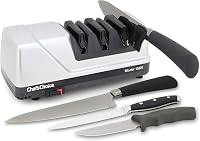
The Chef’sChoice 15XV is designed for straight-edge and serrated knives, with a three-stage system and angle guides. Follow the sharpener’s directions for the knife and edge type.
Stop if the knife doesn’t sit correctly in the sharpener or you’re unsure which stage to use. Don’t force a blade through a slot or against a stone.
How do you sharpen a serrated steak knife?
Use a sharpening rod or sharpener designed for serrated edges, and work with the scallops rather than flattening the teeth. The correct tool needs to fit the size and shape of the serrations.
Many serrated knives are sharpened from the beveled side, one scallop at a time. Place a tapered rod in a scallop and follow the tool maker’s instructions for angle and stroke direction; use light, controlled strokes.
Avoid running a flat stone across the teeth. That can remove material from the points without properly sharpening the scallops.
Some electric sharpeners have a stage designed for serrated knives. The Chef’sChoice 15XV has a final stage that uses a flexible abrasive system to polish and help prolong the life of serrated knives.
Its instructions should guide which stage and process to use.
If the scallops are unusually shaped, badly worn, or difficult to reach, a professional sharpener may be the safer choice. Compare best serrated steak knives if you’re choosing a serrated set, or best nonserrated steak knives if you prefer a straight edge that’s simpler to sharpen.
What should you do before sharpening?
Read the knife and sharpener instructions, clear a stable work area, and identify the edge. These checks help you choose a compatible method before you put the blade to an abrasive.
Wash and dry the knife if needed, then place it where it can’t slide. Keep your fingers away from the edge and move the blade in a controlled direction.
Don’t sharpen a knife while holding it in the air or resting it on an unstable surface. If the handle or blade is loose, stop and have the knife repaired or replaced.
After sharpening, remove metal dust and wipe the blade before using it. Store the knife so its edge won’t knock against other tools.
For other knife styles, the care questions can differ. A chef knife vs santoku comparison explains how their shapes suit different kitchen tasks, while this Milk Street Nakiri knife review covers a vegetable-focused blade.
Can every steak knife be sharpened?
Many straight-edge and serrated steak knives can be sharpened, but the method and practicality vary. A very thin, damaged, coated, or blunt table knife may need the maker’s guidance or professional care.
A straight edge is usually more straightforward to sharpen because it has one continuous bevel. Serrations take more attention: the tool has to fit the scallops, and each section may need separate work.
If a serrated knife has lost much of its tooth shape, sharpening may not restore its original cutting feel. Ask a professional sharpener whether the edge can be restored before attempting aggressive grinding at home.
Some makers recommend handwashing knives or give specific care instructions. Follow those directions; dishwasher suitability and edge care are separate questions.
See best steak knives dishwasher safe if cleanup is part of your buying decision.
Which knives and tools fit this guide?
Choose a sharpener based on the steak knife’s edge, not on a general promise that it sharpens every knife. A product with clear instructions for your edge type is easier to use with care.
The Victorinox Fibrox Pro in the product data is a curved boning knife with a plain stainless steel edge, not a steak knife. Its example shows why edge type matters: plain edges call for a plain-edge sharpening method, while the blade’s intended cutting task is different.
The RADA Paring Knife Galore gift set includes three paring knives with stainless steel blades. It is made for tasks such as paring apples, trimming chicken breasts, and preparing vegetables, so consider it only if you also need small prep knives.
How do you know when a steak knife needs sharpening?
Sharpen when the knife no longer cuts cleanly with light pressure. If it slips on food or tears instead of making a neat cut, inspect the edge and choose a compatible method.
A honing rod may help maintain a straight edge, but it doesn’t remove the same amount of material as sharpening. Serrated blades need an appropriate serration tool instead of routine honing across the teeth.
Use the knife on a suitable cutting surface and store it so the edge doesn’t rub against other utensils. Those habits can help reduce unnecessary wear between sharpening sessions.
If you’re unsure whether a knife is worth sharpening, compare its condition and intended use with the cost and effort of replacement. For questions about another stainless steel knife brand, see are Cuisinart stainless steel knives good.
What is the safest way to sharpen steak knives?
Use a stable surface, a sharpener made for the edge, and light, controlled strokes. Stop if the knife slips, the sharpener instructions don’t cover that edge, or the blade appears damaged.
For a straight edge, pick a suitable stone, guided tool, or electric sharpener and keep the angle consistent. For serrations, use a tapered or electric tool made for scallops, and follow its instructions rather than grinding across the teeth.
Choose a professional sharpener when the edge is damaged or the serrations are too difficult to match. Pick a plain-edge steak knife if easier home sharpening matters most; choose a serrated one if its tooth pattern better suits your cutting preferences.
Frequently asked questions
Can you sharpen steak knives?
Yes. You can sharpen a straight-edge steak knife with a suitable sharpening stone, guided sharpener, or other tool designed for plain edges.
Serrated knives need a tool suited to their scallops, and some may be better handled by a professional sharpener.
Check the knife maker's care instructions before starting.
Can you sharpen serrated steak knives at home?
You can sharpen many serrated knives at home with a tapered rod or sharpener designed for serrations, working on each scallop as directed. The method depends on the blade's pattern and the tool.
If you can't match the tool to the edge, ask a professional sharpener.
How often should steak knives be sharpened?
Sharpen steak knives when they struggle to cut food cleanly, rather than following a fixed calendar. How often that happens depends on use, storage, and care.
A honing rod can help maintain a straight edge between sharpening sessions, but it won't replace sharpening a dull blade.
Can a knife sharpener damage steak knives?
A sharpener can damage an edge if its angle or abrasive doesn't suit the knife, or if you press too hard. Serrated blades need special care because sharpening across the points can change their shape.
Read the knife and sharpener instructions, and stop if the edge does not fit the tool.