What Is a Steak Knife Used For?
A steak knife is used to cut cooked meat at the table, especially steaks, chops, poultry, and other firm foods. Its pointed tip and sharp edge help you portion food without using a large kitchen knife.
On this page (8 sections)
- What foods is a steak knife used for?
- How does a steak knife cut meat?
- What is the difference between a steak knife and a dinner knife?
- When does another kitchen knife work better?
- How should you choose a steak knife edge?
- What can sharpen a steak knife?
- Can a steak knife cut other table foods?
- What is the best steak knife use for your kitchen?
A steak knife is used to cut cooked meat at the table, including steak, pork chops, chicken, burgers, and roasted meats. Its compact handle is easy to control beside a plate, while its pointed tip and sharp edge help you cut portions without bringing a large prep knife to the dining table.
Steak knives come with plain or serrated edges. Serrations can grip a browned crust, while a plain edge makes a smooth cut and is usually simpler to hone with the correct sharpener.
What foods is a steak knife used for?
A steak knife is used for firm cooked foods that need more cutting power than a regular dinner knife. Common uses include:
- Steaks and beef roasts
- Pork chops and tenderloin
- Roasted chicken and turkey
- Burgers and meatloaf
- Grilled vegetables with firm skins
- Pizza, sandwiches, and crusty bread
The knife should move through food with light pressure. If you have to saw aggressively or press down hard, the edge may be dull, the food may be unusually tough, or another blade may suit the job better.
A steak knife is a table tool, so use it on a plate rather than a cutting board for kitchen prep. For a broader look at types of kitchen knives, match the blade shape to the task instead of asking one knife to do every job.
How does a steak knife cut meat?
A steak knife cuts meat with a short, sharp blade that gives you control close to the plate. The pointed end can start a cut, and the edge separates cooked fibers as you guide the knife back and forth.
A serrated edge uses small teeth to catch the surface of a steak or roast. This can be useful when the outside is browned or slightly firm.
A plain edge uses one continuous cutting surface and may give a cleaner slice when the blade is sharp.
The best choice depends on the food and how you care for knives. Our guide to steak knives serrated or not compares the two edge styles in more detail.
What is the difference between a steak knife and a dinner knife?
A steak knife has a sharper cutting edge and a more pointed tip than a standard dinner knife. A dinner knife is mainly for spreading, pushing, and cutting softer foods, while a steak knife is made for firmer food at the table.
A steak knife is not automatically the best knife for preparing meat. Its shorter blade works well on a plate, but a larger kitchen blade can give you better control when cutting a whole roast or dividing ingredients on a board.
Keep the knife stable on the plate and cut away from your fingers. Never use a table knife as a pry tool, and don't twist the blade through hard bones.
When does another kitchen knife work better?
Another kitchen knife works better when the food is raw, large, attached to a bone, or being prepared on a cutting board. Use the blade that gives you enough length, clearance, and control for the specific cut.
A chef knife suits chopping and slicing larger ingredients. A boning knife is better for trimming meat close to bones.
A paring knife works well for small produce and detail work.
When should you use a chef knife?
Use a chef knife for larger prep jobs that need a long edge and a stable cutting board. It can slice a roast, chop vegetables, mince herbs, or portion boneless meat before cooking.
A chef knife is less convenient at the table because its size takes more room and its pointed heel or broad blade may be awkward beside a plate. For a larger prep set, see our guide to the best chef knife set.
When should you use a boning knife?
Use a boning knife when you need to trim meat close to a bone or remove meat from one. A narrow, curved, semi-stiff blade can follow the shape of the bone more closely than a table knife.
The Victorinox Victorinox swiss army cutlery fibrox pro has a 5.5-inch stainless steel blade, a curved semi-stiff edge, and an ergonomic Fibrox Pro handle with a non-slip grip.
This knife suits cooks who prepare beef or pork cuts and want a pointed blade for piercing meat. Its 6-inch item length and 4.2-ounce weight make it a compact prep knife, but it is still a kitchen tool rather than a table knife.
Wash and dry it after raw-meat work, then store it so the edge does not strike other utensils. The plain edge needs suitable maintenance as it loses sharpness.
When should you use a paring knife?
Use a paring knife for small produce and detail cuts, such as peeling, trimming, or shaping fruits and vegetables. It can also help with small chicken-breast tasks, but it is not a substitute for a steak knife when you are eating at the table.
The RADA Cutlery Paring Knife Galore Gift Set includes peeling, regular, and heavy-duty paring knives. The blades use T420 high-carbon stainless steel, and the handles are brushed aluminum with a satin finish.
This set suits a kitchen that needs several small blade styles. It is a poor fit if your main need is cutting cooked steak, since paring knives are designed for prep details rather than table use.
RADA recommends handwashing the silver handles and storing the knives carefully to protect their cutting edges. Keep each knife in a sleeve or gift box when practical.
How should you choose a steak knife edge?
Choose a serrated edge for crusty surfaces and a plain edge for smooth cuts and simpler sharpening. Think about the foods you serve most often and whether you want to maintain the edge yourself.
Serrations can continue cutting when the outside of a steak is browned or firm. They can be harder to sharpen because the teeth need a compatible tool and technique.
Plain edges are easier to inspect and can be maintained across a flat sharpening surface.
Our guide to how to sharpen steak knives explains the care difference. You can also compare best serrated steak knives with best nonserrated steak knives before choosing an edge.
What can sharpen a steak knife?
A suitable knife sharpener can restore a compatible plain or serrated edge when used according to its design. Check the sharpener's supported edge types and angle before using it.
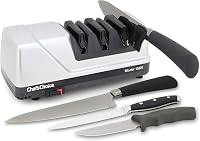
The Chef's Choice Chef’sChoice 15XV EdgeSelect Professional Electric Knife is a gray, 3-stage sharpener with 100-percent diamond abrasives and precision angle guides for straight-edge and serrated knives.
It converts traditional 20-degree household edges to a 15-degree Trizor XV edge and measures 10 L x 4.25 W x 4.25 H inches. The first sharpening takes about 1 minute, while resharpening takes about 10 seconds according to the product details.
Use a sharpener like this only when its guides and stages match the knife edge. A steak knife with unusual teeth or damage may need a different sharpening method.
Can a steak knife cut other table foods?
Yes, a steak knife can cut firm foods that resist a regular dinner knife, including crusty sandwiches, pizza, cooked sausages, and firm vegetables. The pointed tip can also help separate food into smaller bites.
Avoid using it on hard bones, frozen food, metal, glass, or other surfaces that can damage the edge. Cut on a plate or approved cutting surface, and keep the blade away from your hand.
For specialized cookware questions, see What Is a Braiser Used for? and What Is a Double Boiler Insert Used for?. Those tools solve cooking problems that a steak knife cannot.
What is the best steak knife use for your kitchen?
Choose a steak knife for cutting cooked meat and firm foods at the table. Choose a chef knife for broad prep, a boning knife for meat close to bones, and a paring knife for peeling and small produce work.
Pick a serrated edge if crusty surfaces are common at your table. Pick a plain edge if you prefer a smooth cut and a simpler sharpening routine.
Keep every knife clean, dry, sharp, and stored so the edge remains protected.
Frequently asked questions
What is a steak knife used for?
A steak knife is used to cut cooked meat into bite-size pieces at the table. It works well for steaks, chops, poultry, burgers, and firm roasted foods.
A pointed tip helps start cuts, while a sharp plain or serrated edge separates the food without needing a large chef knife.
Is a serrated steak knife better than a plain steak knife?
Neither edge is best for every table. A serrated steak knife can grip a browned crust and keep cutting as the teeth move through the food.
A plain-edge knife gives a smoother cut and can be sharpened with the right method.
Your preferred foods and care routine should guide the choice.
Can you use a steak knife to cut raw meat?
You can use a steak knife for small raw-meat tasks, but it is not the best general tool for trimming or portioning larger cuts. A boning knife suits work close to bones, while a chef knife handles larger pieces.
Wash and sanitize any knife used with raw meat before another task.
What is the difference between a steak knife and a chef knife?
A steak knife is a compact table knife designed for cutting cooked food on a plate. A chef knife is a larger kitchen knife used for prep tasks such as slicing, chopping, and mincing on a cutting board.
The chef knife offers more blade length and control for larger ingredients.