What Is a Braiser Used for?
On this page (10 sections)
Quick answer: A braiser is a wide, moderately shallow, lidded pan made for browning food first and then cooking it gently with a small amount of liquid.
It is especially useful for chicken thighs, short ribs, cabbage, beans, and one-pan meals that need both surface area and a covered finish.
A braiser sits between a saute pan and a Dutch oven. Its broad floor gives ingredients room to brown, while its walls and lid hold enough liquid for slow, moist cooking. For a related wide-pan comparison, see sauteuse and saute pan differences.
The shape can also roast, simmer, shallow-fry, and serve at the table. Whether it earns cabinet space depends on how often you combine searing with a gentle covered finish.
What Makes a Braiser Different?
| Feature | What it does | Why it matters |
|---|---|---|
| Wide floor | Fits food in one layer | Supports browning before liquid is added |
| Moderate depth | Contains a shallow braising liquid | Keeps part of the food above the liquid |
| Close lid | Traps steam during the covered stage | Slows moisture loss and supports even cooking |
| Two side handles | Provides balanced lifting | Useful for a heavy, full vessel |
How Braising Works
Braising uses two stages. First, food is browned in fat to develop color and flavor. Then a modest amount of liquid is added, the pan is covered, and the food cooks more gently.
The food is not normally submerged as it would be in soup. The liquid, steam, and covered environment work together. After the food becomes tender, the lid can come off so the liquid reduces into a more concentrated sauce.
- Brown in batches. Crowding releases steam and limits color.
- Cook aromatics. Adjust heat so browned bits do not burn.
- Add the recipe’s liquid. Scrape the flavorful fond from the floor.
- Return the main ingredients. Keep the intended portion above the liquid.
- Cover and finish gently. Follow the recipe’s temperature and doneness cues.
- Reduce if needed. Remove the lid only after the food is properly cooked.
The braiser advantage: You can brown, deglaze, cover, and reduce in one vessel without moving the meal between a skillet and a deep pot.
What Can You Cook in a Braiser?
Chicken and meat
Chicken thighs, short ribs, pork shoulder portions, and similar cuts benefit from initial browning followed by a moist finish. Arrange pieces with space around them during the searing stage.
Vegetables
Cabbage wedges, fennel, leeks, carrots, and other sturdy vegetables can brown across the wide floor before liquid is added. The shallow body makes arranging and serving easier than in a tall pot.
Beans, grains, and one-pan meals
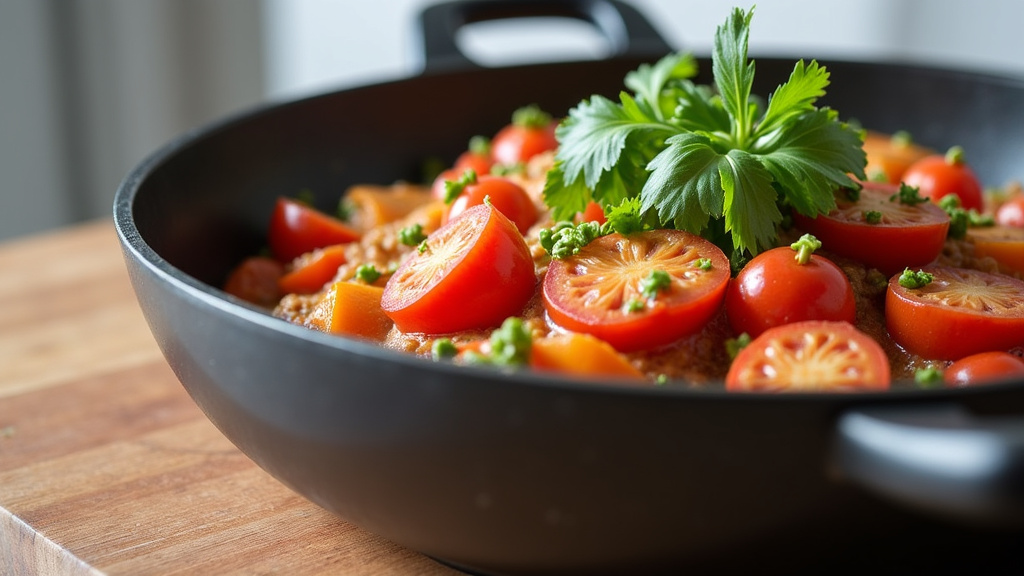
A braiser can simmer beans, tomato-based dishes, rice, or grains when the recipe fits its capacity. Its broad opening encourages reduction, so monitor liquid more closely than in a narrow saucepan.
Shallow frying and roasting
The walls contain modest oil better than a skillet, and an oven-safe model can roast. For a different flat-cooking option, see when a griddle serves a different purpose from a skillet. Follow the exact cookware and recipe instructions; the lid, knob, enamel, and handles may have different heat limits.
Braiser vs. Dutch Oven
A Dutch oven is deeper and often better for soup, large stews, bread, or recipes that need more liquid capacity. A braiser offers easier access and faster evaporation.
- Choose a braiser for food arranged in one layer and a shallow sauce.
- Choose a Dutch oven for larger volumes, deep stews, or long liquid-heavy cooking.
- Either can handle many braises if the recipe fits safely.
If you already own a wide Dutch oven, the overlap may be substantial. A braiser becomes more valuable when you repeatedly want more floor area and lower sides.
Braiser vs. Saute Pan
Both have wide floors and straight or gently sloped walls. A saute pan usually has one long handle plus a helper handle, while a braiser commonly has two short side handles and a heavier body. A rondeau pan serves related browning and braising needs.
The saute pan is easier to reposition on the stovetop. The braiser often fits the oven and dining table more neatly. Construction matters more than the name, so compare actual dimensions and weight.
How to Choose the Right Braiser
- Cooking surface: Make sure your normal portions fit without crowding.
- Capacity: Leave room for liquid, bubbling, and stirring.
- Weight: Consider the pan, lid, food, and sauce together.
- Handles: Confirm protected hands fit securely around them.
- Cooktop: Check burner fit and induction compatibility.
- Oven limits: Verify the body, coating, lid, knob, and handles.
A larger braiser is not always better. An oversized floor on a small burner can heat unevenly, and the full vessel may become difficult to carry.
Safety check: Short side handles become hot during stovetop and oven cooking. Use dry protection on both sides and clear a stable landing place before lifting the full pan.
Common Mistakes to Avoid
- Crowding food during browning
- Adding enough liquid to boil rather than braise
- Using high heat that scorches fond or enamel
- Leaving the lid on when the sauce needs reduction
- Buying a size that does not fit the burner, oven, or cabinet
Who benefits most from a braiser?
It is a strong fit for cooks who make family-size one-pan meals, browned meats with sauce, or arranged vegetables. If you mostly boil pasta and make soup, a deeper pot may be more useful.
The Bottom Line
A braiser combines a skillet-like floor with enough depth and a lid for moist cooking. It earns its space when browning and covered finishing happen in the same recipe.
Frequently Asked Questions
Can a braiser replace a Dutch oven?
For shallow braises and many stews, yes. A Dutch oven remains better when you need more depth or liquid capacity.
Can you fry in a braiser?
Many models can pan-fry or shallow-fry, but keep oil safely below the rim and follow the manufacturer’s heat guidance.
Is a braiser the same as a saute pan?
No, although they overlap. A braiser commonly has two short handles, a heavier body, and a table-to-oven design; a saute pan usually has a long handle.
What size braiser should I buy?
Choose the smallest size that fits your normal portions in one layer while leaving safe room for liquid and stirring.
Does a braiser need a lid?
A fitted lid is central to the covered stage of braising. The pan can still sear, roast, and reduce without it.


