What Is a Rondeau Pan Used for in a Home Kitchen?
On this page (11 sections)
Quick answer: A rondeau is a wide, straight-sided pan with two short handles. It is used for browning large batches, braising, simmering, reducing sauces, poaching, and oven finishing.
In a home kitchen, it makes the most sense when you regularly cook family-size meals that need more floor area than a Dutch oven and more capacity than a skillet.
A rondeau is common in professional kitchens because pan cooking surface versus listed diameter handles batches efficiently. Home versions offer the same advantage in a compact, oven-friendly shape.
It overlaps with a braiser, shallow casserole, and two-handled sauteuse. For how a sauteuse compares with a saute pan, see our sauteuse and saute pan guide. The useful question is not what the manufacturer calls it, but how wide, deep, heavy, and manageable it is.
What a Rondeau Adds to a Home Kitchen
| Design feature | Cooking benefit | Typical use |
|---|---|---|
| Broad flat floor | More food contacts the surface | Searing chicken or meat in batches |
| Straight walls | Contains liquid without excessive depth | Braising, poaching, simmering |
| Wide opening | Encourages evaporation | Reducing sauces after cooking |
| Two short handles | Fits ovens and provides balanced lifting | Stovetop-to-oven meals |
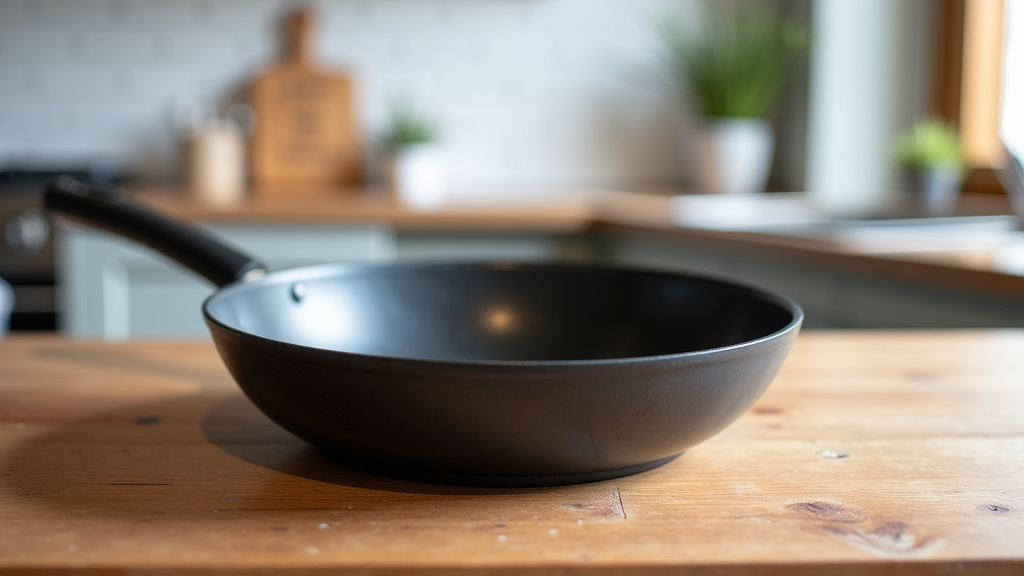
Best Uses for a Rondeau
Browning a large batch
The broad floor gives meat or vegetables room to contact the hot surface. Brown in batches if needed; packing the entire pan tightly will trap steam.
Braising and simmering
After browning, add aromatics and a controlled amount of liquid, then cover. The walls contain the sauce while the wide base keeps ingredients arranged in a relatively shallow layer.
Reducing a sauce
Once the food is done, remove the lid and use the wide opening to concentrate the braising liquid. Stir and lower the heat as the sauce thickens.
Poaching and one-pot meals
A rondeau can poach fish or poultry, cook large grain dishes, and handle family-size meals. The exact task should fit its depth and safe liquid capacity.
Where a rondeau excels: It combines the floor area of a large saute pan with the balanced handles and oven fit of a shallow casserole.
Rondeau vs. Braiser
The two names frequently describe very similar cookware. A rondeau traditionally has straight sides and may be deeper or more utilitarian. A braiser may have gently sloped sides and a heavier oven-to-table design.
There is no universal naming rule. Compare these details instead:
- Flat interior diameter
- Wall height and total capacity
- Lid fit and handle shape
- Empty and filled weight
- Material, coating, and oven limit
Rondeau vs. Saute Pan
A saute pan usually has a long handle, making it easier to reposition on the stovetop. A rondeau uses two short handles, which conserve space and support balanced lifting.
Both can sear, shallow-fry, make pan sauce, and braise. Choose the handle style that matches where the cookware will spend most of its time.
Rondeau vs. Dutch Oven
A Dutch oven is deeper and often heavier. It is better for tall stews, soup, bread, and recipes that need greater liquid depth.
A rondeau offers more exposed area relative to capacity. That makes browning and reduction easier, but it also loses moisture faster.
Choose the rondeau for breadth; choose the Dutch oven for depth.
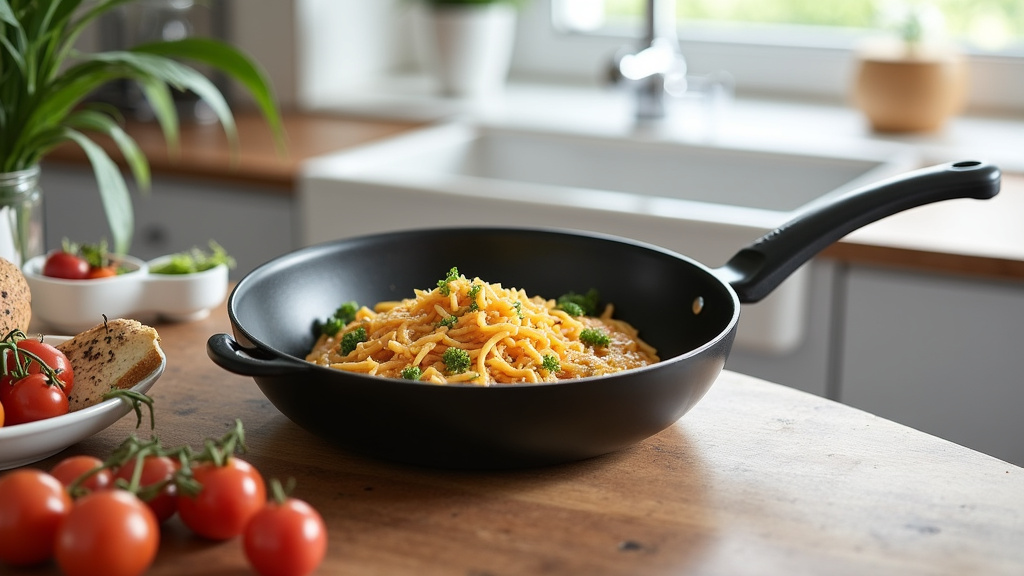
How to Choose a Home-Kitchen Size
Commercial rondeaux can be far larger than most households need. Oversizing creates three problems: poor burner coverage, excessive weight, and awkward storage.
- Count normal servings. Buy for repeated meals, not the largest gathering imaginable.
- Measure your burner. A base extending far beyond the heat source may cook unevenly.
- Check oven clearance. Include both handles and the lid.
- Estimate filled weight. Use both handles when moving it.
- Measure cabinet space. Short handles help, but the broad diameter still matters.
Technique Tips for Better Results
- Preheat gradually according to the material and coating.
- Dry food before searing and leave space between portions.
- Use lower, steadier heat after adding liquid.
- Keep the lid on for moisture retention and off for reduction.
- Rotate the pan only if the burner heats the broad base unevenly and it is safe to do so.
Safety check: A large rondeau becomes extremely heavy when full. Clear a heat-safe landing place first, use dry protection on both handles, and ask for help rather than carrying an unsafe load.
Common Mistakes to Avoid
- Buying a commercial-scale size for a small home burner
- Crowding food and expecting strong browning
- Ignoring rapid evaporation from the wide opening
- Assuming the lid and handles share the body’s heat rating
- Confusing top diameter with flat floor area
Does a home cook need one?
A rondeau is worthwhile when you regularly make large shallow braises, batch-seared meals, or wide reductions. If a Dutch oven and saute pan already cover those jobs, it may be unnecessary overlap.
The Bottom Line
A rondeau is a high-capacity, wide-floor vessel that moves comfortably from browning to simmering and reduction. Choose a size your burner can heat evenly and you can lift safely.
Frequently Asked Questions
Is a rondeau the same as a braiser?
They can be nearly identical. Rondeau often implies straighter sides and a professional style, but manufacturer naming varies.
Can a rondeau replace a saute pan?
It can handle many of the same tasks. The main difference is two short handles instead of a long stovetop handle.
Can you roast in a rondeau?
Yes, when the exact model is oven-safe and large enough for air and heat to circulate around the food.
What size works at home?
Choose according to normal servings, burner diameter, oven clearance, storage, and filled weight rather than a professional-kitchen standard.
Does a rondeau need a lid?
A lid is valuable for braising and simmering. The vessel can still sear, fry, roast, and reduce without it.


