What Is the Difference Between a Stockpot and a Dutch Oven?
On this page (12 sections)
- Stockpot vs. Dutch Oven at a Glance
- What a Stockpot Does Best
- What a Dutch Oven Does Best
- How Heat Retention Changes Cooking
- Which Is Better for Soup?
- Capacity and Filled Weight Matter
- Can One Replace the Other?
- Construction and Compatibility Checks
- Common Mistakes to Avoid
- The Bottom Line
- Frequently Asked Questions
- Sources and Further Reading
Quick answer: A stockpot is tall, relatively light, and built for liquid volume. A Dutch oven is shorter, heavier, and designed to hold heat steadily for browning, braising, stewing, and covered cooking.
Choose a stockpot for pasta water, broth, blanching, and large soup batches. Choose a Dutch oven when you want to sear ingredients and continue cooking them slowly in the same vessel.
Both are deep, lidded pots with two side handles, but they solve different problems. The stockpot prioritizes capacity and handling. The Dutch oven prioritizes heat retention and a stable cooking environment.
Size, material, and exact construction still vary, so treat the name as a starting point rather than a complete specification.
Stockpot vs. Dutch Oven at a Glance
| Feature | Stockpot | Dutch oven |
|---|---|---|
| Shape | Tall and narrow for volume | Lower and wider for access |
| Typical weight | Lighter for its capacity | Heavy, especially in cast iron |
| Heat behavior | Often responds faster to burner changes | Stores and releases heat steadily |
| Best work | Boiling, stock, pasta, blanching | Searing, braising, stew, roasting |
| Main limitation | Less convenient for browning | Heavy to move when full |
What a Stockpot Does Best
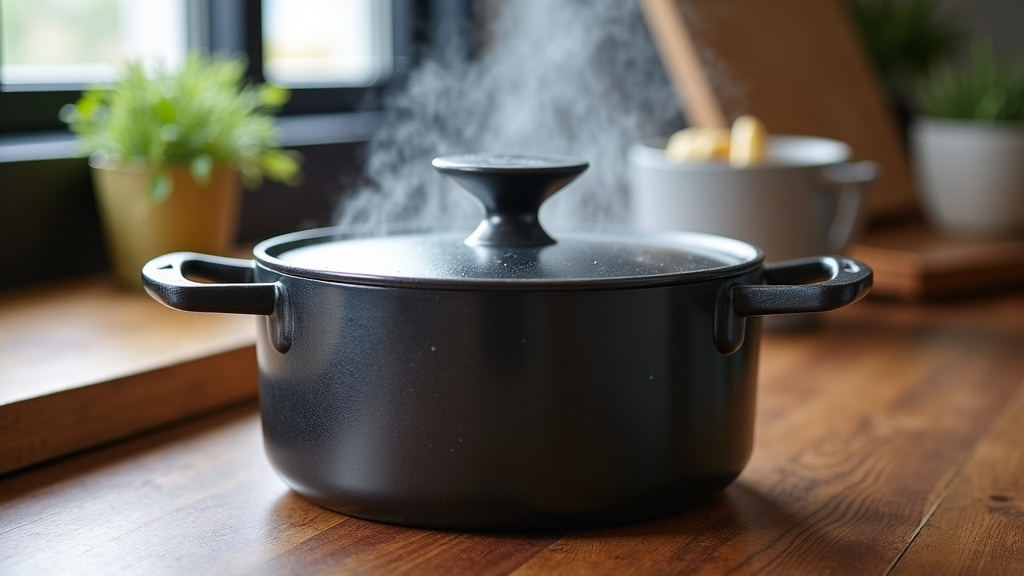
A stockpot creates a large column of water or broth without occupying an excessively wide burner area. Its tall sides limit evaporation compared with a broad, shallow vessel.
Use a stockpot for:
- Cooking pasta in plenty of water
- Making broth or stock from bones and vegetables
- Preparing large batches of soup
- Blanching corn or vegetables
- Boiling foods when capacity matters more than surface access
Many stockpots use stainless steel or another relatively light construction. That is useful because a large volume of water is already heavy.
What a Dutch Oven Does Best
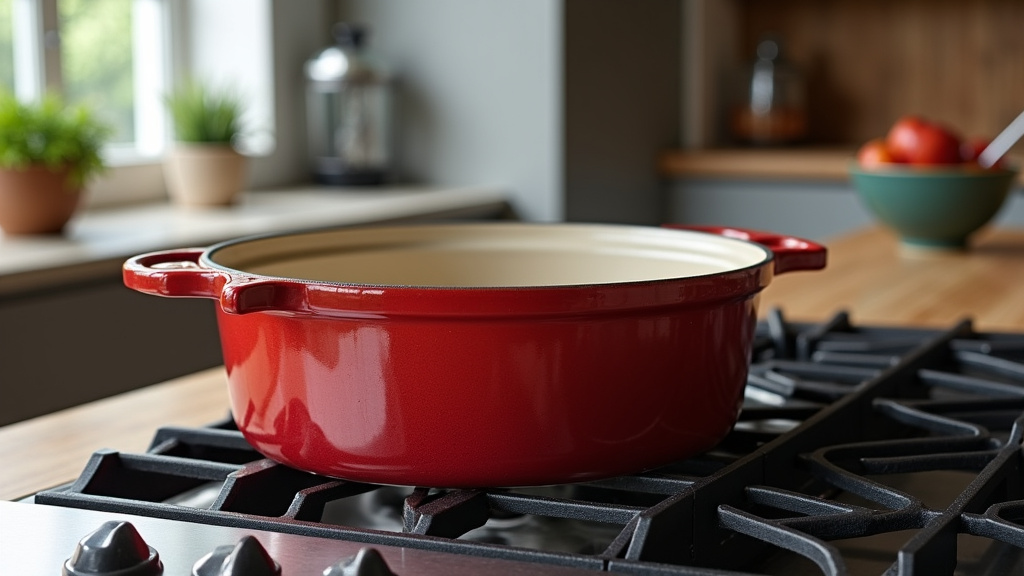
A Dutch oven usually has a thick body and a close-fitting lid. Cast iron versions hold substantial heat, helping the vessel stay steady when cool ingredients are added.
Use a Dutch oven for:
- Browning meat before building a stew
- Slow braises and pot roasts
- Chili, beans, and thick soups
- Stovetop-to-oven recipes when the model is approved
- Bread or roasting only when the exact cookware instructions permit it
The lower, wider body gives better access to the cooking surface than a tall stockpot. That makes searing and stirring easier. A wide-floor rondeau is another shape built for browning and simmering.
Fast decision: If the job is mostly heating a large amount of liquid, choose the stockpot. If it starts with browning and continues with slow covered cooking, choose the Dutch oven.
How Heat Retention Changes Cooking
A heavy Dutch oven takes longer to warm and longer to cool. Once hot, it resists rapid temperature drops. This can be helpful for braising and stewing that benefit from steady heat.
That same thermal mass makes it less responsive when the burner is turned down. Move early when a dish is getting too hot rather than waiting for the vessel to cool immediately.
A lighter stockpot generally responds faster. For boiling water, that is practical. For searing, thin construction may lose heat quickly when crowded with cool food.
Which Is Better for Soup?
Either can make soup. Pick according to the recipe and batch size.
- Choose a stockpot for a large, broth-heavy batch.
- Choose a Dutch oven when you want to brown meat or vegetables first.
- Choose the vessel that leaves safe stirring room without becoming too heavy to move.
A medium Dutch oven is often more convenient for everyday soup than an oversized stockpot. The largest pot is not automatically the best pot.
Capacity and Filled Weight Matter
One quart of water weighs roughly two pounds before you add the pot, lid, and food. A large vessel can become difficult to lift long before it is filled to the rim.
Before choosing a size:
- Estimate your normal batch. Buy for regular use, not a rare maximum.
- Check the empty weight. Then imagine it filled with water.
- Confirm sink clearance. The pot must fit for filling and cleaning.
- Measure cabinet height. Include the lid and handles.
- Plan how you will drain it. A pasta insert or smaller pot may be safer than carrying a huge load.
Can One Replace the Other?
A Dutch oven can make stock, boil pasta, and blanch vegetables if it is large enough. Its disadvantages are weight and often lower capacity.
A stockpot can make stew, but it may not brown as evenly or hold heat as steadily. If the bottom is thin, base construction comparisons can help explain how cookware spreads heat, while high burner heat can create hot spots.
For a small household, one medium Dutch oven may cover more varied recipes. For frequent batch cooking or pasta, a separate stockpot earns its storage space.
Construction and Compatibility Checks
Not every Dutch oven is cast iron, and not every stockpot is lightweight. Read the exact specifications.
- Cooktop: Confirm induction or other compatibility.
- Oven: Check the body, handles, lid, and knob separately.
- Interior: Follow care guidance for bare metal, enamel, or nonstick surfaces.
- Base: Match its diameter to the burner.
- Handles: Make sure protected hands can grip them securely.
Safety check: Never carry a very large pot of boiling water across the kitchen if you can drain or transfer it more safely in place. Use dry protection and two secure handles.
Common Mistakes to Avoid
- Buying an oversized stockpot that is unsafe to lift when full
- Using maximum heat under an empty enameled Dutch oven
- Expecting a thin stockpot to sear like heavy cookware
- Assuming every Dutch-oven knob is broiler-safe
- Adding cold water to very hot cookware and risking thermal shock
A practical two-pot setup
A medium Dutch oven handles braises, stew, chili, and everyday soup. Add a larger, lighter stockpot if you regularly cook pasta, stock, or food for a crowd.
The Bottom Line
A stockpot is a volume specialist. A Dutch oven is a heat-retention specialist. There is useful overlap, but the best choice comes from your usual batch size, whether you brown before simmering, and how much weight you can handle safely.
Frequently Asked Questions
Can you make stock in a Dutch oven?
Yes. Capacity may be lower than a dedicated stockpot, but the vessel can make excellent small or medium batches.
Can a stockpot go in the oven?
Only if the manufacturer approves the exact pot, handles, lid, and knob for the intended temperature.
Which is better for pasta?
A stockpot is usually lighter and offers more water capacity. Choose a size you can fill and drain safely.
Why is a Dutch oven so heavy?
Many are made from thick cast iron, which stores heat well but adds substantial weight. Other constructions may be lighter.
Do I need both?
No. Buy both only if large-volume boiling and steady braising are recurring, distinct needs in your kitchen.


