What Is the Difference Between Clad and Disc-bottom Cookware?
On this page (10 sections)
Quick answer: Fully clad cookware carries bonded heat-conducting layers through the base and walls. Disc-bottom cookware attaches a conductive plate mainly beneath the floor of the vessel.
Clad construction favors wall heating and responsiveness. A well-designed disc bottom can offer excellent base heating at lower cost, especially for liquid-heavy pots.
Neither design is automatically superior. The useful choice depends on vessel shape, cooking technique, thickness, weight, and how far the conductive material covers the cooking area.
Clad vs. Disc Bottom at a Glance
| Feature | Fully clad | Disc bottom |
|---|---|---|
| Conductive layer | Base and side walls | Primarily under the base |
| Wall heating | More direct and continuous | Walls rely more on heat moving from the base and contents |
| Typical strength | Sauces, sauteing, broad pans | Stockpots, boiling, value-focused cookware |
| Watch for | Weight and actual layer thickness | Undersized discs and heat concentration near the edge |
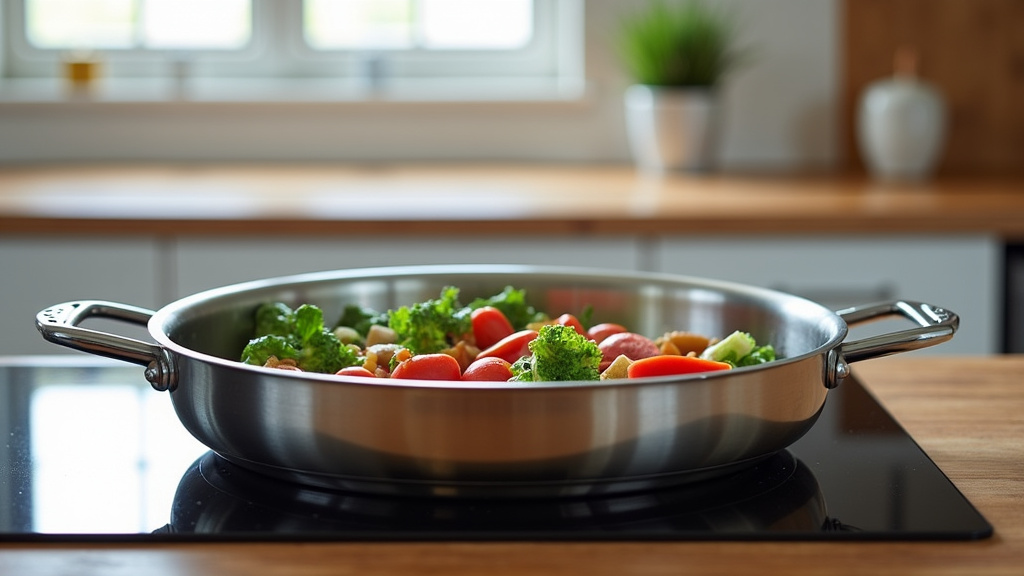
How Fully Clad Cookware Moves Heat
what fully clad cookware means commonly sandwiches aluminum or copper between stainless layers. Because that sandwich continues up the sides, heat can spread into the walls instead of remaining concentrated at the base.
This can be useful in a saucier, skillet and saute pan differences where food contacts both the floor and the lower walls. It may also create a smoother thermal transition around the corner of the pan.
How a Disc Bottom Works
A disc-bottom vessel attaches a layered plate to its base. The disc may combine aluminum for conductivity with stainless steel for durability or induction compatibility.
A good disc should cover the usable floor rather than ending far inside the pan’s edge. If the conductive plate is too small, food near the perimeter may heat differently from food over the center.
Do not judge by the visible disc alone: Its metal, thickness, coverage, bonding, and flatness matter more than whether the seam looks impressive.
Which Design Fits Each Cooking Job?
Sauces and Reductions
Fully clad construction can help when sauce coats the walls or you whisk around curved corners. Responsive layers make burner changes easier to manage.
Sauteing and Shallow Frying
A wide clad pan can distribute heat through the base and sides. A substantial, well-covered disc can also perform well; surface area and crowding remain important.
Stock, Pasta, and Blanching
A disc-bottom stockpot often makes practical sense because water circulates heat throughout the vessel. For help choosing between those pot types, see our stockpot and Dutch oven guide. Fully clad walls may add cost and weight without an equal benefit for boiling.
Stovetop-to-Oven Cooking
Either design can work if the body, handles, lid, and coating are rated for the intended temperature. Construction type alone does not establish oven safety.
What Matters More Than the Label
- Conductive-metal thickness: affects evenness, responsiveness, and stability.
- Coverage: the layer or disc should support the usable cooking area.
- Flatness: essential for good contact on smooth electric and induction surfaces.
- Weight: affects pouring, lifting, cleaning, and storage.
- Handle design: changes balance and control when the vessel is full.
Simple choice
Choose fully clad for a pan whose walls actively participate in cooking. Consider disc bottom for a deep liquid vessel or when a good base, lower price, and manageable weight matter more than wall response.
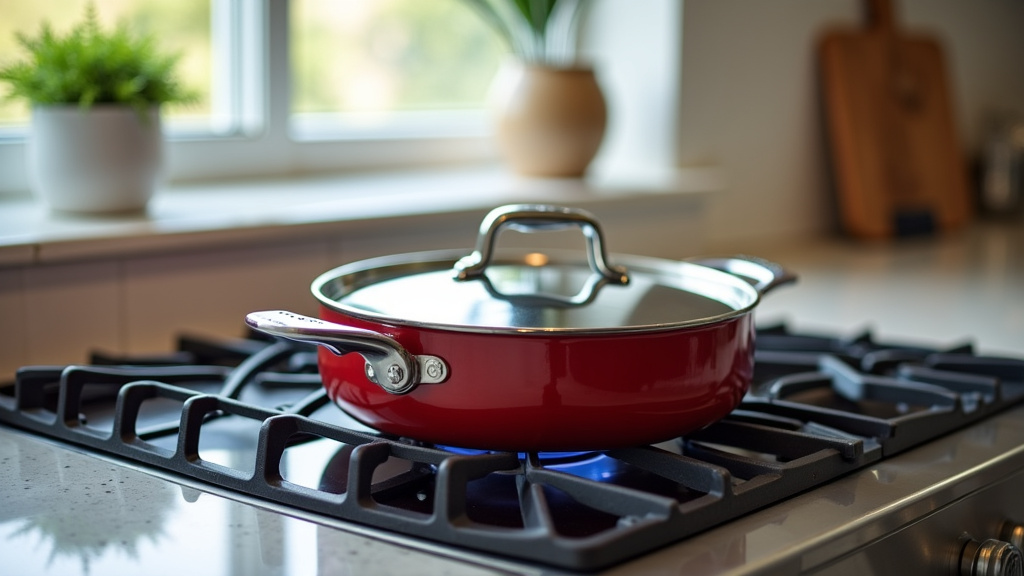
How to Compare Two Pans
- Confirm whether the layers reach the rim or remain in the base.
- Compare flat-base diameter with your burner size.
- Check the total and filled weight.
- Look for an explicit induction statement if needed.
- Verify oven, broiler, lid, knob, and utensil limits.
- Review the warranty and care instructions for separation, warping, and cleaning.
Common Mistakes
- Assuming every stainless pan is fully clad
- Assuming a thick-looking disc contains a thick conductive layer
- Using an oversized burner beneath a small base
- Overheating an empty pan
- Adding cold water to very hot cookware
The Bottom Line
Fully clad cookware extends its bonded layers into the walls, while disc-bottom cookware concentrates them beneath the base. Clad construction is valuable when wall heating matters; disc bottoms are often efficient for boiling and large liquid batches.
Compare the exact construction, not just the category. Either design can be excellent or disappointing depending on materials, thickness, coverage, and workmanship. For a broader overview of how cookware materials affect performance, see the materials guide.
Frequently Asked Questions
Is disc-bottom cookware cheaper?
It often is because the conductive material covers less of the vessel, but price varies with thickness, materials, brand, and manufacturing.
Can disc-bottom cookware work on induction?
Yes, if the exterior base is magnetically compatible and the maker identifies the model for induction use.
Is fully clad cookware always lighter?
No. Full cladding can add weight, while a thick disc can also be heavy. Check the actual product weight.
Can the disc separate?
A bonded base can be damaged by manufacturing defects, extreme overheating, or thermal shock. Follow the maker’s care guidance and warranty terms.


