What Is the Difference Between a Skillet and a Saute Pan?
On this page (11 sections)
- Skillet vs. Saute Pan at a Glance
- Why a Skillet Is Easier for Turning and Browning
- Why a Saute Pan Is Better for One-Pan Meals
- Which Pan Has More Cooking Surface?
- Handling, Weight, and Storage
- How to Get Better Results from Either Pan
- Can One Replace the Other?
- Common Buying Mistakes
- The Bottom Line
- Frequently Asked Questions
- Sources and Further Reading
Quick answer: A skillet has low, flared sides that make turning food and releasing steam easier. A saute pan has straight sides, a wider flat floor, and usually a lid, so it contains sauces, oil, and splatter more effectively.
Choose a skillet for eggs, pancakes, cutlets, and fast browning. Choose a saute pan when a dish starts with searing and finishes with liquid.
The names sound interchangeable, and both pans can handle many of the same meals. The important difference is not the label—it is the shape of the cooking surface and walls.
That geometry changes how much food fits in one layer, how quickly moisture escapes, and how comfortably you can stir, flip, or pour.
Skillet vs. Saute Pan at a Glance
| Feature | Skillet | Saute pan |
|---|---|---|
| Sides | Low and flared | Taller and nearly vertical |
| Flat floor | Usually smaller at the same rim diameter | Usually wider and easier to fill in one layer |
| Access | Easy to slide in a turner or toss food | Walls contain food but reduce side access |
| Moisture | Open shape encourages evaporation | Straight walls and lid retain more moisture |
| Best fit | Turning, frying, browning | Searing, shallow frying, pan sauces, braising |
Do not compare rim diameter alone; learn how to measure a frying pan’s diameter before comparing models. A 12-inch skillet and a 12-inch saute pan can have noticeably different flat cooking areas because the skillet begins flaring outward near its base.
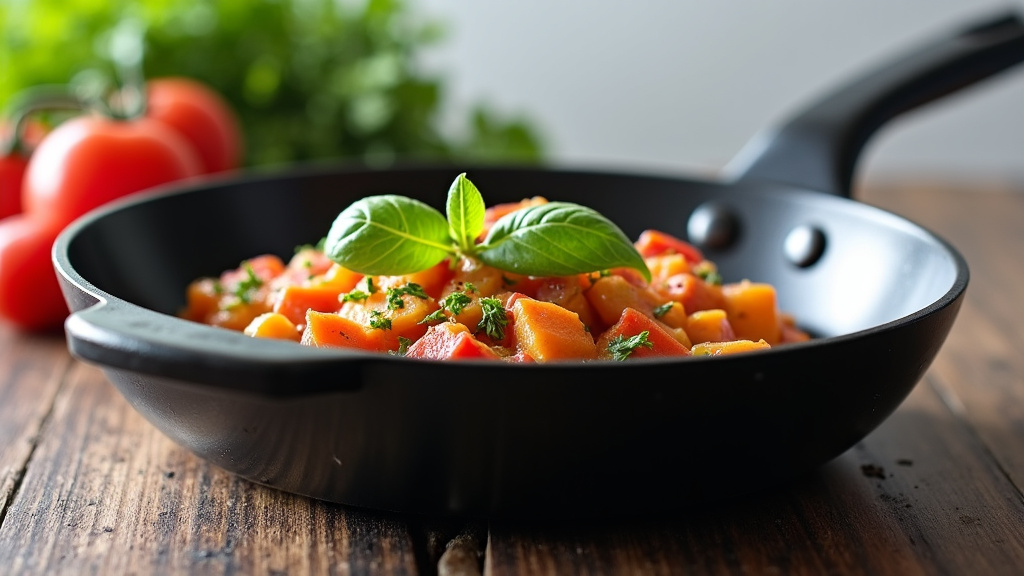
Why a Skillet Is Easier for Turning and Browning
The skillet’s sloped wall gives a spatula a natural path underneath food. That makes delicate eggs, pancakes, fish fillets, and cutlets easier to turn without forcing the utensil straight down. For a related cooking-surface choice, compare a griddle with a skillet.
The open profile also lets water vapor escape. That helps when you want vegetables to brown instead of simmering in their own moisture.
Use a skillet for:
- Eggs, pancakes, and grilled sandwiches
- Burgers, chops, cutlets, and fish fillets
- Vegetables that need quick evaporation
- Foods you frequently turn, stir, or slide onto a plate
The flared sides do reduce contained capacity. Add too much sauce or frying oil, and the same open shape that makes access easy can increase splatter and spill risk.
Why a Saute Pan Is Better for One-Pan Meals
A saute pan preserves more flat floor area because its sides rise vertically. That gives pieces of meat or vegetables more room to make direct contact with the hot surface.
The walls also contain liquid. You can sear chicken, remove it briefly, cook aromatics, add broth or sauce, then return the chicken and cover the pan to finish.
Use a saute pan for:
- Searing several portions in one uncrowded layer
- Building pan sauces after browning
- Shallow frying with better oil containment
- Braising or simmering under a fitted lid
Fast decision: If you mainly need to flip and brown, reach for the skillet. If you need to brown, add liquid, and cover, the saute pan is usually more convenient.
Which Pan Has More Cooking Surface?
At an equal listed diameter, the saute pan generally has the larger flat floor. However, cookware dimensions are not standardized, so the actual measurement matters more than the product name.
Look for the diameter of the flat interior base—not only the outside rim. A broader base lets you space ingredients apart, which supports browning. Crowded food releases moisture faster than it can evaporate, producing steam around the food.
The skillet may still feel roomier during stirring because its flared walls create an open working area above the base. Flat floor area and total interior volume are different measurements.
Handling, Weight, and Storage
Saute pans often include a lid and a short helper handle opposite the long handle. Those features are useful, but they add weight and take up more cabinet space.
A lighter skillet is easier to tilt, slide, and maneuver. A full saute pan is safer to move with two hands, especially when it contains hot liquid.
Before buying, check:
- Flat base diameter: Match it to your burner size.
- Filled weight: Consider the food and liquid, not only the empty pan.
- Handle clearance: Make sure it fits your oven and cabinet.
- Lid fit: Confirm whether the lid is included and oven-safe.
- Material: Compare response, weight, coating, and care instructions.
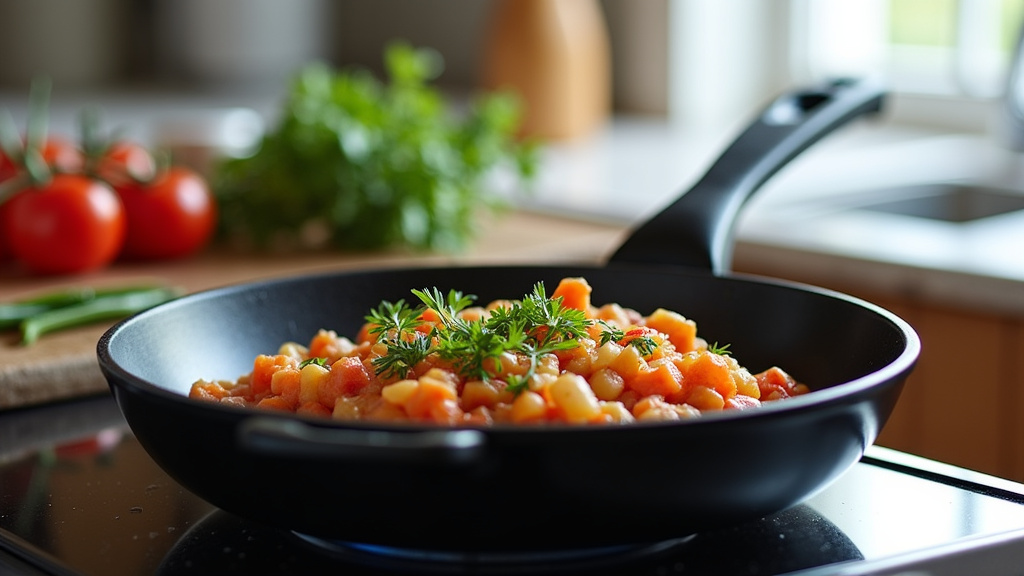
How to Get Better Results from Either Pan
Give food enough room
Arrange ingredients in a single layer when browning. If the pan is crowded, cook in batches rather than raising the heat aggressively.
Use the lid deliberately
A lid is useful for braising and finishing thicker pieces, but it traps steam. Leave it off during the browning stage unless the recipe calls for retained moisture. A braiser for covered cooking also combines browning with a covered finish.
Match heat to the construction
Preheat gradually and follow the manufacturer’s guidance for the exact material or coating. A heavy pan may need more time to warm, while a responsive pan may need smaller burner adjustments.
Safety check: The pan body, lid, knob, handle, and coating may have different oven or broiler limits. Verify every component before moving either pan from stovetop to oven.
Can One Replace the Other?
For many meals, yes. A skillet can simmer a modest sauce, and a saute pan can fry eggs or brown vegetables. The compromise appears at the edges of the task.
A skillet becomes awkward when liquid approaches its low sides. A saute pan becomes less convenient when you want to toss food or slide a turner beneath a delicate item. For more on how those differences affect cooking, see pan depth and side shape.
If you own only one, choose according to the meals you cook most often. If you regularly make both breakfast foods and saucy one-pan dinners, the two shapes provide useful rather than purely decorative overlap.
Common Buying Mistakes
- Assuming equal rim diameters mean equal cooking area
- Buying a deep, heavy saute pan and expecting the tossing feel of a skillet
- Ignoring the weight of the lid and a full batch of food
- Choosing by shape while overlooking coating and cooktop compatibility
- Assuming every handle or lid is oven-safe to the same temperature
Best all-around choice
Choose the pan that fits your most common technique. A skillet favors access and evaporation; a saute pan favors surface area and containment. Construction quality and the right size still matter more than owning both names.
The Bottom Line
A skillet and saute pan overlap, but their shapes encourage different styles of cooking. Pick the skillet when easy turning and fast evaporation matter. Pick the saute pan when you want a larger flat floor, straighter walls, a lid, and better control of liquid.
Frequently Asked Questions
Can a saute pan replace a skillet?
It can handle many skillet tasks, but its straight sides make flipping and tossing less convenient. It is better when the recipe includes sauce, shallow oil, or covered cooking.
Can a skillet be used for sauteing?
Yes. Its open shape works well for many sauteed foods, particularly when you want moisture to escape quickly.
Which pan is better for frying?
Use a skillet for modest pan-frying and easy turning. A saute pan’s taller walls provide better containment for shallow frying, but always keep oil well below the rim.
Do both pans need lids?
No. Saute pans commonly include lids because their design supports simmering and braising. A lid can be useful on a skillet, but it is not essential for its main strengths.
Which is better for induction?
Either works if its exact base is induction-compatible, sufficiently flat, and appropriately sized for the cooking zone.


