What Does Fully Clad Cookware Mean?
On this page (9 sections)
Quick answer: Fully clad cookware uses bonded metal layers that continue across the base and up the side walls.
It usually combines a durable stainless cooking surface with a more conductive aluminum or copper layer. “Fully clad” describes where the layers extend—not their thickness, quality, or exact composition.
The construction can improve heat movement beyond the floor of the pan, especially in sauciers, saute pans, and other vessels where food touches the walls. It does not automatically make a pan the best choice for every job.
What Fully Clad Construction Looks Like
| Part | Typical role | What to verify |
|---|---|---|
| Interior layer | Food-contact surface, often stainless steel | Finish, care, and food-contact material |
| Conductive core | Spreads heat, often aluminum or copper | Metal, thickness, and whether it reaches the rim |
| Exterior layer | Structure and cooktop contact | Induction compatibility and finish |
On a true fully clad vessel, that bonded sandwich extends through the walls. A clad and disc-bottom cookware comparison explains how a disc-bottom pan instead places its conductive package mainly under the base.
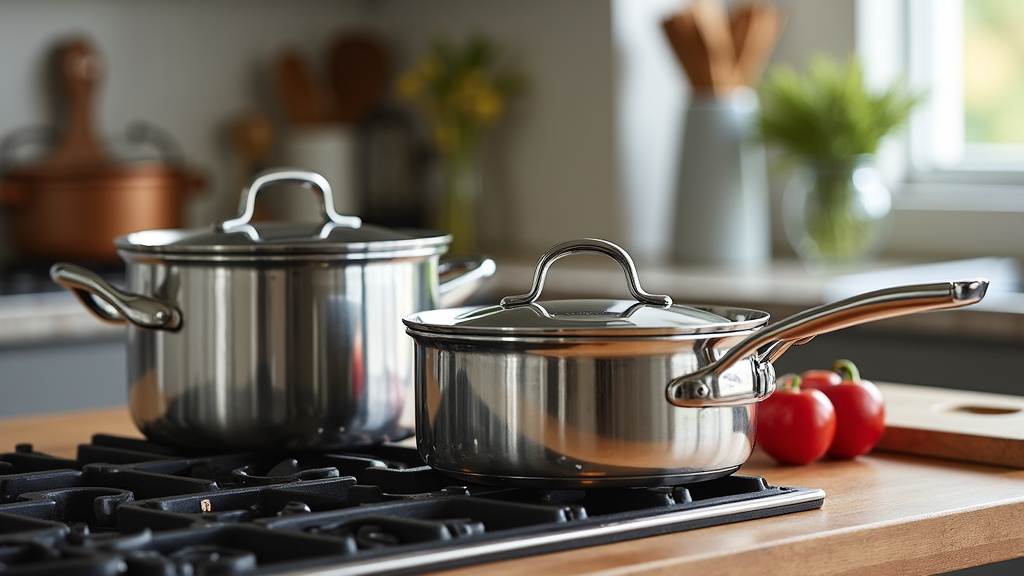
Why Cladding Up the Walls Can Matter
Heat enters cookware from the burner and spreads through its materials. When cookware material and cooking performance, the walls can participate more evenly in heating the food.
This is especially useful when:
- a sauce climbs the walls as you whisk;
- food fills a saute pan above its base;
- you reduce liquid across a broad vessel;
- the pan moves between stovetop and oven, within its stated limits.
The benefit is less important when the contents are mostly water. In a tall stockpot, circulating liquid distributes heat, so a substantial disc base may perform the task efficiently without clad walls.
Marketing check: “Clad,” “multilayer,” and “stainless” do not always mean fully clad. Look for an explicit statement that the bonded layers extend from the base to the rim.
Fully Clad Does Not Tell You Everything
Two fully clad pans can feel and cook differently. Total thickness, the amount of conductive metal, pan diameter, wall shape, handle design, and weight all influence performance.
Ply Count Is Not a Quality Score
Three-ply commonly means three bonded layers; five-ply means five. More layers do not guarantee more conductive metal or faster response. A well-designed three-ply pan can outperform a thin or poorly balanced five-ply pan.
Weight Changes Handling
Extra layers and thicker construction can add stability, but they also make tossing, pouring, and washing harder. Consider the pan’s weight when filled, not just when empty.
The Exterior Determines Induction Compatibility
Aluminum and copper are not inherently induction-compatible. A fully clad pan needs a suitable magnetic exterior layer to work on induction. Check the exact product specification.
Fully Clad vs. Disc Bottom
- Choose fully clad when wall heating, responsiveness, and an even transition from base to sides matter.
- Consider disc bottom for liquid-heavy stockpots, budget-conscious purchases, or when you want more mass concentrated beneath the cooking surface.
- Inspect either design for a flat base, secure handles, practical weight, and a disc or clad layer that covers the usable cooking area.
Best way to compare two pans
Ignore the construction label for a moment. Compare usable surface area, total weight, layer thickness, handle comfort, cooktop compatibility, and the exact tasks you need the pan to perform.
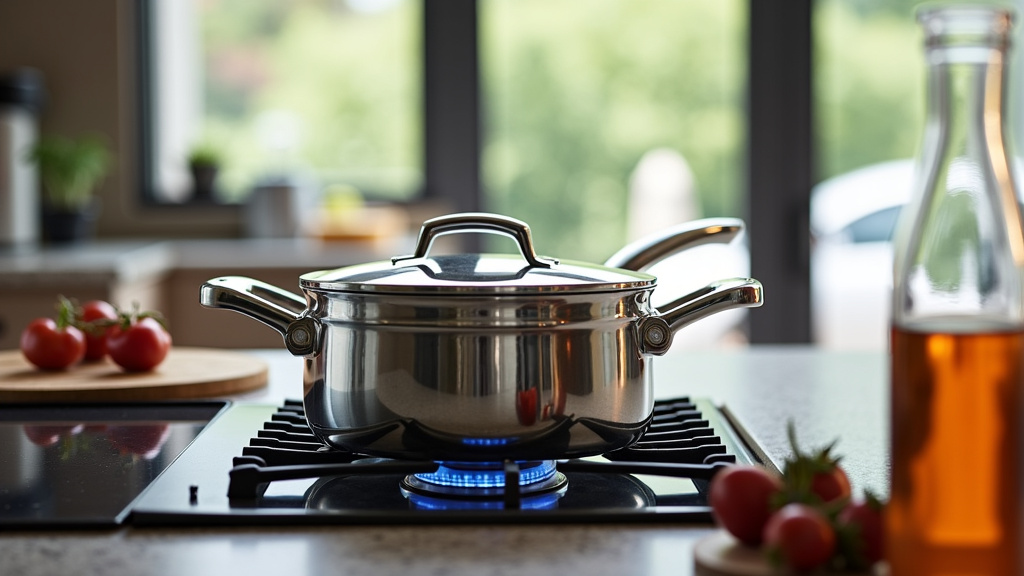
How to Use Fully Clad Cookware
- Start with moderate heat. Conductive cores often need less burner output than expected.
- Preheat gradually. Add oil and food at the appropriate stage for the recipe.
- Use the full surface. Avoid crowding when browning so moisture can escape.
- Lower heat promptly. Responsive construction rewards active temperature control.
- Cool before washing. Sudden temperature changes can stress cookware.
Common Misunderstandings
- Assuming a visible seam at the base always means full cladding
- Believing five-ply is automatically better than three-ply
- Expecting clad stainless to release food like nonstick
- Assuming every fully clad pan works on induction
- Ignoring the lower heat limit of the lid, knob, or handle
The Bottom Line
Fully clad cookware carries its bonded layers from the base through the side walls. That can support more consistent wall heating and responsive stovetop control.
Judge the finished pan, not the label alone. Thickness, materials, shape, weight, and compatibility determine whether the construction is useful in your kitchen.
Frequently Asked Questions
Can you see whether cookware is fully clad?
Sometimes the layered edge is visible at the rim, but appearance is not reliable. Use the manufacturer’s construction specification.
Is fully clad cookware nonstick?
Not unless it has a separate nonstick coating. Bare stainless fully clad cookware requires normal stainless-steel heat and oil technique.
Is fully clad better for a stockpot?
Not necessarily. Because liquid circulates heat, a well-made disc base may be sufficient and can reduce cost or weight.
Does fully clad cookware warp?
Any cookware can be damaged by excessive heat or thermal shock. Substantial construction may improve stability, but follow the exact care instructions.


