How to Use a Knife Sharpener Rod
To use a knife sharpener rod, hold it tip-down on a stable surface and draw the knife heel to tip along the rod at a consistent angle. A honing rod realigns a slightly rolled edge; abrasive rods remove metal, and a very dull knife may need a sharpener or whetstone.
On this page (9 sections)
- How do you use a knife sharpener rod safely?
- What does a honing rod do to a knife edge?
- What angle should you use on a knife rod?
- Should the rod tip touch the cutting board?
- How many strokes should you make on each side?
- When should you use a honing rod instead of a sharpener?
- Which tools help when honing isn't enough?
- How do you maintain a rod and knife edge?
- What should you remember when using a knife sharpener rod?
To use a knife sharpener rod, steady the rod tip-down on a stable surface and draw the knife heel to tip along it at a consistent angle. A smooth honing rod realigns a slightly rolled edge; an abrasive rod removes metal, and a very dull knife may need a sharpener or whetstone.
The safe technique is slow and controlled. Keep your fingers behind the guard or handle, use light pressure, and stop if the blade slips or the knife maker advises against rod honing.
How do you use a knife sharpener rod safely?
Place the rod tip-down on a cutting board or folded towel, then make light strokes from the knife heel to its tip. Keep the blade at the same angle on both sides.
- Hold the rod handle firmly, with its tip resting on a stable surface.
- Hold the knife by its handle, keeping fingers clear of the blade.
- Set the heel of the blade near the rod handle at the chosen angle.
- Draw the blade down and across the rod, moving from heel to tip.
- Repeat on the other side with the same light pressure.
- Alternate a few strokes per side, then check the edge.
The blade should travel along the rod in one controlled motion. Don't saw back and forth, press hard, or let the edge scrape across the rod at an uneven angle.
What does a honing rod do to a knife edge?
A smooth steel rod mostly realigns a slightly rolled edge; it doesn't restore a badly worn edge. Ceramic and diamond rods are abrasive and remove metal as they sharpen.
Compare ceramic and steel honing rods before choosing.
A knife edge can bend slightly during routine cutting. Honing can move that edge back into line, which may help the knife cut more cleanly for a while.
A dull knife may have lost enough metal that realignment alone can't help. If a few gentle strokes don't improve the cut, switch to a sharpening stone or a suitable knife sharpener.
For a closer look at the distinction, read what a honing rod does for a knife. The materials and edge condition matter when choosing between honing and sharpening.
What angle should you use on a knife rod?
Match the knife's existing edge angle and keep it steady. Many common kitchen knives use an angle in the range of about 15 to 20 degrees per side, but the right angle depends on the knife.
If you already know the knife's angle, use it as a guide. If you don't, check the knife maker's care instructions rather than guessing with a steep angle.
A consistent angle matters more than fast strokes. Tilting the blade during a pass can round the edge instead of aligning or sharpening it.
How to use a knife sharpener rod at a steady angle
Use a visual cue: hold the blade at a low angle to the rod and avoid changing the gap as the knife moves. Move your whole arm smoothly so the angle stays similar from heel to tip.
Some rods include angle guides, while others require you to control the blade position yourself. A guide can help keep the angle consistent, but it doesn't replace careful strokes.
Should the rod tip touch the cutting board?
Yes, resting the rod tip on a stable surface can make the movement easier to control. Keep the surface from sliding and use a board or towel that won't shift under light pressure.
This vertical method gives your other hand room to guide the knife handle. Keep your fingers away from the blade's path, and don't hold the rod in the air if that makes it wobble.
A horizontal stroke is another option for people who can control the rod securely. Whichever position you choose, the knife and rod should stay stable throughout the pass.
How many strokes should you make on each side?
Begin with 3 to 5 light, alternating strokes per side, then check the edge. More strokes aren't automatically better, especially with abrasive rods that remove metal.
Use fewer strokes when the edge only needs a quick realignment. Stop if the blade feels sharp enough for its normal work, or if you notice the knife catching or slipping during a pass.
If the knife remains dull, don't compensate by pressing harder. It likely needs actual sharpening, or its edge may need professional attention.
When should you use a honing rod instead of a sharpener?
Use a smooth honing rod for routine edge alignment and a sharpener when the edge has become dull or damaged. A ceramic or diamond rod can sharpen because its abrasive surface removes metal.
The right choice depends on how the knife cuts and what the rod is made of. Compare honing rod vs knife sharpener if you're deciding which tool fits your kitchen.
For the rod itself, best honing rods for kitchen knives can help you compare options by material and intended use. A diamond rod, for example, is an abrasive sharpening tool, as covered in this guide to the best diamond honing rod.
Can you use a rod on every kitchen knife?
No. Follow the knife maker's care guidance, particularly for serrated blades, very hard steel, thin edges, or specialty knives.
A rod designed for straight edges may not fit the shape of a serrated blade. If you use different types of kitchen knives, check whether each one can be honed and what angle it needs.
Which tools help when honing isn't enough?
Choose a real sharpening tool when the knife stays dull after careful honing. The right tool depends on whether you want guided electric sharpening or a water-based whetstone setup.
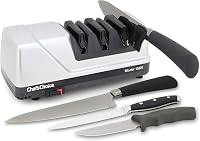
The Chef'sChoice 15XV is an electric option with 3 stages, diamond abrasives in stages 1 and 2, and flexible spring guides. See how to use the sharpener for its steps.
Its design supports straight-edge and serrated knives, with guidance for creating a 15-degree edge.
A guided sharpener can suit someone who wants the machine to help control the angle. Follow the sharpener's instructions and confirm the process is appropriate for your knife before using it.
The Sharp Pebble whetstone has 1000 and 6000 grit surfaces, a bamboo base, and an angle guide. It uses water-based sharpening, so it suits someone willing to work through stone sharpening rather than use an electric tool.
A stone takes practice to use consistently, even with an angle guide. Keep the stone and knife stable, and follow its instructions for preparing and cleaning the stone.
How do you maintain a rod and knife edge?
Clean the rod as its maker directs and store it where the rod and knife edges won't bang together. A chipped or damaged rod can make honing less predictable.
Use a knife rod only when the edge needs alignment, rather than after every cut. For ordinary food preparation, a suitable cutting board and careful storage also help avoid unnecessary edge damage.
For safe cutting technique with a Chinese cleaver, see how to use a Chinese cleaver.
A ceramic bowl is useful for serving food after prep, but it doesn't sharpen or hone knives. The DOWAN set includes 4 porcelain bowls with a 22 oz stated size and is described as suitable for cereal, soup, salad, fruit, and rice.
Keep the bowl product separate from sharpening decisions; it supports meal prep, not edge care. For knife-specific care, use the rod or sharpener that fits the blade and follow the knife maker's instructions.
What should you remember when using a knife sharpener rod?
For a slightly rolled edge, use a few light, steady strokes on a smooth honing rod. If the knife stays dull, use an abrasive rod, whetstone, or electric sharpener suited to that blade.
Keep the rod tip stable, match the existing edge angle, and move from heel to tip without pressing hard. Choose a true sharpener when honing no longer restores the cut, and check specialty knives before using any rod.
Frequently asked questions
Does a honing rod sharpen a knife?
A smooth steel honing rod mainly realigns a slightly rolled edge, so it can feel sharper without removing much metal. Ceramic and diamond rods are abrasive and remove metal as they sharpen.
If the edge is blunt, damaged, or still slips after honing, use a sharpening method suited to the knife.
What angle should I use on a honing rod?
Use the angle that matches the knife's existing edge, which is often around 15 to 20 degrees per side for common kitchen knives. Keep the angle steady through each stroke.
If you don't know the edge angle, check the knife maker's care guidance instead of forcing a new bevel.
How many strokes should I use on a knife rod?
Start with 3 to 5 light, alternating strokes per side, then check how the knife cuts a suitable food. The exact number depends on the rod and the edge condition.
Avoid pressing hard or repeating strokes once the edge feels aligned, since abrasive rods remove metal.
Can you use a honing rod on every kitchen knife?
No. Check the knife maker's care instructions, especially for very hard, thin, serrated, or specialty blades.
A rod can damage an edge if its angle or material doesn't suit the knife.
Serrated knives usually need a tool designed for their scalloped edge.