Honing Rod vs Knife Sharpener: Which Do You Need? (November 2026)
Choose a honing rod for routine edge realignment and a knife sharpener when the edge needs worn steel removed. The right tool depends on whether your knife is misaligned or genuinely dull.
On this page (9 sections)
- Honing rod vs knife sharpener: what is the difference?
- When should you use a honing rod?
- When should you use a knife sharpener?
- Which knife sharpener suits your routine?
- Can a honing rod replace a whetstone?
- Are diamond rods different from steel honing rods?
- How do you choose between the 4 tools?
- How should you care for a honing rod or sharpener?
- Final choice: honing rod or knife sharpener?
Choose a honing rod for routine edge realignment and a knife sharpener when the blade has lost enough steel to need reshaping. The choice depends on the condition of the knife, not just the tool name.
A honing rod moves a slightly displaced edge back into alignment. A sharpener uses an abrasive surface to remove worn metal and form a fresh edge.
That difference matters because sharpening removes more material than honing. Use the lightest tool that solves the problem, then move to abrasive sharpening when the edge no longer responds.
If a knife still cuts but feels rough or drags through soft food, it may only need realignment. A few light passes on a fine rod can restore a smooth feel without changing the blade shape.
If the knife pushes food aside, tears instead of slicing, or has a visibly rounded or chipped edge, alignment alone will not fix it. It needs abrasive sharpening to remove worn steel and create a new cutting surface.
Many home cooks keep both tools because they cover different stages of care. The rod handles shifts from daily prep, while the sharpener handles slower wear over weeks or months.
Think of honing as upkeep and sharpening as repair. Upkeep should happen more often, while repair should happen only when needed.
Choosing in that order protects the knife and saves effort. You avoid grinding steel from a blade that only needed alignment, and you avoid wasting time honing a blade that needs sharpening.
Your routine also matters, as daily prep creates more edge movement than occasional cooking. A cook who chops vegetables every evening will use the rod more than someone who cooks once a week.
Straight edge and serrated knives can also respond differently, so let the knife guide the choice. Start light, test the edge on food, and sharpen only when honing stops helping.
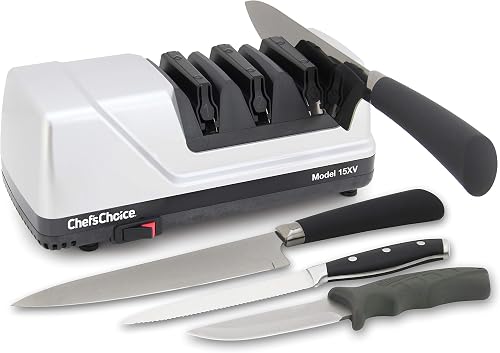 Best for guided electric sharpening
Chef's Choice Chef’sChoice 15XV EdgeSelect Professional Electric Knife

Honing rod vs knife sharpener: what is the difference?
A honing rod maintains an existing edge, while a knife sharpener rebuilds an edge with abrasive material. The two tools can sit in the same kitchen because they serve different points in a knife's care cycle.
During cutting, the edge can shift slightly even when the knife is not damaged. A fine steel rod can help realign that edge so the knife feels smoother through food.
A sharpening stone, diamond abrasive or powered sharpener removes some steel. That process is useful when the edge is rounded, chipped or too dull for a few light honing passes to help.
The phrase “knife sharpener” covers several tools. It can mean a whetstone, a guided manual sharpener or an electric model, so check what the tool actually removes and how it controls the angle.
For background, see our guide to what is a honing rod for a knife. It explains why a rod is part of maintenance rather than a replacement for every sharpening method.
When should you use a honing rod?
Use a honing rod when your knife still cuts but feels less smooth or less precise than before. A few controlled passes can restore alignment without the more aggressive metal removal associated with sharpening.
A rod is suited to regular care before cooking or after repeated use. It helps maintain a working edge between less frequent sharpening sessions.
The Utopia Kitchen rod has a 12-inch fine carbon steel surface with nickel-chrome plating. Its non-slip rubber bottom and hanging loop suit cooks who want a rod that can be stored close to the prep area.
The ALLWIN-HOUSEWARE W rod also measures 12 inches and uses a fine carbon steel honing surface. Its non-slip handle, anti-slip metal tip and hanging loop support a braced honing position.
Learn the basic motion in how to use a knife sharpener rod, then keep the strokes light. Pressing hard does not make a rod work better and can make control harder.
How often should you hone a knife?
Hone when the knife's cutting feel declines, rather than following a rigid calendar. A cook who uses the same chef knife every day may need maintenance more often than someone who cooks occasionally.
Keep the rod stable and move the blade through the intended angle with controlled strokes. Work along the full edge instead of concentrating on one short section.
The correct angle depends on the knife and rod. A rod does not automatically convert every blade to a new bevel, so follow the knife or tool guidance when an angle is specified.
When should you use a knife sharpener?
Use a knife sharpener when honing no longer restores the edge or when the blade has a rounded or damaged section. Sharpening creates a new edge by removing worn steel.
A whetstone gives you manual control over the process. The Sharp Pebble stone has 1000 and 6000 grits, an angle guide and a bamboo base.
The 1000 grit is the working side for a dull or damaged edge. The 6000 grit is the finer side for polishing, so the stone supports both stages in one setup.
A powered sharpener is more suitable when you want guided sharpening with less manual angle control. The Chef’sChoice 15XV uses 3 stages, 100-percent diamond abrasives and flexible spring guides.
The 15XV is designed to convert traditional 20-degree factory edges into 15-degree Trizor XV edges. That is a meaningful change in edge geometry, so choose it when that design fits your knives and cutting preferences.
Which knife sharpener suits your routine?
Both can remove worn steel, but they ask for different levels of setup and attention.
The Sharp Pebble needs water, a stable base and a sequence from the coarser 1000 grit to the finer 6000 grit. Its angle guide can help beginners keep the blade position consistent.
The Chef’sChoice 15XV uses a simple on/off switch and flexible spring guides. Its 3 stages sharpen, hone and polish, and it works with both straight edge and serrated knives.
Speed is another difference. The Chef’sChoice product information gives about 1 minute for first-time sharpening and about 10 seconds for resharpening.
A whetstone is better suited to cooks who want to control each stage rather than use an electric process.
If you want to compare broader blade styles before choosing a care method, our guide to types of kitchen knives covers common knife shapes and uses.
Can a honing rod replace a whetstone?
A honing rod cannot replace a whetstone when the knife needs substantial steel removal. It can extend the time between sharpening sessions, but it does not do the same abrasive job.
Think of the rod as routine maintenance. It keeps an edge aligned after normal cutting, while a whetstone handles a dull edge that has lost its working shape.
A 1000-grit stone suits a knife that no longer responds to honing. The 6000-grit side then refines the edge after the main work.
Do not use a rod to correct every chip or severely rounded edge. Repeated passes will not match the repair from a suitable abrasive surface.
A honing rod works because its fine steel surface nudges a bent edge back into line. It is not designed to grind away much metal or rebuild a worn bevel.
A whetstone works differently, as its abrasive grit cuts steel until a fresh edge forms. That process is slower and more deliberate, but it solves problems a rod cannot reach.
The two tools therefore work well together. The rod helps a sharp knife feel sharp for longer, and the stone restores it when wear builds up.
Consider a chef knife used for many meals without sharpening. It may still feel dull after careful honing, and extra rod passes will only add frustration.
At that point, a 1000-grit surface can remove the worn area and establish a clean edge. The 6000-grit side can then polish it so it glides more smoothly through food.
The setup takes more time than honing, because a whetstone needs water and a stable base. That extra step is worthwhile when the knife needs repair rather than light maintenance.
Using a rod first also means you sharpen less often. That preserves more blade for future use, and a rod can delay but not erase months of wear.
Are diamond rods different from steel honing rods?
Diamond rods use an abrasive surface, while traditional steel rods mainly realign the edge. That makes a diamond rod closer to a light sharpening tool, although the amount of steel removed depends on its surface and use.
Choose carefully if you want maintenance with minimal material removal. A traditional fine steel rod is the clearer fit for alignment-focused care.
For a closer look at that category, see our guide to best diamond honing rods. Compare the surface type with the condition of your knives before choosing.
A rod should also match how you hold and store it. The Utopia Kitchen model has a hanging loop and a non-slip rubber bottom, while the ALLWIN-HOUSEWARE W model has a hanging loop and anti-slip metal tip.
How do you choose between the 4 tools?
Pick the tool that matches the edge problem and your preferred sharpening process. A quick decision rule keeps you from using an abrasive sharpener when a rod would be enough.
Choose the Utopia Kitchen rod for fine daily maintenance and broad knife compatibility. It is designed for kitchen, household, sporting and pocket knives, including standard and serrated edges.
Choose the ALLWIN-HOUSEWARE W rod for regular chef-knife care with a braced tip. Its fine carbon steel surface is intended to realign rather than aggressively grind the blade.
Choose the Sharp Pebble whetstone when you want water-based manual sharpening with 1000 and 6000 grits. The angle guide and bamboo base help create a more structured setup.
Choose the Chef’sChoice 15XV when you want electric, guided sharpening for straight edge and serrated knives. Its 15-degree Trizor XV design is best for cooks who want that specific edge conversion.
The best honing rods for kitchen knives can help you compare rod designs if your main need is ongoing edge care. If the blade is already very dull, focus on abrasive sharpening instead.
How should you care for a honing rod or sharpener?
Keep each tool clean, dry and stored where its working surface will not be damaged. Care is simple, but moisture and careless storage can shorten the useful life of a sharpening tool.
The Utopia Kitchen rod should be wiped with a non-woven cloth soaked with cooking oil, then dried. If it is washed with water, dry it completely and hang it in a cool place.
It is not dishwasher safe.
The ALLWIN-HOUSEWARE W rod also needs to be wiped dry after use. Its hanging loop gives you a simple storage option, while the anti-slip tip helps keep it stable during honing.
For the Sharp Pebble, use water-based sharpening as directed and keep the stone supported by its bamboo base. Let the setup dry according to its care instructions before putting it away.
Keep an electric sharpener dry and unplugged when it is not in use. Use the guides as designed, and avoid forcing a blade through the stages.
Final choice: honing rod or knife sharpener?
Choose a honing rod for routine realignment, and choose a knife sharpener when the edge needs worn steel removed. That is the central honing rod vs knife sharpener rule.
Pick the Utopia Kitchen or ALLWIN-HOUSEWARE W rod for regular kitchen maintenance. Pick the Sharp Pebble for manual sharpening and polishing, or the Chef’sChoice 15XV for guided electric sharpening with a 15-degree edge design.
Use a rod between sharpening sessions, then sharpen only when the knife's cutting performance shows that alignment alone is no longer enough.
The Utopia Kitchen rod suits cooks who want fine daily care for kitchen, household, sporting and pocket knives. Its 12-inch carbon steel surface, non-slip rubber bottom and hanging loop make routine use and storage straightforward.
The ALLWIN-HOUSEWARE W rod is a strong fit for frequent chef-knife upkeep at home. Its 12-inch fine carbon steel surface, non-slip handle and anti-slip metal tip support a stable, braced honing position.
The Sharp Pebble whetstone suits cooks who prefer water-based manual sharpening. Its 1000 grit handles dull or damaged edges, its 6000 grit polishes the finish, and the angle guide and bamboo base help beginners set up with more confidence.
The Chef’sChoice 15XV suits cooks who want guided electric sharpening for straight edge and serrated knives. Its 3-stage system, 100-percent diamond abrasives and flexible spring guides are built around creating a 15-degree Trizor XV edge.
Each option has a clear place in a routine, and none needs to do every job. A rod keeps an edge aligned, a whetstone rebuilds it by hand, and an electric sharpener rebuilds it with guided power.
Start by testing your knife after a few light honing passes, because that test tells you what the blade actually needs. If cutting feels smooth again, stop there and save the sharpening for another day.
If the knife still struggles, move to the sharpener that matches your preferred pace and level of control. That simple order keeps knife care effective without removing more steel than necessary.
Frequently asked questions
Is a honing rod the same as a knife sharpener?
A honing rod and a knife sharpener do different jobs. A rod mainly realigns an edge that has shifted during use, while a stone or powered sharpener removes worn steel to create a new edge.
Use the rod for routine upkeep and a sharpener when honing no longer restores cutting performance.
Should I use a honing rod or a sharpener first?
Start with a honing rod if the knife still cuts but feels less smooth. If light honing does not improve the edge, use a sharpening tool such as a whetstone or electric sharpener.
Removing steel too often can shorten the useful life of a knife.
Can a honing rod sharpen a completely dull knife?
A honing rod is not the right first choice for a completely dull knife. It can realign a slightly displaced edge, but a very dull or damaged edge usually needs abrasive sharpening from a whetstone or a powered sharpener.
What is the best tool for a beginner?
A guided electric sharpener is the simplest option when you want repeatable angle control, while a honing rod is simpler for routine maintenance. The Chef’sChoice 15XV has flexible spring guides and 3 stages; the Sharp Pebble whetstone includes an angle guide for manual sharpening.