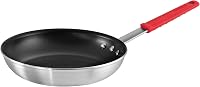
Why Can Two Pans with the Same Diameter Hold Different Amounts?
On this page (11 sections)
- The Dimensions That Change Capacity
- Why Rim Diameter Tells Only Part of the Story
- Same Diameter, Different Cooking Jobs
- How to Compare Capacity Accurately
- Practical Capacity Is Lower Than Total Capacity
- How Shape Changes Performance Beyond Volume
- Common Comparison Mistakes
- A Simple Shape Thought Experiment
- The Bottom Line
- Frequently Asked Questions
- Sources and Further Reading
Quick answer: Diameter measures width at one point, while capacity depends on depth and the entire interior profile. At the same rim diameter, a deeper pan with straighter walls usually holds more than a shallow pan with strong flare and broad curves.
That is why two pans carrying the same nominal size can differ in both quart capacity and usable cooking area.
The Dimensions That Change Capacity
| Feature | Effect on volume |
|---|---|
| Depth | More vertical height generally adds capacity |
| Wall angle | Straight walls preserve width lower in the pan |
| Corner radius | Broad curves reduce lower-wall volume |
| Fill line | Brimful and practical capacities are different |
Why Rim Diameter Tells Only Part of the Story
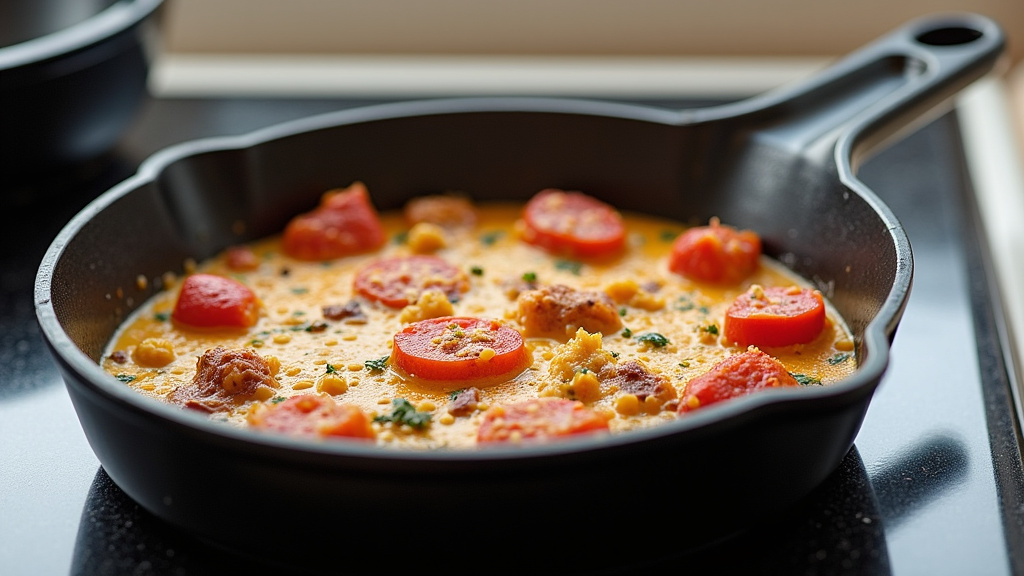
Nominal diameter is usually measured at the top opening. Two pans can therefore match at the rim even though one narrows sharply toward a small base and the other stays wide almost to the bottom.
The straight-sided pan preserves more cross-sectional area through its depth. The flared skillet gives up volume in exchange for easier turning and faster evaporation.
Simple comparison: Diameter describes the opening. Capacity describes the three-dimensional space underneath it.
Same Diameter, Different Cooking Jobs
A shallow flared skillet may be better for eggs, cutlets, and foods that need turner access. A deeper straight-sided sauté pan may be better for sauces, braises, and meals that begin with searing and end with liquid, much like the saucepan and saucier comparison.
More volume does not automatically mean more flat browning area. Compare the interior floor separately. A deep pan can hold more while still offering a smaller level surface than another shape. For another look at cooking surface choices, see the griddle and skillet comparison.
How to Compare Capacity Accurately
- Measure rim diameter through the center.
- Measure the flat interior floor before the wall curve begins.
- Measure vertical depth from the lowest interior point to the rim.
- Observe whether the walls are straight, flared, or rounded.
- Use measured water to compare total volume when needed.
- Record a practical fill level that leaves headroom.
Use the same unit and fill line for both pans. Cookware labels may be rounded, so a small difference is not necessarily meaningful.
Practical Capacity Is Lower Than Total Capacity
A pan filled to the rim cannot be stirred or carried safely. Bubbling, foam, and solid ingredients all need room. A high-capacity pan can still feel crowded when the recipe requires vigorous movement. This guide explains how to judge usable capacity below the rim for everyday cooking.
Compare like with like: Do not compare one brand’s brimful volume with another pan’s recommended working capacity.
How Shape Changes Performance Beyond Volume
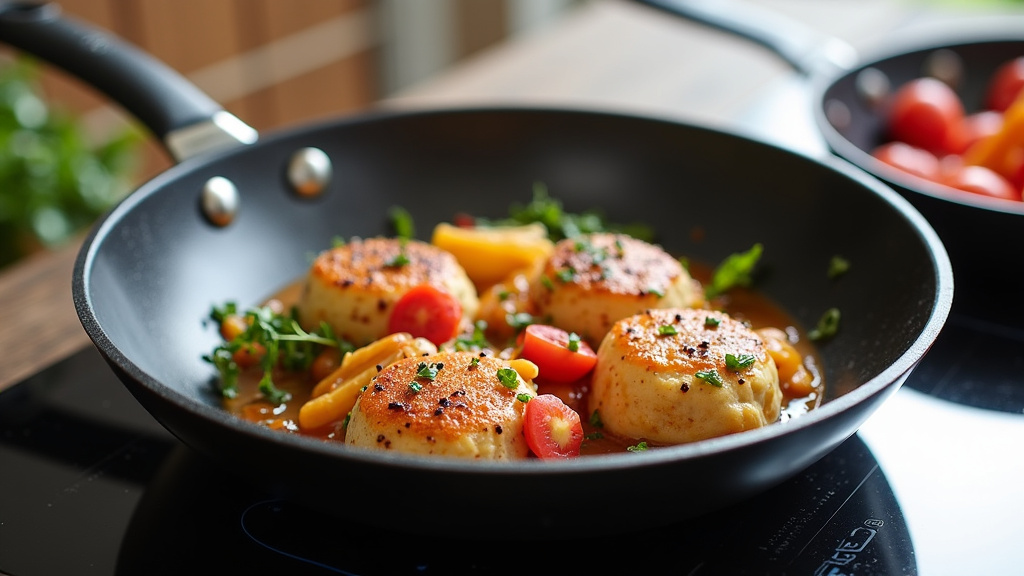
- Evaporation: wide openings expose more surface to air.
- Containment: tall walls reduce spills and splatter.
- Tool access: flared walls make turning easier.
- Reduction: broad surface can evaporate sauce faster.
- Storage: deeper pans need more vertical room.
- Handling: added capacity also adds loaded weight.
Common Comparison Mistakes
- Matching pans only by rim diameter
- Assuming a deeper pan has more flat floor
- Ignoring wall angle and corner curves
- Treating a rounded quart label as an exact laboratory result
- Ignoring safe headroom
- Buying capacity that exceeds burner, cabinet, or lifting limits
A Simple Shape Thought Experiment
Imagine two pans with identical openings. Pan A keeps nearly the same width as its walls descend. Pan B narrows continuously toward a much smaller floor. If both have the same depth, Pan A encloses more space.
Now make Pan B deeper. Its added height may recover some or all of the missing volume, even though it still offers less flat floor. That is why neither diameter nor depth alone can describe capacity.
The same idea applies to rounded corners. A tight transition from floor to wall preserves more volume near the bottom. A broad curve sacrifices some volume but can make whisking or tossing easier.
Decision point: Buy for the job. Choose floor area when one-layer contact matters, and choose safe usable volume when liquids or large batches matter.
The Bottom Line
Two same-diameter pans can hold different amounts because their depth and interior shape differ. Compare floor area for browning and full profile for capacity. The better pan is the one whose shape fits the recipe, not the one with the larger number alone.
Frequently Asked Questions
Does a deeper pan always hold more?
Greater depth usually adds volume, but wall flare, corner curves, and the chosen fill line also matter.
Why does a sauté pan hold more than a skillet?
Its straight walls often preserve width from the floor to the rim, while skillet sides flare outward.
Can two pans with the same capacity have different diameters?
Yes. A taller narrow vessel and a wider shallow vessel can hold similar volumes.
Which measurement predicts browning space?
The flat interior floor is more useful than rim diameter for estimating one-layer food contact.
How can I verify an unlabeled pan’s volume?
Add water in known measured amounts on a level surface and keep a running total. For a pot, this is a practical way to measure capacity in quarts.