How Is a Saucepan Different from a Saucier?
On this page (12 sections)
- Saucepan vs. Saucier at a Glance
- How Shape Changes the Way You Cook
- Best Uses for a Saucepan
- Best Uses for a Saucier
- Which One Is Better for Rice?
- Which One Is Better for Sauce?
- How to Choose the Right Size and Construction
- Technique Tips That Improve Results
- Common Mistakes to Avoid
- The Bottom Line
- Frequently Asked Questions
- Sources and Further Reading
Quick answer: A saucepan has straight sides and defined bottom corners, which contain liquid and work well with a lid. A saucier has rounded sides and a wider opening, making whisking, stirring, and reducing sauces easier.
Choose a saucepan for rice, reheating, boiling, and general liquid cooking. Choose a saucier for custards, gravy, risotto, and mixtures that need constant movement.
Both vessels have a long handle and can cook sauces, grains, and small batches of soup. The difference becomes noticeable when a whisk reaches the bottom.
A saucepan has a flat floor that meets the wall at a sharper angle. A saucier replaces that corner with a continuous curve, so food has fewer places to collect.
Saucepan vs. Saucier at a Glance
| Feature | Saucepan | Saucier |
|---|---|---|
| Wall shape | Straight and relatively tall | Curved and more open |
| Bottom corner | More defined | Rounded for whisk access |
| Evaporation | Narrower opening slows reduction | Wider opening encourages reduction |
| Best motion | Stirring and covered simmering | Whisking, folding, and continuous stirring |
| Typical jobs | Rice, soup, pasta, reheating | Sauces, custards, risotto, reductions |
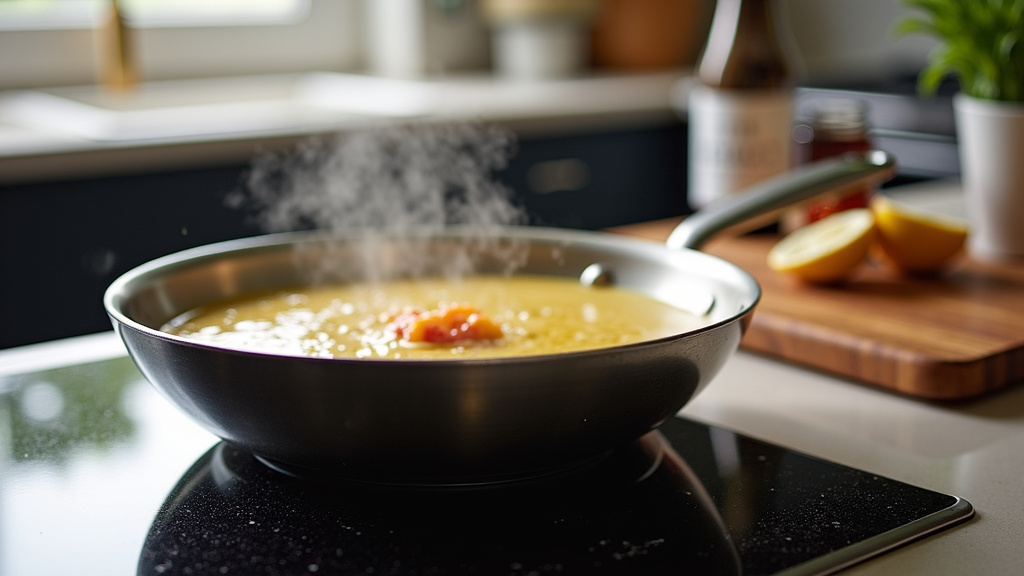
How Shape Changes the Way You Cook
The saucepan contains liquid
A saucepan’s straight walls provide useful depth without requiring a very wide burner. The smaller opening limits evaporation and helps a fitted lid sit above the liquid.
That makes it a practical choice for oatmeal, rice, hard-cooked eggs, reheated soup, and small portions of pasta or vegetables.
The saucier improves utensil access
A saucier’s rounded bottom lets a whisk follow the entire interior. There is no sharp corner where flour, egg, cheese, or thickened sauce can hide.
The broad opening exposes more liquid to air, so reductions can proceed faster. It also makes it easier to see texture changes while stirring.
Simple rule: Use the saucepan when you need to contain and cover. Use the saucier when you need to whisk, reduce, and watch texture.
Best Uses for a Saucepan
- Cooking rice or grains: straight sides and a lid support controlled absorption.
- Heating soup: depth contains bubbling liquid and reduces splatter.
- Boiling eggs or vegetables: the compact footprint saves burner space.
- Reheating leftovers: moderate depth works for small portions.
- Making simple sauces: frequent stirring still works when the mixture is not prone to collecting in corners.
A saucepan is generally the more versatile first purchase because its shape handles both covered and uncovered liquid cooking.
Best Uses for a Saucier
- Cheese sauce and gravy: a whisk can reach the curved base.
- Custards and curds: continuous stirring is easier and more complete.
- Risotto: the open shape provides access while the rice is stirred.
- Reductions: the wider surface releases moisture efficiently.
- Caramel or sugar work: the curved interior can make controlled stirring easier when the recipe calls for it.
A saucier is not limited to sauce. It can handle oatmeal, soup, grains, and reheating, though its open profile may evaporate liquid faster than expected.
Which One Is Better for Rice?
A straight-sided saucepan with a close-fitting lid is usually the simpler choice. Its narrower opening loses less moisture, and its geometry makes a water-to-grain ratio easier to repeat.
A saucier can cook rice, but its wider opening may change evaporation. If you switch vessels, use the food’s doneness and the manufacturer’s or recipe’s directions rather than assuming identical timing.
Which One Is Better for Sauce?
For a sauce that needs frequent whisking, the saucier has a clear ergonomic advantage. The curved bottom helps prevent unmixed material from remaining at the edge.
For a thin sauce that mainly simmers under a lid, a saucepan works well. The technique matters more than the word “sauce” in the cookware name.
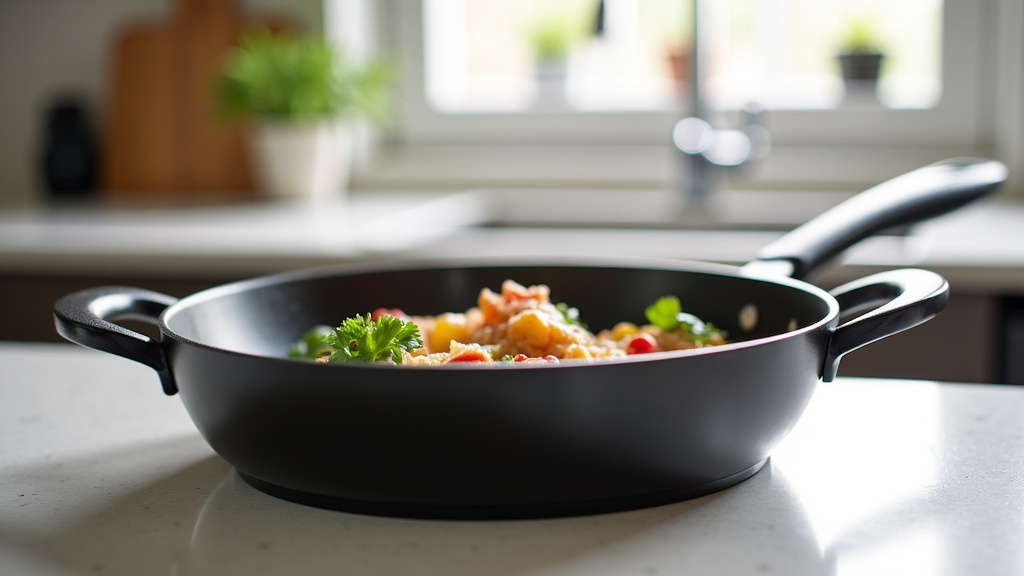
How to Choose the Right Size and Construction
Capacity labels tell you how much a vessel can hold, but they do not show how comfortably you can stir it. Leave headroom for bubbling and utensil movement.
- Match capacity to normal batch size. An oversized vessel spreads a small sauce thinly; an undersized vessel splashes.
- Check the base diameter. It should sit securely on your burner.
- Test handle balance. A full pan should not feel as if it wants to tip.
- Confirm lid availability. A saucepan benefits from a fitted lid; some sauciers include one and some do not.
- Review material and coating rules. Utensils, heat level, cleaning, and induction compatibility vary.
Technique Tips That Improve Results
Use the right utensil
A balloon whisk benefits from a saucier’s curve. A spoon or silicone spatula may be more practical in a narrow saucepan. Use tools approved for the cooking surface.
Control the burner
Choose a burner close to the size of the base. Flames or intense heat extending beyond the bottom waste energy and can overheat handles or discolor sidewalls.
Watch reduction in a saucier
The wider opening can reduce a mixture faster. Stir and check consistency frequently rather than following time alone.
Safety check: Do not fill either vessel to the rim. Leave enough space for bubbling and stirring, and turn the long handle away from traffic while keeping it clear of neighboring burners.
Common Mistakes to Avoid
- Buying by capacity without checking interior shape
- Using a whisk that cannot reach a saucepan’s corners
- Ignoring faster evaporation in a wide saucier
- Choosing a size that becomes difficult to lift when full
- Assuming every handle and lid shares the pan body’s oven limit
Which should you buy first?
For general cooking, start with a medium lidded saucepan. Add a saucier if you regularly make whisked sauces, custards, risotto, or reductions and want easier corner-free access.
The Bottom Line
A saucepan is a compact, straight-sided vessel built for contained liquid cooking. A saucier trades some containment for a curved interior and wider opening. Choose by the motion and moisture control your recipes require.
Frequently Asked Questions
Can a saucier replace a saucepan?
Often, yes. Expect faster evaporation and check whether the saucier includes a suitable lid for covered recipes.
Is a saucier only for sauces?
No. It can cook grains, oatmeal, soup, custards, and other foods. Its main benefit is easy stirring and whisking.
Why are saucier sides curved?
The curve removes the sharp bottom corner, allowing a whisk or spatula to sweep the interior more completely.
Which is easier to pour from?
That depends on the rim, weight, handle balance, and whether the exact model has a pouring lip. Shape alone does not decide it.
Does a saucier reduce liquid faster?
Its wider opening often exposes more surface area, which can increase evaporation compared with a narrower saucepan of similar capacity.


