How Much Usable Capacity Does a Pot Have Below the Rim?
On this page (10 sections)
Quick answer: A pot’s usable capacity is always lower than its brimful capacity. There is no safe universal percentage because headroom depends on bubbling, foam, ingredient displacement, stirring, and the cooking method.
A calm stew may sit higher than pasta water. Frying oil requires far more margin and method-specific limits.
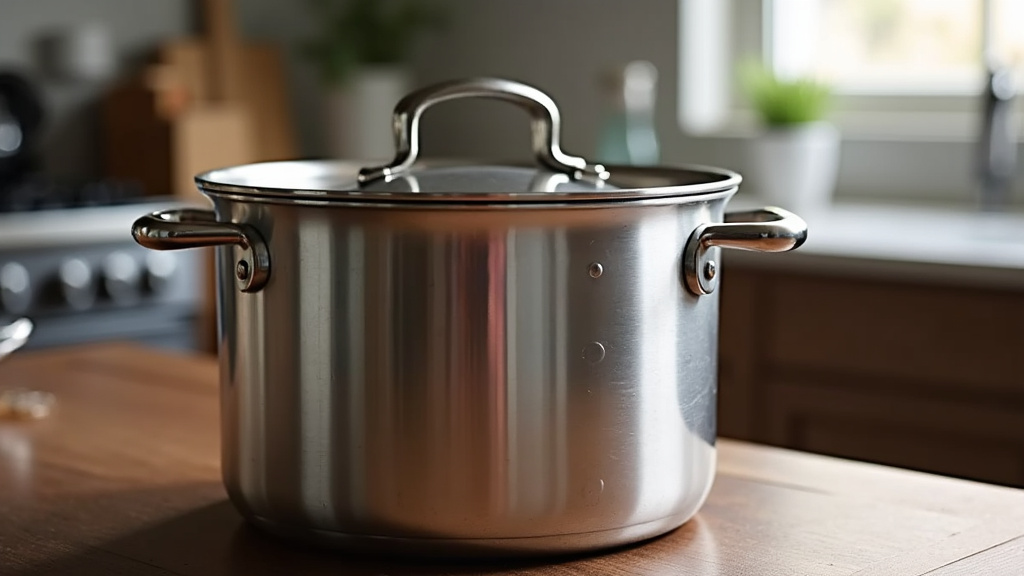
“Eight quarts” describes the vessel’s approximate total volume, not necessarily the amount you should cook at once. Usable capacity is the level that lets the food move without overflowing and lets you handle the pot safely.
What Uses the Space Above the Food?
| Factor | Why headroom matters |
|---|---|
| Boiling and foam | The liquid level can rise quickly |
| Displacement | Pasta, vegetables, and meat raise the level |
| Stirring | Tools and moving food need clearance |
| Transport | A lower level reduces sloshing near the rim |
Why One Fill Rule Does Not Work
Different foods behave differently. Pasta water can foam rapidly. Grains and beans expand. Soup may spatter when blended. A dense braise may move very little but become heavy and awkward to lift.
Heat level matters too. A gentle simmer is easier to contain than a vigorous boil. Lid position can temporarily trap foam or condensation, changing the risk near the rim.
Best method: Choose the fill level from the food’s behavior and the next step in the recipe—not from the capacity label alone.
Plan Usable Capacity Step by Step
- Identify the most active stage. Boiling, blending, and vigorous stirring need more room.
- Account for ingredients added later. Dry pasta, vegetables, and meat displace liquid.
- Allow expansion. Grains, legumes, and foamy starches can grow or rise.
- Consider the tool. A whisk, ladle, or immersion blender needs clearance.
- Check loaded handling. You should be able to move the pot without liquid approaching the rim.
Examples of Different Headroom Needs
Soup and stock
Leave space for stirring and for ingredients that may be added later. A large batch also becomes heavy, so carrying safety can set the practical limit before the rim does.
Pasta and starchy foods
Foam can climb rapidly. Use a sufficiently large pot, moderate the heat, and monitor it rather than relying on a lid to contain a rising boil.
Blended soup
An immersion blender displaces liquid and can create splashes. Lower fill levels improve tool control.
Frying
Hot oil can rise dramatically when food is added. Use a tested method and equipment-specific guidance; do not infer an oil limit from a general capacity percentage.
Critical safety point: Never carry a very full pot of hot liquid if it can be divided or allowed to cool. Keep handles secure and the path clear.
How Pot Shape Changes Usable Space
Tall walls provide more vertical headroom at a given floor area. A wide opening encourages evaporation and provides access, but can expose more moving liquid near the rim.
Strongly curved corners may reduce volume compared with straight sides. Two pots with the same nominal capacity can therefore feel different during stirring and transport.
Common Mistakes
- Using brimful capacity as recipe capacity
- Adding bulky ingredients after the liquid is already high
- Leaving no space for foam or expansion
- Using high heat to force a crowded pot
- Forgetting that tools displace liquid
- Choosing a batch too heavy to drain or carry safely
How to Find Your Pot’s Practical Level
Fill the cool pot with measured water to a conservative level, then measure pot capacity in quarts. Next, compare that level with the foods you actually cook.
For quiet soups, you may be comfortable slightly higher. For pasta, beans, or vigorous boiling, choose lower. If ingredients are added after the liquid, estimate their displacement before heating.
A temporary exterior note or a written kitchen reference is safer than scratching or modifying the vessel. Repeat the exercise for different uses if the same pot handles several very different recipes.
When to move up a pot size
Use a larger vessel when normal stirring brings food close to the rim, foam repeatedly threatens to escape, or the finished pot is too heavy to carry confidently. Extra room is often more useful than cooking at the maximum possible fill.
The Bottom Line
Usable capacity is the volume that leaves enough room for the food’s behavior, your tools, and safe handling. There is no one percentage for every recipe. Plan for the most active stage and choose a larger vessel when the margin is uncertain.
Frequently Asked Questions
Is usable capacity listed on cookware?
Usually the stated number is nominal total capacity. Product instructions may provide fill or use guidance.
Can I use a fixed two-thirds rule?
It may be a rough starting point for some foods, but it is not universally safe. Food behavior and method should determine the level.
Does a lid let me fill the pot higher?
No. A lid can retain heat and moisture, but it may also hide or trap rising foam.
Why is an oversized pot sometimes better?
Extra headroom improves stirring, foam control, and handling, provided the base fits the burner and the pot remains manageable.
How can I mark a practical fill level?
Measure with water, choose a suitable working level for common recipes, and record that volume without permanently modifying the pot.