How Do You Measure the Capacity of a Pot in Quarts?
On this page (11 sections)
- What Capacity Are You Measuring?
- How to Measure a Pot in Quarts
- Why the Label and Your Result May Differ
- How Much Headroom Should You Leave?
- Choosing a Pot from the Measurement
- Common Mistakes
- Useful Conversion Notes
- Three Practical Measurements
- The Bottom Line
- Frequently Asked Questions
- Sources and Further Reading
Quick answer: Put the empty pot on a level surface and add water with a known measuring container, keeping a running total. The amount that reaches the rim is brimful capacity; practical cooking capacity is lower because food needs headroom.
In U.S. measures, one liquid quart equals four cups or about 0.946 liters. Cookware labels may use rounded values.
Measuring with water is more reliable than estimating from height and diameter, especially when a pot has curved corners, sloped walls, or a thick base.
What Capacity Are You Measuring?
| Capacity | Meaning | Best use |
|---|---|---|
| Brimful | Volume to the top rim | Comparing total vessel volume |
| Usable | Volume below a safe working level | Planning real recipes |
| Recipe volume | Food plus liquid after displacement | Choosing the right pot for one dish |
How to Measure a Pot in Quarts
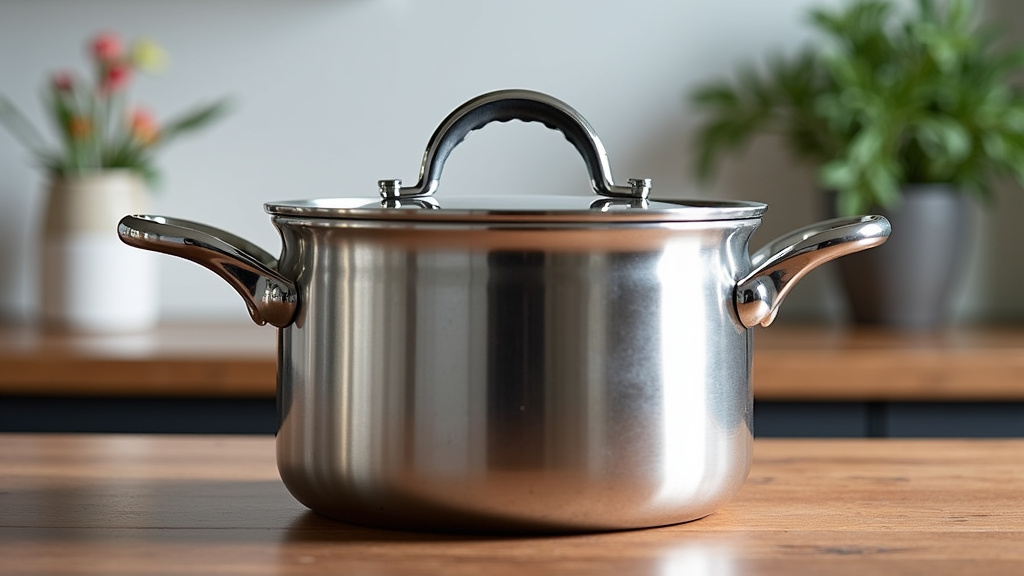
- Cool and empty the pot. Place it on a level counter or in a stable sink.
- Choose a known measure. A marked quart container reduces repeated pours; a reliable cup measure also works.
- Add water in equal amounts. Keep a written tally so you do not lose count.
- Stop at your chosen line. Measure to the rim for brimful volume or mark a safer level for practical use.
- Convert if needed. Four U.S. cups equal one U.S. liquid quart.
Read the measuring container at eye level and avoid estimating partial pours. For a more useful kitchen record, note both the total and the level that leaves comfortable stirring room.
Easy record: “Brimful: about 5 quarts; comfortable soup level: about 4 quarts” is more helpful than a single number.
Why the Label and Your Result May Differ
Manufacturers may round the stated capacity, use a different fill line, or apply measurement tolerances. U.S. and imperial quarts also are not the same size, and a liter conversion can introduce another small difference.
Your measuring cup can add error as well. The goal in a home kitchen is a consistent, practical result—not laboratory precision.
How Much Headroom Should You Leave?
There is no universal percentage. Calm soup needs less empty space than foamy pasta water. Beans, grains, and bulky vegetables can raise the level as they cook. Immersion blenders and vigorous stirring require room for movement.
Frying oil requires method-specific safety limits and should never be planned by a generic pot-capacity rule. Follow a tested recipe and the equipment instructions.
Safety check: A pot filled to the rim is not a usable cooking volume. Leave enough room for bubbling, stirring, ingredient displacement, and safe transport.
Choosing a Pot from the Measurement
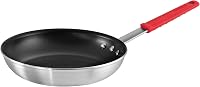
Capacity alone does not determine suitability. A tall narrow pot and a wide shallow pot can hold similar amounts but behave differently; see how pan shapes affect capacity. The wider opening encourages evaporation, while the taller shape may contain splatter and occupy a smaller burner footprint.
Also consider loaded weight. Water weighs roughly two pounds per U.S. quart, before counting the pot and food. Make sure the handles feel secure and the filled vessel is manageable.
Common Mistakes
- Measuring on a tilted surface
- Losing count during repeated pours
- Treating brimful volume as safe cooking volume
- Ignoring food displacement and expansion
- Comparing U.S. and imperial quarts as if they were identical
- Filling a heavy pot beyond what can be lifted safely
Useful Conversion Notes
- 1 U.S. liquid quart = 4 U.S. cups
- 1 U.S. liquid quart is approximately 0.946 liters
- 1 liter is approximately 1.057 U.S. liquid quarts
Conversions are convenient for recipes, but avoid stacking rounded conversions. If you measured the vessel in liters, keep that original figure and convert only when needed.
Three Practical Measurements
An unlabeled stockpot
Measure its brimful volume once, then record a lower working level for soup. This makes future batch planning faster.
A pot for pasta
Do not plan from water alone. Leave room for the pasta’s displacement, starch foam, and safe stirring.
A pot used with an immersion blender
Mark a conservative level that keeps the blender head submerged while leaving room for movement and splashing.
The Bottom Line
Measure a pot by adding a known amount of water and totaling the pours. Record usable pot capacity below the rim. The practical number—combined with shape, weight, and headroom—is the one that matters most for everyday cooking.
Frequently Asked Questions
How many cups are in a U.S. quart?
Four U.S. cups equal one U.S. liquid quart.
Can I measure capacity with liters?
Yes. One U.S. liquid quart is about 0.946 liters. Record the original measure to avoid repeated rounding.
Why does my measurement differ from the label?
Rounded labeling, the chosen fill line, measuring-container accuracy, and unit conventions can all create a difference.
Can I calculate capacity from dimensions?
You can estimate simple shapes, but water measurement is more practical for pots with curved corners, sloped sides, and irregular interiors.
Should I fill a four-quart pot with four quarts of food?
Usually not. Real cooking requires headroom, and the necessary amount varies by food and method.