Is Ceramic Cookware Non Toxic?
Ceramic cookware can be a non toxic choice when its coating is free of substances you want to avoid and you use it as directed. The term covers more than one material, so check what the coating is made of and how the maker says to care for it.
On this page (8 sections)
- Is ceramic cookware non toxic?
- What is ceramic cookware made of?
- Does ceramic cookware contain PFAS or PTFE?
- What should you check before choosing ceramic cookware?
- How should you use and care for a ceramic coated pan?
- Is ceramic cookware safer than stainless steel?
- Is ceramic cookware safe in the oven?
- How do you choose ceramic cookware for your kitchen?
Ceramic cookware can be a non toxic choice when its coating is made without substances you want to avoid and you use it as directed. The term doesn't mean every pan has the same coating or construction, so check the material and care information for the exact cookware.
Many ceramic nonstick pans have a metal body with a ceramic based coating on the cooking surface. That differs from cookware made entirely of ceramic.
If you want a broader comparison, see our guide to best non toxic cookware.
Is ceramic cookware non toxic?
It can be, but “ceramic” by itself isn't a complete safety claim. Check whether the maker identifies the coating as free of substances such as PFAS, PTFE, lead, or cadmium, and follow the stated use and care instructions.
Those terms describe different substances. A claim that cookware is free of one doesn't confirm that it is free of all the others, so read each claim separately.
Coatings can also wear with use. Use suitable utensils and cleaning tools, and stop using a pan if its coating is peeling or badly damaged.
What does ceramic cookware non toxic mean?
For a buyer, it means checking the coating's stated composition and the limits on using it. It doesn't mean that all products called ceramic cookware have the same ingredients or will stay in the same condition forever.
A “non toxic” phrase on its own is broad. Look for specific, plain claims about substances you want to avoid, such as “PFAS-free” or “PTFE-free,” and confirm they refer to the cookware rather than packaging or an accessory.
Our guide to what ceramic cookware is made of explains the difference between the pan body and its cooking surface.
What is ceramic cookware made of?
Many ceramic nonstick pans pair a metal body with a ceramic based coating. The body spreads heat and gives the pan its shape, while the coating forms the cooking surface.
Aluminum is one common body material in the products discussed here. Some pans also have a separate base for induction cooking, so the material description may include more than one metal or layer.
Don't assume that a ceramic coating means the whole pan is ceramic. For another coated-pan option, compare best ceramic cookware non toxic with cookware made from an uncoated material such as stainless steel cookware described as non toxic.
Does ceramic cookware contain PFAS or PTFE?
Some ceramic cookware is advertised as free of PFAS or PTFE, but the claim varies by product. Check for explicit statements about each substance you care about instead of relying on the word “ceramic.”
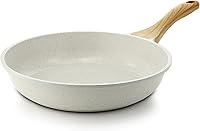
The SENSARTE frying pan is described as free of PFAS, PFOA, PTFE, lead, and cadmium. The maker also says its pan has a ceramic surface and recommends medium heat and hand washing to extend its life.
That information helps you compare stated materials and care guidance; it isn't an independent test result. If you want a pan-focused comparison, see our guide to best frying pans non toxic.
What should you check before choosing ceramic cookware?
Start with the coating claims, body material, heat limits, and care instructions. Those details tell you more about whether a specific pan suits your kitchen than a broad “non toxic” label.
Look for:
- Specific free-from statements for substances you want to avoid.
- The pan body's material and whether it works with your cooktop.
- Maximum oven temperature and whether handles or lids need to be removed.
- Utensil, cleaning, and dishwasher guidance.
- A clear description of the coating and included pieces.
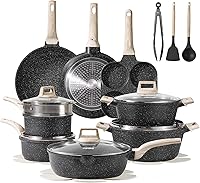
The SENSARTE 13-piece set is described as free of intentionally added PFOA, PTFE, PFAS, lead, and cadmium. It has an aluminum body, a stainless steel base, tempered glass lids, and a stated oven limit of 550°F.
SENSARTE recommends medium heat, soft cleaning tools, and hand washing to extend the set's life. For readers who want to compare cleanup instructions across cookware, see best non toxic dishwasher safe cookware.
How should you use and care for a ceramic coated pan?
Follow the specific cookware's heat and cleaning instructions, and protect the cooking surface from rough tools. Medium heat, gentle utensils, and a soft sponge are common care directions for the examples here.
Avoid assuming that “dishwasher safe” means the dishwasher is the best choice for long-term coating care. The SENSARTE products' care guidance recommends hand washing, while also describing low-temperature dishwasher use as suitable.
The Umite Chef set is described as having an aluminum body and a mineral reinforced granite coating, with claims that it is free of PFOA, PTFE, and PFOS. Its care directions call for medium-low heat, wooden or silicone utensils, and cooling before washing.
This set's coating is described as granite rather than ceramic, so it can help you compare the care of another nonstick surface. The maker says to remove the detachable handle before oven use and to wash the pan body only.
Is ceramic cookware safer than stainless steel?
The materials differ, so the right choice depends on the surface and care you prefer. Ceramic coated cookware has a nonstick surface that can wear, while stainless steel cookware has a metal cooking surface without a nonstick coating.
With either type, check the materials and use instructions for the exact cookware. Read what fully clad cookware means if you are comparing stainless steel construction, or explore best Caraway ceramic cookware for another ceramic cookware comparison.
Is ceramic cookware safe in the oven?
Check the stated oven limit for the pan, lid, and handle before putting cookware in the oven. Parts of a set can have different limits, and removable handles may need to come off.
The SENSARTE frying pan and cookware set are described as oven safe up to 550°F, with the pan's handle to be removed. The Umite Chef set has a stated oven range of 480°F to 500°F, with its detachable handle removed.
Don't apply one product's temperature limit to another pan. Our guide to best oven safe ceramic cookware can help you compare options by oven use.
How do you choose ceramic cookware for your kitchen?
Choose ceramic coated cookware if you want a nonstick surface and can follow its heat and care directions. Check the precise free-from statements and construction details before buying, and consider stainless steel if you prefer an uncoated cooking surface.
For a frying pan, compare surface claims and utensil care. For a set, check each piece, handle, lid, and cooktop compatibility so the cookware fits how you cook.
If a product's coating is peeling or badly damaged, stop using it. For intact cookware, the simplest decision rule is to choose the materials and care routine you can follow consistently.
Frequently asked questions
Is ceramic cookware non toxic?
Some ceramic coated cookware is made without PFAS, PTFE, lead, and cadmium, but the word ceramic alone doesn't confirm that. Check the exact materials and free-from claims for the cookware you plan to buy, then follow its heat and care instructions.
A ceramic coating can wear, so replace a pan if it is badly damaged.
Is ceramic cookware made from solid ceramic?
Usually, cookware called ceramic nonstick has a metal body with a ceramic based coating, rather than a pot made entirely from ceramic. The pan body may be aluminum or another metal.
Check the construction details, since the coating and the body serve different purposes.
Does ceramic cookware contain PTFE?
Ceramic coated cookware may be made without PTFE, but the name ceramic isn't enough to confirm that. Look for a clear PTFE-free statement for the exact pan or set, along with other substances you want to avoid.
Don't assume that every ceramic coating uses the same formula.
How do you make ceramic cookware last longer?
Use the heat level and utensils allowed by the cookware maker, and let a hot pan cool before washing if the care directions advise it. Soft sponges and hand washing can help protect a nonstick surface.
Replace cookware if the coating is peeling or badly damaged.