What Is Ceramic Cookware Made Of?
Ceramic cookware can be made from solid clay-based ceramic or metal cookware with a thin ceramic-based coating. The word ceramic describes different layers, so check whether it refers to the pan body or just its cooking surface.
On this page (7 sections)
- What is ceramic cookware made of?
- Is ceramic cookware solid ceramic or just coated?
- What does a ceramic coating contain?
- What metal is under ceramic cookware?
- How can you tell which kind of ceramic cookware you have?
- Does ceramic cookware mean the pan is free of PTFE?
- Which kind of ceramic cookware should you choose?
Ceramic cookware is made from either a solid clay-based ceramic body or a metal pan covered with a ceramic-based nonstick layer. Many pans sold as ceramic nonstick have an aluminum body beneath the coating, so the word “ceramic” alone doesn’t tell you what the whole pan is made of.
The difference matters when you compare weight, stovetop fit, and care instructions. Check the body, cooking surface, and base as separate parts.
What is ceramic cookware made of?
Ceramic cookware can mean solid ceramic or ceramic-coated metal. In coated cookware, the metal gives the pan its shape and the coating forms the cooking surface.
Solid ceramic cookware is made from clay-based material shaped and fired into a rigid vessel. Coated cookware usually starts with a metal body, often aluminum, and gets a ceramic-based finish on the cooking surface.
That means two pans described as ceramic may have different construction. For a broader look across cookware materials and brands, see our guide to best ceramic cookware brands.
Is ceramic cookware solid ceramic or just coated?
Most ceramic nonstick cookware is metal with a ceramic-based coating, not a pan made entirely from ceramic. Solid ceramic cookware has a ceramic body; coated cookware has a metal body under a thin surface layer.
A coated pan’s body and base can also differ. For example, a pan might have an aluminum body and a stainless steel base.
The base may help make it compatible with induction, while the coating provides the cooking surface.
What is ceramic cookware made of when it has a coating?
A coated pan commonly combines an aluminum body with a ceramic-based nonstick surface. The body provides the pan’s structure, while the coating covers the food-contact area.
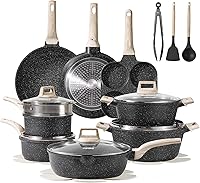
Caraway’s set includes a frying pan, saucepan, sauté pan, Dutch oven, lids, and storage pieces. Its ceramic coating and aluminum construction make it an example of coated cookware, rather than a solid ceramic pan.
To compare how metal layers work together, read what fully clad cookware means. Cladding describes how metal layers are arranged, which is a separate detail from whether a pan has a ceramic cooking surface.
What does a ceramic coating contain?
A ceramic nonstick coating is a thin, hard surface made from ceramic-based materials. The exact formulation can vary by brand, so the word “ceramic” doesn’t name a single recipe.
Brands may describe a coating as natural or free from certain substances. Treat those as specific claims about that brand’s cookware, not as proof that every ceramic coating has the same ingredients.
SENSARTE describes its cooking surface as natural ceramic and says it is free from intentionally added PFOA, PTFE, PFAS, lead, and cadmium. Those statements apply to that set’s coating and materials.
The SENSARTE set shows why it helps to read each material separately: its body is cast aluminum, its base is stainless steel, and its cooking surface is ceramic nonstick. See our guide to best Caraway ceramic cookware for another brand-specific example.
What metal is under ceramic cookware?
Aluminum is common under ceramic nonstick coatings, though some cookware also uses stainless steel in the base or other parts. The exact combination depends on the pan.
Aluminum is often used as the body because it conducts heat. A stainless steel base can change stovetop compatibility, so check the maker’s construction details if you have induction.
Redchef describes its set as aluminum and ceramic. It also has a removable handle, and the set is described as compatible with gas, electric, and induction stovetops.
If induction is important, compare the construction and compatibility details in best Caraway cookware for induction. The presence of a ceramic coating by itself doesn’t show whether a pan will work on an induction cooktop.
How can you tell which kind of ceramic cookware you have?
Check whether the material description names a ceramic body or a metal body with a ceramic coating. If it lists aluminum or stainless steel as the body material, the pan isn’t solid ceramic.
Look for separate details about the cooking surface, body, and base. A material list that names aluminum and ceramic may indicate coated metal cookware, while a “ceramic” label without layer details may need clarification from the brand.
Also check care guidance before choosing a pan. Dishwasher and oven instructions vary across products, even when their cooking surfaces are both called ceramic; our guide to best ceramic dishwasher safe cookware compares care claims by product.
Does ceramic cookware mean the pan is free of PTFE?
No. “Ceramic” by itself doesn’t identify every ingredient in a pan or coating.
Check the brand’s specific materials and any claims about PTFE or other substances.
The term can describe a cooking surface, a body, or both. A coated metal pan may have a ceramic-based surface, but that label alone doesn’t establish what substances the maker used or excluded.
When a specific chemical matters to you, look for a clear statement about that substance for the exact cookware. Don’t infer a complete material list from the word “ceramic.”
Which kind of ceramic cookware should you choose?
Choose solid ceramic if you want a ceramic body, and choose ceramic-coated metal if you want a metal pan with a ceramic-based cooking surface. Then compare the body, base, compatibility, and care instructions.
A coated set may suit you if you want several pots and pans with the same type of nonstick surface. For color options, see best red ceramic cookware; compare each product’s construction rather than relying on the color or “ceramic” label.
If you’re deciding between brands, start with the materials for each layer and the cooktop you use. The key question is simple: is the ceramic the pan body, the coating, or both?
Frequently asked questions
Is ceramic cookware made entirely of ceramic?
No, the term can refer to a solid ceramic body or to a ceramic-based coating on a metal pan. Many ceramic nonstick pans use an aluminum body under the coating, while some have a stainless steel base or handle.
Check the material details to see which layer is ceramic.
What is under a ceramic nonstick coating?
A ceramic nonstick coating often sits over an aluminum pan body, which helps conduct heat through the cookware. Some designs also use a stainless steel base for stovetop compatibility.
Check the construction details for both the body and base, since they can use different materials.
Is ceramic cookware the same as porcelain cookware?
Not always. Porcelain is a type of ceramic, but cookware labels may use “ceramic” for a coating rather than a solid porcelain or clay body.
Read the product’s material description to tell whether the cooking surface, body, or both are ceramic.
How can you tell if a pan is solid ceramic?
Look for a body described as ceramic, clay, or porcelain, rather than a metal body with a ceramic coating. A coated pan may still have an aluminum or stainless steel body.
If the construction details are unclear, ask the maker which material forms the pan body.