Are Stainless Steel Knives Magnetic?
Some stainless steel knives are magnetic, but stainless steel is not automatically magnetic. The blade's alloy and structure determine whether it will stick to a magnetic knife strip or holder.
On this page (8 sections)
- Why are stainless steel knives magnetic?
- Does stainless steel mean the knife will stick to a magnet?
- How do you test a stainless steel knife for magnetism?
- Is magnetic knife storage safe for stainless steel blades?
- What if a stainless steel knife is not magnetic?
- Can a magnetic strip hold every kitchen knife?
- Should you buy a magnetic knife holder?
- What is the answer to “are stainless steel knives magnetic”?
Some stainless steel knives are magnetic, but stainless steel is not automatically magnetic. The blade's alloy and structure determine whether it will stick to a magnetic knife strip, wall bar, or other magnetic kitchen knife storage.
The simplest check is to bring a small magnet close to the blade's flat side. A strong pull usually means the knife can work with magnetic storage, while a weak pull or no pull means you should use a block, drawer insert, sheath, or another nonmagnetic option.
Why are stainless steel knives magnetic?
Stainless steel knives are magnetic when their steel contains a structure that responds strongly to a magnet. Stainless steel is a broad group of alloys, so the name alone cannot predict how a knife will behave.
Many kitchen knife blades use martensitic stainless steel because it can be hardened for cutting. That type is commonly magnetic.
Ferritic stainless steel is also generally magnetic, while austenitic stainless steel is often weakly magnetic or nonmagnetic.
Heat treatment and manufacturing can change the result. A blade may attract a magnet more strongly in one area than another, especially near the spine, bolster, or tang.
A thin or highly polished blade can still be magnetic even if the attraction feels weaker than expected.
Magnetism is different from rust resistance. Stainless steel resists corrosion because of its chromium content and protective surface layer.
That does not tell you whether the steel will stick to a magnet.
For a broader introduction to types of kitchen knives, compare blade shapes, edges, and common uses before choosing storage.
Does stainless steel mean the knife will stick to a magnet?
No, stainless steel does not guarantee magnetic attraction. The steel grade matters more than the word “stainless,” and manufacturers do not always publish the exact alloy used in a kitchen knife.
A knife with a magnetic blade may still be a poor match for a magnetic holder if the magnet is too weak, the blade is unusually thin, or the holder cannot support the knife's shape. A strong magnet can also make removal awkward if you pull the knife sideways across the surface.
The blade's magnetic response does not measure sharpness, strength, or quality. It only tells you how the material responds to a magnetic field.
Use cutting performance, construction, handle comfort, care needs, and storage fit as separate buying decisions.
Our guide to stainless steel for knife blades explains why steel choice affects edge behavior, corrosion resistance, and maintenance.
Are stainless steel knives magnetic if they have a nonmetal handle?
A nonmetal handle does not prevent a blade from being magnetic. Test the exposed blade, not the handle, because wood, plastic, and thermoplastic materials do not provide the same response as steel.
The Victorinox Victorinox swiss army cutlery fibrox pro has a 6 in stainless steel blade and a Fibrox Pro thermoplastic rubber handle. Its curved, semi-stiff blade suits trimming close to bones, so a magnetic strip may be useful only if the holder grips the blade securely and keeps the cutting edge protected.
Keep the blade dry before storage. Place it flat against a covered magnetic surface rather than dragging the edge across the strip.
How do you test a stainless steel knife for magnetism?
Use a small magnet on the blade's flat side, then test the storage holder with the knife's actual weight and shape. The magnet test is quick, but it cannot tell you whether a particular strip is safe or strong enough.
Follow these steps:
- Clean and dry the knife.
- Hold the magnet near the blade's broad, flat section.
- Check the spine and heel if the center feels weak.
- Notice whether the pull is strong, light, or absent.
- Repeat the test on any knife you plan to store on the same strip.
Keep the magnet away from the cutting edge while testing. You do not need to slide it along the blade, and dragging metal against the edge can cause scratches or small chips.
A weak pull does not always mean the knife cannot be stored magnetically. The holder's design, magnet placement, and contact area all matter.
If the knife shifts, tilts, or slips, choose different storage.
Is magnetic knife storage safe for stainless steel blades?
Magnetic storage is safe when the holder supports the knife securely and you place the blade gently. The main risks are a falling knife, edge damage from dragging, and accidental contact while removing it.
Mount a wall strip according to its instructions and place it where people will not brush against the exposed blades. Store each knife with enough space to remove it by the handle.
Keep the cutting edge facing away from the area where hands will pass.
A covered magnetic strip can reduce contact between the blade and the holder. It does not replace careful handling, correct installation, or regular cleaning.
Do not store a wet knife on a magnetic strip. Dry the blade and handle first, then clean the holder when needed so food residue does not collect behind the knife.
What if a stainless steel knife is not magnetic?
Choose a nonmagnetic storage method if the blade does not attract the magnet or does not stay firmly attached. A knife block, drawer insert, blade guard, or individual sleeve can keep the edge protected without relying on magnetic force.
A block works well when you want the knife enclosed and upright. A drawer insert keeps blades out of sight, but each knife needs a secure slot and enough clearance for the handle.
The RADA Cutlery Paring Knife Galore Gift Set includes 3 knives: peeling paring, regular paring, and heavy-duty paring. Each has a stainless steel blade and a cast aluminum handle, and the set is designed for tasks such as peeling, trimming chicken breasts, and preparing vegetables.
RADA advises protecting the cutting edge by storing the knives carefully in the gift box or sleeve. Handwash the silver aluminum handles and dry the knives before putting them away.
For more comparisons, see are Cuisinart stainless steel knives good and best stainless steel kitchen knives.
Can a magnetic strip hold every kitchen knife?
No, a magnetic strip may not hold every knife securely. Blade magnetism, knife weight, blade shape, and the holder's strength all affect compatibility.
Large or thick knives need a holder with enough support along the blade. Narrow blades may have less contact area, while knives with wide bolsters can sit differently from slim kitchen knives.
A magnetic strip should hold the knife without sliding when you release the handle.
Serrated blades, specialty blades, and knives with unusual shapes deserve extra care. Test each one before storing it above a work surface.
For specialized options, compare Wusthof Classic vs Classic Ikon knives, steak knife use, and the best fillet knife for fish.
Does sharpening change whether a knife is magnetic?
Sharpening usually does not change the blade's basic magnetic behavior. It removes a small amount of steel from the edge, while the alloy and most of the blade remain the same.
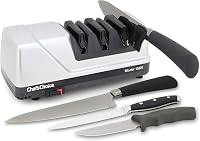
The Chef’sChoice 15XV EdgeSelect Professional Electric Knife Sharpener has a 3-stage system, 100-percent diamond abrasives, and guides for straight-edge and serrated knives. It is designed to convert traditional 20-degree edges to 15-degree edges, so it may help maintain knives that are already suitable for your storage system.
The unit measures about 10 x 4.25 x 4.25 in and is gray. Follow the sharpener's instructions for the knife edge you are working on, and clean and dry the blade before storage.
Should you buy a magnetic knife holder?
Buy magnetic storage only after testing your knives and checking the holder's support, placement, and installation requirements. It is a good fit when you want visible access and your blades stay firmly attached without edge contact.
Choose a block or drawer storage system if any knife slips, if you have children who could reach the strip, or if you prefer enclosed blades. A sheath or sleeve can also suit a single specialty knife that does not attract a magnet.
If you are comparing stainless steel knife options, the best stainless steel chef knives guide can help you assess blade shape and use before choosing storage.
What is the answer to “are stainless steel knives magnetic”?
Some stainless steel knives are magnetic, but the steel type determines the result. Test each blade with a magnet, then check that your chosen holder supports it without sliding or forcing the edge against the surface.
Pick a magnetic strip for securely held blades and easy access. Pick a block, drawer insert, or sleeve when the attraction is weak, the knife is unusually shaped, or enclosed storage better protects the edge.
Frequently asked questions
Are all stainless steel knives magnetic?
No. Some stainless steel knives attract magnets, while others do not.
Ferritic and martensitic stainless steels are usually magnetic, but many austenitic stainless steels are weakly magnetic or nonmagnetic.
The exact alloy, heat treatment, and blade structure affect the result.
How can you tell if a stainless steel knife is magnetic?
Hold a small magnet near the flat side of the blade, away from the cutting edge. A strong pull suggests the blade can work with magnetic storage, but test the actual knife because stainless steel labels do not identify the alloy or guarantee magnetic attraction.
Will a magnetic knife strip damage stainless steel knives?
A magnetic strip can hold a stainless steel knife safely when the magnet is covered, the knife is placed and removed without dragging, and the strip supports the blade securely. Keep fingers away from the edge and follow the holder's weight and installation instructions.
Are stainless steel knife handles magnetic?
The handle may or may not attract a magnet, depending on its materials and any internal metal. Test the blade rather than relying on the handle, because magnetic storage needs enough contact and holding force to support the knife without slipping.