Are Kitchen Knives Made of Stainless Steel?
Most kitchen knives are made with stainless steel or a stainless steel blend. Stainless blades resist rust and stains, while carbon steel and ceramic offer different trade-offs in sharpness, care, and durability.
On this page (12 sections)
- Are knives made of stainless steel?
- What does stainless steel mean in a knife blade?
- How is stainless steel different from carbon steel?
- Are ceramic knives made of stainless steel?
- Which stainless steel knife suits meat preparation?
- How should you maintain a stainless steel kitchen knife?
- Can an electric sharpener work with stainless steel knives?
- Are stainless steel paring knives useful for produce?
- Are all stainless steel knives the same?
- Should you choose stainless steel for a chef knife?
- What should you check before buying stainless steel knives?
- What is the simple answer about stainless steel knives?
Most kitchen knives are made of stainless steel or a stainless steel blend. Stainless blades resist rust and stains better than plain carbon steel, which makes them a practical fit for daily chopping, slicing, peeling, and trimming.
The word stainless describes corrosion resistance, not a single metal recipe. Knife makers use different steel grades and treatments, so two stainless blades can differ in hardness, edge retention, flexibility, and sharpening needs.
Are knives made of stainless steel?
Yes, stainless steel is the most common material for everyday kitchen knife blades. It contains enough chromium to form a protective surface that slows rust and staining during normal kitchen use.
Stainless steel can also include carbon and other elements that change how the blade behaves. More carbon can support hardness and edge retention, while other additions may improve toughness or resistance to wear.
A stainless blade still needs basic care. Food acids, salt, moisture, and rough storage can damage the surface over time, so rinse away residue, dry the knife, and avoid leaving it in standing water.
For a broader look at types of kitchen knives, match the blade shape to the work before comparing steel. A chef knife, paring knife, boning knife, and serrated knife need different profiles even when all use stainless steel.
What does stainless steel mean in a knife blade?
Stainless steel means the blade is designed to resist corrosion, not that it can never rust. Chromium helps protect the surface, but the amount and the rest of the alloy affect performance.
A kitchen knife may be labeled stainless steel without naming the exact grade. That label tells you about the material family, but it does not by itself tell you how long the edge will stay sharp or how easily the knife will sharpen.
Look for useful details such as:
- The stated blade material and steel grade
- Whether the blade is stamped or forged
- The blade's thickness and flexibility
- The intended use, such as slicing, peeling, or boning
- The care instructions, especially hand washing and drying
Our guide to stainless steel for knife blades explains why steel grades matter when two knives both use stainless material.
How is stainless steel different from carbon steel?
Stainless steel is easier to maintain, while carbon steel usually needs more drying and care. Carbon steel can develop a patina or rust when exposed to moisture and acidic foods, but some cooks prefer its sharp feel and easy sharpening.
Stainless steel suits households that want a blade that tolerates regular food prep with less maintenance. Carbon steel suits cooks who enjoy frequent sharpening, careful drying, and the changing surface that comes with use.
Neither material is automatically better for every kitchen. Choose based on how often you'll clean and dry the knife, how much edge maintenance you want, and whether a low-maintenance blade matters more than traditional carbon-steel behavior.
Are ceramic knives made of stainless steel?
No, ceramic knives use a hard ceramic material instead of stainless steel. Ceramic blades resist many stains and can feel light in the hand, but they can chip or break if dropped, twisted, or used on hard foods.
Ceramic is not a general replacement for every kitchen knife. It may suit thin slicing and some produce, while stainless steel is more versatile for tasks that require flex, toughness, or repeated sharpening.
Check the blade material before buying if you specifically want stainless steel. A stainless blade is usually the more flexible choice for a mixed kitchen where one knife may handle several food types.
Which stainless steel knife suits meat preparation?
A stainless steel boning knife suits cooks who need a narrow blade for trimming meat close to bone. The Victorinox Victorinox swiss army cutlery fibrox pro uses a 6 in stainless steel blade with a curved, semi-stiff profile, a pointed tip, and a black Fibro Pro handle made for a non-slip grip.
Its 5.5 in size designation and 6 in item length describe a compact boning knife for controlled cuts rather than broad slicing. The blade is plain edged and stamped, and the included component is 1 boning knife.
Choose it if you want one focused tool for meat trimming and prefer a handle designed for grip when wet. Skip it if you need a general chef knife for vegetables, herbs, and large cutting-board tasks.
Victorinox identifies the knife as made in Switzerland and says it meets NSF standards. Hand wash and dry it promptly, keep the edge protected during storage, and use a suitable cutting surface.
How should you maintain a stainless steel kitchen knife?
Wash stainless steel knives according to their care instructions, dry them promptly, and store them so the edge does not strike other tools. Stainless steel reduces corrosion risk, but it does not remove the need for cleaning and safe storage.
Avoid leaving a knife in a sink or submerged in water. Salt and acidic food residue can remain on the blade and cause spots, especially around the handle or any scratches.
A dull blade can be harder to control than a sharp one. Use a sharpening method that matches the knife's edge and follow the tool's angle guidance rather than repeatedly removing metal without a plan.
Can an electric sharpener work with stainless steel knives?
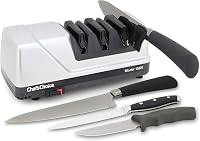
Yes, an electric sharpener can work with many stainless steel knives when its guides and stages match the blade edge. The Chef's Choice Chef’sChoice 15XV EdgeSelect Professional Electric Knife is a 3-stage sharpener with 100-percent diamond abrasives and precision angle guides.
It is designed for straight-edge and serrated knives and can convert traditional 20-degree factory edges to a 15-degree Trizor XV edge. The first 2 stages use diamond abrasives, while the third stage uses a flexible abrasive system for polishing and serrated-knife work.
The sharpener measures 10 in long by 4.25 in wide by 4.25 in high. Choose it if you want guided electric sharpening for several knife types and have room for a 4.2 lb countertop tool.
Use the guides carefully and keep the knife moving as directed. A sharpener that changes a 20-degree edge to 15 degrees may not suit every blade or every sharpening preference, so check the knife's edge design first.
Are stainless steel paring knives useful for produce?
Yes, stainless steel paring knives are useful for peeling, trimming, and small produce tasks. The RADA Cutlery Paring Knife Galore Gift Set includes 3 stainless steel paring knives: peeling, regular, and heavy duty.
The blades use T420 high-carbon stainless steel and a hollow-ground design. The silver handles are permanently cast brushed aluminum with a satin finish, and the set is made in the USA.
Choose this set if you want separate small knives for different prep jobs rather than one all-purpose blade. The 3-piece set includes peeling, regular, and heavy duty paring knives, so it gives you more task options than the Victorinox boning knife.
RADA specifies hand washing for the aluminum handles. Store the knives carefully in their gift box or sleeve to protect the cutting edges, and keep them away from loose tools in a drawer.
Are all stainless steel knives the same?
No, stainless steel knives can differ widely in performance even when the label is the same. Steel grade, heat treatment, blade thickness, edge angle, construction, and handle design all affect daily use.
A flexible stainless blade may suit filleting or trimming, while a stiffer blade can feel more controlled for dense foods. A thin edge may slice cleanly but need more careful use than a thicker edge.
Construction also matters. A stamped blade is cut from sheet steel, while forged knives are shaped through a different manufacturing process.
Neither label alone guarantees that a knife will suit your hand or your cooking tasks.
For brand-specific guidance, see are Cuisinart stainless steel knives good. If you are comparing broad options, our guides to the best stainless steel kitchen knives and best stainless steel chef knives can narrow the choice.
Should you choose stainless steel for a chef knife?
Choose stainless steel for a chef knife if you want a versatile blade with simpler day-to-day care. It is a strong default for cooks who prepare mixed foods and do not want to manage a carbon-steel patina.
A chef knife should match your cutting style, board, storage space, and comfort. Compare that choice with a chef knife vs utility knife guide if you are unsure whether you need a full-size chef blade or a smaller general-purpose knife.
Look for a blade length you can control, a handle that feels secure, and care instructions you'll follow. A stainless knife that is cleaned, dried, and stored properly can serve as a dependable everyday tool.
What should you check before buying stainless steel knives?
Check the blade material, intended task, edge type, handle grip, construction, and care needs. The material label is useful, but it is only one part of the buying decision.
A practical checklist is:
- Confirm that the blade is stainless steel if corrosion resistance is a priority.
- Match the blade shape to the task.
- Check whether the edge is plain or serrated.
- Consider whether you want a flexible, semi-stiff, or firm blade.
- Choose storage that protects the cutting edge.
- Select a sharpening method that suits the blade.
If you want a coordinated collection, compare best kitchen knife sets with blocks. If you plan to use a magnetic strip, first check are stainless steel knives magnetic because stainless steels vary in magnetic behavior.
What is the simple answer about stainless steel knives?
Most kitchen knives are made of stainless steel because it balances corrosion resistance, useful sharpness, and manageable care. The best choice still depends on the task: choose the Victorinox for meat trimming, the RADA set for small produce work, and the Chef’sChoice sharpener if guided edge maintenance fits your knives.
For another kitchen-knife option, compare Ninja kitchen knives.
Choose stainless steel when you want everyday practicality. Choose another blade material only when its care needs and cutting behavior match the way you cook.
Frequently asked questions
Are most kitchen knives made of stainless steel?
Yes, most everyday kitchen knives use stainless steel because it resists rust, stains, and moisture better than plain carbon steel. The exact steel grade still matters, since stainless knives can differ in hardness, edge retention, flexibility, and ease of sharpening.
Is stainless steel good for kitchen knives?
Stainless steel is a practical choice for kitchen knives because it needs less drying and oiling than carbon steel. It can hold a useful edge and handle regular food preparation, but the best result depends on the steel type, heat treatment, blade shape, and care.
Are stainless steel knives better than carbon steel knives?
Stainless steel knives are usually easier to maintain, while carbon steel knives can offer a very sharp, responsive edge with more care. Stainless steel is often better for busy kitchens, but carbon steel may suit cooks who don't mind drying the blade and managing discoloration.
Do stainless steel knives rust?
Stainless steel knives resist rust, but they are not impossible to rust. Salt, acids, trapped moisture, harsh cleaning, and long storage while wet can cause spots or corrosion, so wash the blade as directed, dry it promptly, and store it safely.