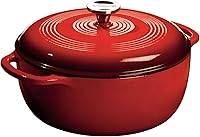
What Is Dutch Oven Cooking?
Dutch oven cooking uses a heavy, lidded pot for steady heat on the stovetop, in the oven, or over a campfire. It works well for braising, simmering, baking, and slow cooking.
On this page (8 sections)
- What is Dutch oven cooking best for?
- How do you cook with a Dutch oven on the stovetop?
- When should you move a Dutch oven into the oven?
- Can you cook soup in a Dutch oven?
- Is Dutch oven cooking the same as using a slow cooker?
- Can you use a Dutch oven over a campfire?
- What should you know about cast iron and enamel?
- When is a Dutch oven the wrong tool?
Dutch oven cooking uses a heavy, lidded pot to hold steady heat for braising, simmering, baking, roasting, and slow cooking. Depending on its material and care instructions, the pot can move between the stovetop and oven, while some bare cast iron models are made for outdoor fires.
The lid helps limit moisture loss, and the thick walls warm and cool more slowly than thin cookware. That makes a Dutch oven useful for recipes that cook for a while, from a pot of beans to a loaf of crusty bread.
What is Dutch oven cooking best for?
Dutch oven cooking is best for recipes that benefit from steady heat and a covered pot. Use it to brown ingredients first, then add liquid and cook gently on the stove or transfer the pot to the oven.
Braising is a common method: brown meat or vegetables, add a modest amount of liquid, cover, and cook until tender. The covered pot traps steam, while the liquid helps keep the food moist.
A Dutch oven also works for soups, stews, beans, sauces, and one-pot meals. For a closer look at what changes between vessels, read What Is the Difference Between a Stockpot and a Dutch Oven?.
Its enamel coating means the pot doesn't need seasoning like bare cast iron. Lodge recommends hand washing with warm, soapy water and a nylon brush to help keep the finish in good shape.
How do you cook with a Dutch oven on the stovetop?
Start over moderate heat and let the pot warm gradually. Thick cast iron retains heat, so you can often lower the burner once the pot is hot.
For braising, brown food in batches so the ingredients have room to sear. Add liquid after browning, scrape up browned bits, cover, and maintain a gentle simmer rather than a hard boil.
For soup, stew, or beans, keep the heat low enough to prevent scorching at the bottom. Stir as needed, especially when the recipe has thick ingredients or little liquid.
A Dutch oven can be heavy when full. Use both handles, keep the pot close to your body when moving it, and place it on a stable, heat-safe surface.
When should you move a Dutch oven into the oven?
Move the pot to the oven when a recipe needs even, surrounding heat after stovetop browning. This is useful for covered braises, baked dishes, and bread, provided the pot and lid are rated for the oven temperature.
Check the pot's own care instructions for its oven limit, lid guidance, and allowed heat sources. Handles and knobs may have different limits from the pot itself.
For bread, the hot covered pot holds steam around the dough early in baking, which supports a crisp crust. See our guide to best Dutch ovens for baking bread or best Dutch ovens for sourdough for options suited to those loaves.
Can you cook soup in a Dutch oven?
Yes, a Dutch oven is useful for soup because it can brown aromatics, simmer broth, and hold a large batch in one pot. Start with the ingredients that need browning, then add liquid and simmer until everything is tender.
A lidded pot helps reduce evaporation, but the soup still needs occasional stirring and a controlled simmer. If you make soup often, compare the sizes and features in our best Dutch ovens for soup guide.
The Oyster White version has an enamel finish over cast iron. Its enamel surface stands up to acidic ingredients, according to the product description, so it can suit recipes with tomatoes or wine.
Is Dutch oven cooking the same as using a slow cooker?
No. A Dutch oven is a pot used with an external heat source, while a slow cooker is an electric appliance with its own cooking settings.
Both can cook food slowly, but they fit different routines.
A Dutch oven lets you brown ingredients on the stovetop before continuing the recipe in the same pot. A manual slow cooker offers high and low settings plus a warm function, which can suit a meal you want to leave cooking while you handle other tasks.
Its removable stoneware insert is dishwasher safe and can be used in a microwave or an oven up to 400°F. It is an appliance with its own limits, not cookware for a stovetop or campfire.
For a fuller comparison, see Dutch oven vs Crock Pot: which should you choose?. To understand how material affects heat and care, read how cookware materials change cooking performance.
Can you use a Dutch oven over a campfire?
Some Dutch ovens are made for outdoor cooking, but check the specific pot before putting it over a fire. Bare cast iron models designed for camping can be used with coals, while enameled cookware may have different heat-source limits.
Outdoor Dutch ovens may have legs and a lid designed to hold coals. Use heat-resistant gloves, stable support, and tools intended for hot cast iron, and follow the maker's instructions for fire use.
Plan the pot size around the meal and the number of people. Our guide to best Dutch ovens for camping covers outdoor options, and best Dutch oven tripods can help you compare hanging setups.
What should you know about cast iron and enamel?
Bare cast iron and enameled cast iron retain heat, but their surfaces call for different care. Bare cast iron needs seasoning and drying after washing, while enamel offers a coated surface that doesn't require seasoning.
Enameled cast iron can be useful for acidic recipes and everyday cooking, but avoid sudden temperature changes and abrasive cleaning tools. Follow the pot's instructions for utensils, cleaning, stovetop use, and oven limits.
Explore best cast iron Dutch ovens and best cast iron pots if you are comparing bare cast iron. For enameled options, see best Staub Dutch ovens, best Staub oval Dutch ovens, best Staub cast iron Dutch ovens, best Lodge Dutch ovens, and best Le Creuset Dutch ovens.
When is a Dutch oven the wrong tool?
Choose another pan when the recipe needs fast heat changes, easy tossing, or a wide shallow surface. A skillet is easier for quick searing, while a stockpot can be more convenient for a very large volume of broth or pasta water.
Dutch ovens are heavy, and their thick walls take time to heat. Consider the pot's filled weight and your storage space before choosing a large model.
For Dutch oven cooking, choose the pot based on the method: an oven-safe enameled model for indoor braising and baking, bare cast iron designed for outdoor heat, or a slow cooker for set-and-leave meals. If your main goal is bread, soup, or camping, use the matching guide above to narrow the options.
Frequently asked questions
What is Dutch oven cooking used for?
Dutch oven cooking is used for braising, simmering, baking, roasting, and slow cooking in a heavy pot with a lid. The pot can move from stovetop to oven when its material and care instructions allow it.
Outdoor cast iron models can also cook over a campfire when designed for that use.
Can you cook anything in a Dutch oven?
A Dutch oven suits many moist and oven-based recipes, but it isn't ideal for every task. Its weight and deep sides can make quick tossing or delicate pan-frying awkward, and a large pot takes longer to heat than a thin skillet.
Match the pot and heat source to the recipe.
Is Dutch oven cooking the same as slow cooking?
Dutch oven cooking can be slow cooking, but the terms are not identical. A Dutch oven is cookware you heat on a stove, in an oven, or outdoors; a slow cooker is an electric appliance that holds a low or high cooking setting for a longer period.
Do you need to season an enameled Dutch oven?
Enameled cast iron has a coated cooking surface, so it doesn't need seasoning like bare cast iron. Follow the pot's care instructions, use suitable utensils, and avoid sudden temperature changes that could harm the enamel.