How to Choose Springform Pan Sizes
Choose a springform pan size by matching its diameter and depth to your recipe yield: 9 inches suits many standard cakes, while 6, 8 and 10 inches help with smaller, larger or layered bakes.
On this page (11 sections)
- Which springform pan size should you choose?
- How does diameter change recipe yield?
- How many servings do springform pan sizes make?
- Which springform pan size is best for cheesecake?
- Is a springform pan set better than one pan?
- How should you scale a recipe for different pan sizes?
- Does pan depth matter as much as diameter?
- What should you check before buying a springform pan?
- Can a mini mold replace a springform pan?
- How do you prevent the wrong pan size from ruining a bake?
- Springform pan sizes: the practical choice
Choose springform pan sizes by matching the pan diameter and depth to the recipe yield and serving needs. A 9 in pan is a useful starting point for many standard cakes, while 6, 8 and 10 in sizes help you adjust the batch up or down.
The right size affects more than the number of slices. It changes the batter depth, baking time, crust thickness and the amount of room needed in your oven and refrigerator.
If you are building a broader bakeware collection, our guide to bakeware sets explains how pans with different shapes and sizes can work together.
Which springform pan size should you choose?
Choose a 9 in springform pan for many standard recipes, a smaller pan for a reduced yield, or a larger pan when the recipe is written for more batter. The best match is the size named in the recipe, because changing diameter changes the cake's depth.
Use this table as a starting point:
| Pan diameter | Good starting use | Main trade-off |
|---|---|---|
| 6 in | Small cheesecakes, trial bakes and compact desserts | Less yield and a deeper fill if you use too much batter |
| 8 in | Small family bakes and reduced recipes | May need a longer bake than a larger pan |
| 9 in | Many standard cheesecakes and cakes | Requires more batter than a small household may need |
| 10 in | Larger cakes, gatherings and recipes written for a wide pan | A smaller recipe may bake too thin |
Diameter is only half of the decision. A pan's depth also affects how much batter it can hold before the mixture approaches the rim.
Start with the recipe's stated diameter and fill level. If you do not have that information, choose a size based on the number of servings you need, then keep the batter depth similar to the original recipe.
What do springform pan sizes mean?
Springform pan sizes usually refer to the round diameter, measured across the pan. A 9 in springform pan is intended to make a round cake about 9 in across, although the outside rim can make the full pan slightly wider.
The number does not describe the height. Two pans with the same diameter can hold different amounts if one has a deeper wall.
Check both measurements when you shop:
- Diameter tells you the cake's width and affects serving size.
- Depth tells you how much batter the pan can hold.
- Outside dimensions tell you whether the pan fits your oven, rack or storage shelf.
- The removable base and latch affect how you release the finished bake.
A recipe written for a 9 in round pan may not behave the same way in a 9 in square pan. The shape changes the surface area and the corners, even when the listed measurement looks similar.
How does diameter change recipe yield?
A wider springform pan has more surface area, so the same amount of batter spreads into a shallower layer. A smaller pan holds that batter deeper, which can make the center take longer to set.
For round pans, surface area is linked to the square of the radius. That means a small change in diameter can create a noticeable change in capacity.
| Pan size | Approximate base area |
|---|---|
| 6 in | 28 sq in |
| 8 in | 50 sq in |
| 9 in | 64 sq in |
| 10 in | 79 sq in |
These figures describe the circular base area, not the full volume. Depth, wall shape and the safe fill level also affect how much batter fits.
An 8 in pan has about 22% less base area than a 9 in pan. A 10 in pan has about 23% more base area than a 9 in pan, so moving between those sizes can change the batter depth more than expected.
When a recipe calls for a 9 in pan and you use a 10 in pan without changing the batter quantity, the cake may be thinner. When you use an 8 in pan, the batter may rise higher and need more time to bake through.
How many servings do springform pan sizes make?
A 6 in pan usually suits a small dessert, an 8 in pan suits a smaller household, and a 9 or 10 in pan suits more servings. The exact count depends on cake height, slice width and whether the dessert is served with other food.
Use serving size as a planning guide rather than a fixed rule:
| Pan diameter | Typical serving plan |
|---|---|
| 6 in | About 4 to 6 modest slices |
| 8 in | About 6 to 8 slices |
| 9 in | About 8 to 12 slices |
| 10 in | About 10 to 14 slices |
These are planning ranges, not guarantees. A tall cheesecake cut into narrow pieces can serve more people than a shallow cake cut into large wedges.
For a birthday or dinner party, consider how many other desserts will be available. One 9 in cheesecake can serve a group differently from a 9 in cake intended to be the only dessert.
If leftovers matter, choose the size that gives you the number of slices you want without leaving the cake too shallow or too tall.
Which springform pan size is best for cheesecake?
A 9 in springform pan is a strong default for a standard cheesecake, especially when the recipe is written for that diameter. Choose 6 or 8 in for a smaller batch, and choose 10 in only when the recipe provides enough batter for the wider base.
Cheesecake batter needs room to expand and set evenly. A pan that is too small can leave the mixture too deep, while a pan that is too large can produce a thin cheesecake with a different texture.
The crust also takes up space. Leave enough room for the crust layer, filling and any planned topping without bringing the filling close to the rim.
A springform pan helps because the side wall releases after the cheesecake has cooled. The removable base lets you move the dessert more easily, but the latch still needs to close fully before filling.
For a general guide to release, cooling and setup, read how to use a springform cake pan.
A 9 in pan for a standard cheesecake
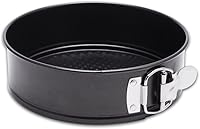
The HIWARE 9 Inch Non-stick Cheesecake Pan Springform has a 9 in diameter, an 8-cup capacity, a steel body and a removable bottom. It is oven safe up to 450°F, and the brand recommends hand washing.
Its non-stick coating and stainless springform buckle are aimed at easier release after the cake has cooled. The pan is round and measures 9.21 in deep by 9.29 in wide by 2.8 in high overall.
This size makes sense when your recipe calls for 9 in or when you need a familiar middle size for family desserts. Its 2.8 in overall height still makes the recipe's fill level important, especially for cakes that rise.
Use a separate tray or foil wrap only if your recipe needs extra protection from leaks. The pan's removable base is useful for release, but no springform pan should be treated as automatically leakproof for a thin liquid batter.
Is a springform pan set better than one pan?
A set is useful when you make different batch sizes or want several diameters for layered cakes. A single pan is simpler when most of your recipes use one size and you have limited storage space.
The HIWARE Springform Pan Set of 3 Non-stick includes 6, 8 and 10 in round pans. The set has an alloy steel construction, stainless springform buckles, non-stick coating and an oven-safe rating up to 450°F.
The three sizes cover the most useful range for small desserts, standard family bakes and larger cakes. You can also use separate pans for layers when the recipe needs several round cakes.
The set's listed capacity is 13 cups, while the individual sizes have different working volumes. Treat the diameter as the first selection step, then check the batter amount and safe fill level for each pan.
Choose the set if you expect your baking needs to change. Choose one 9 in pan if you mostly bake standard cheesecakes and do not want three pans to store and wash.
For a closer look at choosing between removable-side pans and fixed-side pans, compare springform pan vs cake pan.
How should you scale a recipe for different pan sizes?
Scale a recipe by comparing the new pan's base area and depth with the original pan. For pans with similar depth, the area ratio gives you a useful starting point for increasing or reducing batter.
For example, a 9 in round pan has about 64 sq in of base area. An 8 in pan has about 50 sq in, so it holds about 78% as much batter at the same depth.
A 10 in pan has about 79 sq in, so it holds about 123% as much.
Use the ratio as a guide:
- From 9 in to 8 in, start with about 78% of the batter.
- From 9 in to 10 in, start with about 123% of the batter.
- From 9 in to 6 in, use much less batter because the base area is less than half of a 9 in pan.
These figures assume the pans have similar depth and shape. They do not account for a recipe's rising behavior, crust thickness or the space needed at the top.
Keep the fill level close to the original. If the recipe normally fills a pan halfway, do not fill the replacement almost to the rim just because the numbers seem close.
When reducing a recipe, measure small ingredients carefully. Halving one egg can be awkward, so beat it first and weigh or divide it as evenly as possible.
Does pan depth matter as much as diameter?
Pan depth matters because it controls how high the batter sits and how much room remains for rising. A deep pan can hold more, but it can also make the center take longer to bake.
Check the side-wall height before choosing a pan for a tall cheesecake or mousse cake. The diameter may match the recipe while the wall is too short for the intended fill.
Depth also affects how you cool and release the dessert. A taller cake may need more time to chill before you open the latch, especially if the center is soft.
Do not assume that a deeper pan automatically gives a better result. Extra space can help prevent overflow, but it does not replace the recipe's expected diameter or baking time.
What should you check before buying a springform pan?
Check the diameter, depth, material, latch, base and care instructions. Then compare those details with your recipes, oven space and storage habits.
Use this checklist:
- Match the diameter to your most-used recipes.
- Check the depth against the batter height and any crust layer.
- Confirm the outside dimensions fit your oven rack.
- Look for a removable base if easy release matters.
- Check how the buckle closes and opens.
- Confirm the oven temperature rating for your recipes.
- Follow the care instructions for the coating.
- Measure your refrigerator shelf if the cake must chill in the pan.
A non-stick coating can make release easier, but it still helps to prepare the base according to the recipe. A removable bottom does not mean you should lift a warm cake before it has set.
Hand washing is a common care choice for coated springform pans. Avoid cutting directly on the pan's surface, and dry the latch and base fully before storage.
For more springform options, see our guide to the best springform cake pans.
Can a mini mold replace a springform pan?
A mini mold can replace a springform pan only when the recipe suits individual desserts and does not need a removable round cake wall. It is better for small portions than for a standard cheesecake that needs a 6, 8, 9 or 10 in diameter.
The O'CREME Mini Cake Pan Silicone Baking Mold is a 25-pack of round mini molds made from PET. Each mold holds 11.5 fluid oz, measures 4 in by 4 in by 2 in, and has a temperature range from -10°F to 375°F in the product information.
These molds suit batch portions when you want several small desserts instead of one large cake. Their temperature range also covers freezer use for chilled desserts, while the listed material and care instructions make hand washing the general care choice.
They are not a direct substitute for a 9 in springform pan. Choose them when portion size matters more than cutting one round cake into slices.
How do you prevent the wrong pan size from ruining a bake?
Prevent problems by keeping the batter depth close to the recipe's original depth. A diameter change without a batter adjustment can lead to a thin cake, a deep center or a bake that needs a different amount of time.
Use these steps:
- Identify the recipe's original pan diameter and depth.
- Compare the base area of your pan with the original.
- Adjust the batter amount when the area changes noticeably.
- Fill the replacement to a similar level.
- Start checking for doneness earlier in a wider pan.
- Expect more time in a narrower, deeper pan.
- Cool the dessert fully before opening the latch.
Do not rely only on the timer when changing sizes. Look for the recipe's normal signs of doneness, such as a set edge and the expected movement in the center.
If the new pan is much smaller, keep extra batter for another bake rather than overfilling the pan. If it is much larger, a thin layer may dry before the middle reaches the right texture.
Springform pan sizes: the practical choice
Choose 6 in for small desserts, 8 in for reduced recipes, 9 in for many standard cheesecakes, and 10 in for larger recipes written for a wide pan. Match the depth and batter amount before you adjust the baking time.
Pick one 9 in pan if most of your recipes use a standard diameter. Pick the 6, 8 and 10 in set if you bake different batch sizes or make layered cakes.
Choose mini molds when you want individual portions, not when you need to replace a full-size springform pan. Once you match diameter, depth and yield, the right springform pan size becomes a simple recipe comparison.
For more options when you need several sizes in one purchase, see the best springform pan set. You can also compare related bakeware sizes with our guides to what is a half sheet pan, what is a quarter sheet pan and best ceramic cookware for baking.
Frequently asked questions
What is the most common springform pan size?
A 9 in springform pan is a practical starting size for many standard cheesecake and cake recipes. It gives you more surface area than a 6 or 8 in pan without the larger diameter of a 10 in pan.
Always compare the recipe's stated pan size before changing it.
Can I use a different springform pan size than the recipe calls for?
You can change springform pan sizes, but the batter depth and baking time may change. A smaller pan makes a deeper cake that may need more time, while a larger pan creates a shallower cake that may finish sooner.
Keep the pan from becoming too full.
How do I choose a springform pan for cheesecake?
Choose the diameter that matches the cheesecake recipe's yield, then check the pan depth for the batter and any crust. A 9 in pan suits many standard cheesecakes, while a 6 or 8 in pan can work for smaller batches and a 10 in pan can suit a larger one.
Are springform pan sizes measured by diameter?
Yes, round springform pans are usually identified by their inside diameter, such as 6, 8, 9 or 10 in. The outside dimensions can be slightly larger because of the rim and buckle, so measure your oven rack and storage space if clearance is tight.