What Is a Half Sheet Pan?
A half sheet pan is a rimmed baking pan about 18 x 13 inches, sized for cookies, roasted vegetables, sheet cakes, and other oven foods. Its outside dimensions may vary slightly, so measure your oven rack before buying.
On this page (11 sections)
- What are the standard half sheet pan dimensions?
- Why is it called a half sheet pan?
- Will a half sheet pan fit in a home oven?
- What can you cook on a half sheet pan?
- What should you look for when buying one?
- How should you use a half sheet pan?
- Which bakeware products help with related jobs?
- How does a half sheet pan compare with other sizes?
- Is aluminum or stainless steel better for a half sheet pan?
- How do you care for a half sheet pan?
- What is a half sheet pan best for?
A half sheet pan is a rimmed baking pan about 18 x 13 inches, used for cookies, roasted vegetables, sheet cakes, and many other oven foods. The name describes its relationship to a full commercial sheet pan, but brands can vary slightly in their outside measurements.
The rim gives the pan more uses than a flat cookie sheet. It helps contain juices, oil, crumbs, and batter while also making the pan easier to lift from the oven.
What are the standard half sheet pan dimensions?
The common outside size is about 18 x 13 inches, with a shallow rim around the edge. The inside baking surface is smaller because the rim and sloped corners use some of that space.
The exact size depends on how a brand measures the pan. Some dimensions describe the outside edge, while others focus on the flat baking area.
Check both measurements when you need a close fit.
The depth also matters. A shallow rim works well for cookies and roasted food, while a deeper rim gives more room for juices or cake batter.
A deeper pan is not automatically a half sheet pan if its length and width differ greatly from the usual size.
Why is it called a half sheet pan?
A half sheet pan is called “half” because it is roughly half the size of a full sheet pan used in commercial kitchens. It is a practical home-kitchen size that offers a broad surface without requiring the larger oven space of a full pan.
The term does not mean the pan is half-full or designed for half a recipe. You can use it for a full recipe, half a recipe, or several foods at once when the food needs enough room to spread.
For an overview of related sizes and materials, see our guide to bakeware sets.
Will a half sheet pan fit in a home oven?
Many half sheet pans fit standard home ovens, but you should measure first. Oven racks vary in width, depth, and usable space near the door and side walls.
Measure the rack from front to back and side to side. Then compare those measurements with the pan's outside length and width.
Leave enough room to slide the rack out without the pan catching on the oven walls.
A pan that fits the rack may still be awkward if its rim touches the door or if the oven rack cannot slide out safely. Check the oven manual when the rack has an unusual shape or a low clearance near the heating element.
A smaller oven may work better with a quarter sheet pan or another compact baking pan. The goal is a stable fit with room for air to move around the food.
What can you cook on a half sheet pan?
A half sheet pan suits foods that benefit from a broad, shallow surface. Common uses include cookies, roasted vegetables, chicken pieces, bacon, granola, toast, and sheet cakes.
The rim helps contain liquids that would run off a flat cookie sheet. It does not make the pan suitable for deep soups or large amounts of liquid, because the sides remain shallow.
Leave space between pieces when you want browning. Crowding traps steam and can make vegetables or other foods soften instead of developing color.
For cakes, check the recipe's pan depth and batter amount. A half sheet cake pan may have taller sides than a standard rimmed baking sheet, so the terms are related but not always interchangeable.
How much food fits on a half sheet pan?
A half sheet pan has about 234 square inches of outside surface area before accounting for the rim and corners. Its usable baking area is smaller, and the practical capacity depends on the food and the spacing it needs.
A batch of small cookies may fit in one layer with room between pieces. Larger cookies, thick vegetables, or chicken pieces may require more than one batch.
Follow the recipe's spacing guidance instead of filling every open inch. If the food touches or overlaps, use a second pan or cook in batches.
What should you look for when buying one?
Choose a half sheet pan by outside dimensions, rim height, material, coating, and care needs. The best option is the one that fits your oven and matches how you cook.
Aluminum heats quickly and is common in baking pans. Steel and carbon steel can offer a sturdy feel, while nonstick coatings may make release and cleanup easier.
Coated pans still need the care listed by the manufacturer.
Look for a rim that feels easy to grip with oven mitts. A reinforced edge can also make the pan easier to handle, especially when it holds hot food.
If you want a shortlist of standard options, compare these best half sheet pans.
Do you need a nonstick half sheet pan?
A nonstick surface can help with release and cleanup, especially for cookies or sticky roasted foods. It does not remove the need for suitable temperatures, careful spacing, or gentle care.
Use utensils and cleaning methods that suit the coating. Avoid assuming every nonstick pan has the same heat limits or dishwasher guidance.
A bare aluminum pan can be useful when you prefer direct contact with the metal and do not mind washing it carefully. Darker surfaces may brown food differently from light-colored surfaces, so watch the first batch.
How should you use a half sheet pan?
Use the pan on a stable center rack, spread food in an even layer, and leave room between pieces. Preheat the oven as the recipe directs, then rotate the pan only when the recipe allows it.
Place the pan level on the rack. If the food contains liquid, avoid overfilling because shallow rims can spill when the pan moves.
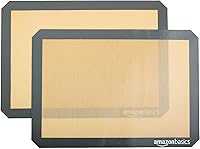
Use parchment paper or a silicone mat when the recipe calls for easier release. Our guide explains how to use silicone baking mats.
Let hot food cool on a heat-safe surface after removing the pan. Do not place a hot pan on a surface that could be damaged by heat.
Which bakeware products help with related jobs?
A half sheet pan handles broad, shallow baking, but loaf pans and mixed-size sets solve different needs. These options can complement a half sheet pan when your recipes include bread or when you need several pan sizes.
The USA Pan Bakeware Pullman Loaf Pan has a cover and measures 9 x 4 x 4 inches. It is made from aluminized steel with a PTFE-, PFOA-, and BPA-free silicone nonstick coating, so it suits square sandwich bread rather than flat-pan baking.
Its cover helps shape a flat-topped loaf, while the fluted surface and wire-reinforced rim are designed to support strength and release. Hand washing with hot water, mild soap, and a gentle scrub brush or sponge is the stated care approach.
Choose it when covered bread is the main need. Skip it if you want a broad surface for cookies, vegetables, or sheet cakes.
The GoodCook Everyday Nonstick Baking Sheet Set includes 13 x 9 inch, 15 x 10 inch, and 17 x 11 inch pans. Its carbon steel construction, scratch-resistant nonstick coating, and dishwasher-safe design give you several smaller choices when a full half sheet may not fit.
The 17 x 11 inch pan is closer to a half sheet than the smaller pans, but it is still not the usual 18 x 13 inch size. Choose this set when oven space or recipe size changes often.
Hand washing is recommended for longer-lasting use, even though the set is dishwasher safe. The different sizes can also help when one pan needs to stay available while another cools.
The USA Pan Nonstick Standard Bread Loaf Pan measures 8.5 x 4.5 x 2.75 inches and has a 1-pound capacity. It is made from aluminized steel with a silicone nonstick coating and suits quick breads, yeast breads, pound cakes, cornbread, and meatloaf.
Its corrugated surface is designed to support air circulation and release, while the folded construction and wire-reinforced rim support the pan's structure. Hand washing with hot water, mild soap, and a gentle scrub brush or sponge is the stated care method.
Choose this pan when you want a standard loaf shape instead of a covered square loaf. It fills a different role from a half sheet pan, so it is useful for recipes that need depth and side support.
How does a half sheet pan compare with other sizes?
A half sheet pan is larger than a quarter sheet pan and smaller than a full sheet pan. It offers a useful middle ground for home baking, but the best size depends on your oven and batch size.
A quarter sheet pan is commonly about 13 x 9 inches. It suits smaller portions, compact ovens, and recipes that would spread too thin on a larger pan.
A full sheet pan is much larger and often needs commercial oven space. It may be practical for catering or large kitchens but can be difficult to use in a typical home oven.
For cakes made in this general shape, see best half sheet cake pans. For one-use events, compare best disposable half sheet pans.
Is aluminum or stainless steel better for a half sheet pan?
Aluminum usually heats quickly and is common for baking, while stainless steel offers a different surface and care profile. Neither material is automatically best for every recipe.
Light-colored aluminum can suit cookies and cakes when you want a familiar baking surface. It may need more careful cleaning if food sticks or stains.
Stainless steel can be a useful choice when you prefer a pan without an aluminum cooking surface. Compare construction, rim strength, and dimensions rather than material alone.
Our guide to best aluminum half sheet pans focuses on aluminum options. For another material comparison, see best stainless steel baking sheets.
How do you care for a half sheet pan?
Let the pan cool, remove food residue gently, and follow its care instructions. Sudden temperature changes, abrasive tools, and harsh cleaning can shorten the useful life of some pans.
Wash a coated pan with mild soap and a soft sponge unless its instructions allow another method. Avoid metal tools when they could scratch the surface.
Dry the pan fully before storing it. If you stack pans, place a soft layer between them when needed to protect coated surfaces.
Inspect the rim and surface over time. A pan that warps, develops sharp edges, or has damaged coating should be removed from regular use.
What is a half sheet pan best for?
A half sheet pan is best for home recipes that need a wide, shallow cooking surface, provided its outside dimensions fit your oven. Measure first, then choose the material, rim depth, and surface finish that match your recipes.
Pick a standard half sheet for larger batches, roasted foods, and sheet cakes. Pick a quarter sheet or smaller baking sheet when your oven is compact or you usually cook smaller portions.
For bread, use a loaf pan with the needed depth and shape. For cakes, disposable pans, or a specific surface material, follow the linked guides above and check the exact dimensions before ordering.
Frequently asked questions
What are the dimensions of a half sheet pan?
A half sheet pan is commonly about 18 x 13 inches on the outside, with a rim around the edge. The usable flat baking area is smaller because the rim takes up space, and exact measurements vary by brand.
Check both the pan and your oven rack before buying.
Will a half sheet pan fit in a home oven?
Many half sheet pans fit standard home ovens when placed on a central rack, but oven interiors vary. Measure the rack width and depth, then allow room for the pan to slide in without touching the door, walls, or heating elements.
A smaller pan may suit compact ovens better.
How much food fits on a half sheet pan?
A half sheet pan gives you about 234 square inches of outside surface area before the rim and usable-area difference. It can hold a batch of cookies, vegetables spread in one layer, or a sheet cake, but the right amount depends on food size and the spacing the recipe needs.
What is the difference between a half sheet pan and a quarter sheet pan?
A half sheet pan is commonly about 18 x 13 inches, while a quarter sheet pan is commonly about 13 x 9 inches. The quarter size is easier to fit in small ovens and suits smaller batches.
See the full comparison in our guide to what is a quarter sheet pan.