Dutch Oven vs Roasting Pan: Which Do You Need? (November 2026)
Choose a Dutch oven for covered braising and stovetop-to-oven cooking; choose a roasting pan for open roasting and browning large cuts. Your cooking method and the shape of the food matter more than which pan seems more versatile.
On this page (9 sections)
- Dutch oven vs roasting pan: which should you choose?
- What does each pan do best?
- Which pan is better for browning?
- Can you start a roast on the stove?
- Which one works for turkey and chicken?
- Do you need a lid or a rack?
- How much room does each pan need?
- Which cookware should you buy first?
- Final choice: Dutch oven or roasting pan?
Choose a Dutch oven for covered braising and stovetop-to-oven cooking; choose a roasting pan for open roasting and browning large cuts. In a Dutch oven vs roasting pan decision, the key differences are depth, lid use and room for food to sit exposed to oven heat.
A Dutch oven holds heat in a deep pot and lets you cover food as it cooks. A roasting pan gives meat more open space, and a rack can hold it above the drippings.
For a bird or large roast, start with the pan's inside dimensions and your oven space. For a stew, braise or dish that begins on the stovetop, a lidded Dutch oven is usually the more useful shape.

Dutch oven vs roasting pan: which should you choose?
Choose the Dutch oven for moist, covered cooking; choose the roasting pan for open exposure and drippings. Each shape suits a different cooking method.
A Dutch oven's depth holds liquid around the food, while its lid helps cover the cooking surface. Many recipes move from stovetop browning to a covered oven finish in the same pot.
A roasting pan is wider and shallower. Its open top exposes more of the food to oven heat, and a rack can raise meat so air circulates around it as fat drains into the pan.
A Dutch oven can roast smaller cuts, and a roasting pan can cook vegetables or a smaller meal. The choice gets clearer when you consider the recipe's liquid, the amount of food, and whether you want a covered or open top.
| Product | Best for | Capacity | Material | Oven safety | Our score |
|---|---|---|---|---|---|
| Lodge Essential Enamel Cast Iron Dutch Oven | covered braising | 6 qt | Enameled cast iron | Up to 500°F | 9.7 |
| Nordic Ware Naturals Half Sheet | smaller open roasts | Aluminum | 9.6 | ||
| Lodge Essential Enamel Cast Iron Dutch Oven | stovetop-to-oven meals | 6 qt | Enameled cast iron | Up to 500°F | 9.6 |
| Cuisinart Chef's Classic 16 In. Roasting Pan | large roasts | Stainless steel and aluminum base | 9.5 |
What does each pan do best?
A Dutch oven is strongest for braises, soups and simmered meals; a roasting pan is strongest for large cuts that need open oven space. Match the pan to what the recipe asks you to do.
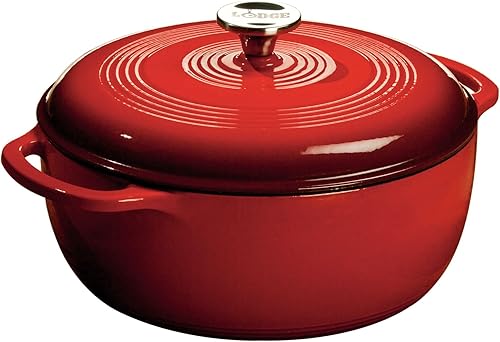
The Lodge Essential Enamel Cast Iron Dutch Oven has a 6 qt capacity, a cast iron body and a lid. Lodge says it is stovetop compatible and oven safe up to 500°F, so it can move between those heat sources for recipes that call for it.
A roasting pan is useful when the food is too large or wide for a pot, or when you want to keep the top exposed. The Cuisinart Chef's Classic 16 In.
Roasting Pan measures 20.7 x 12 x 4.9 in and includes a removable rack.
For smaller open roasts or vegetables, a sheet pan can give food a shallow surface to brown. The Nordic Ware Naturals Half Sheet is 17.9 x 12.9 x 1 in on the outside, and its galvanized steel rim is designed to resist warping.
If you want another color option in the same 6 qt enamel cast iron format, the Lodge Essential Enamel Cast Iron Dutch Oven in Oyster White also supports stovetop and oven use up to 500°F.
Which pan is better for browning?
A roasting pan is generally better for browning a large cut because it leaves the top exposed and gives food room to sit apart. The best result still depends on the recipe, oven heat and how tightly the food is packed.
A lid traps steam and moisture in a Dutch oven. That works well for tenderizing tougher cuts in liquid, but it won't produce the same exposed surface while covered.
For a browned finish after braising, follow the recipe's directions for uncovering the pot near the end. Avoid crowding the meat, since close contact and released moisture can slow browning.
In an open roasting pan, the top of the food receives direct oven heat. A rack can also leave space under a roast for heat movement and fat drainage, while the pan catches the drippings.
A rack isn't necessary for every recipe. If the food should cook in its own juices, sit directly in a bed of vegetables, or remain covered, use the arrangement the recipe calls for.
Can you start a roast on the stove?
A Dutch oven is the better fit when you need to brown food on the stovetop before it goes into the oven. Don't assume a roasting pan is stovetop safe unless its maker says it is.
The Lodge Dutch ovens here are listed as stovetop compatible. That makes them useful for searing a cut, adding liquid and aromatics, then covering the pot for a slower oven cook.
The Cuisinart roasting pan has an aluminum encapsulated base and is described as usable on the stovetop as well as in the oven. Check your burner size and the pan's instructions before using it this way, particularly if the food or pan is heavy.
A roasting pan may be awkward on a small burner because of its broad rectangular base. For a pot-first recipe, a Dutch oven's compact shape is often simpler to handle.
If your recipe starts with a soup or stock, a pot's depth is also useful. See what separates a stockpot from a Dutch oven when deciding whether you need a lidded braising pot or a taller vessel for liquid.
Which one works for turkey and chicken?
A roasting pan is usually the easier choice for whole poultry because it offers a broad base and can hold a rack. Check the bird's size against the pan and oven before cooking.
The Cuisinart roasting pan includes a removable rack that lifts food while the pan collects drippings. Its dimensions are 20.7 x 12 x 4.9 in, so compare the usable space with your bird and oven interior.
For turkey planning, see roasting pans for turkey. If chicken is the main meal, roasting pans for chicken can help you focus on a pan size for that use.
A Dutch oven can work for smaller poultry pieces or a recipe that calls for covered cooking. A whole bird may not fit comfortably in a round 6 qt pot, and the lid can limit access to the surface during roasting.
Do you need a lid or a rack?
Choose a lid for covered cooking and a rack for lifting food above drippings. They solve different problems, so one doesn't replace the other.
A Dutch oven normally comes with a fitted lid. That makes it suited to braising, simmering and recipes where moisture should stay in the pot.
Roasting pans may be sold with or without lids, while some include a rack. If you specifically want covered roasting, compare roasting pans with lids and confirm the lid fits the pan you choose.
A rack helps keep meat above the liquid and fat it releases. Browse roasting pans with racks if that separation matters for your cooking.
Don't assume a rack is always better. Some recipes need the food to sit in liquid or vegetables, while others benefit from airflow below the roast.
How much room does each pan need?
A roasting pan needs enough oven width and depth for its footprint plus safe handling space; a Dutch oven needs room for its handles and lid. Measure the oven cavity and storage shelf before buying.
The Cuisinart pan is 20.7 in long and 12 in wide, before accounting for the space needed to place it or grip its handles. Its 4.9 in height also needs to clear oven racks and the oven door opening.
The Nordic Ware half sheet measures 17.9 x 12.9 x 1 in externally. It is shallower than a roasting pan, so it suits food that can roast without deep sides or a large pool of liquid.
The Lodge Dutch ovens have a 6 qt capacity and cast iron construction. Cast iron retains heat but makes a full pot cumbersome to lift, so consider how you'll move it safely from stovetop to oven or table.
For oven browning in a smaller format, an oven-safe grill pan is another option. See oven grill pans if grill marks and a ridged surface matter more than collecting a roast's drippings.
Which cookware should you buy first?
Buy the Dutch oven first if your regular meals include braises, soups or stovetop-to-oven recipes; buy the roasting pan first if you often cook whole poultry or large roasts. Choose the shape that fits meals you make often.
The enameled Lodge pot offers a lidded 6 qt cooking space for covered methods. Its cast iron material and stovetop compatibility make it useful beyond a single roast.
A roasting pan is a more targeted choice for open roasting. A rack adds separation between the food and drippings, while the broad base gives a large cut room to sit.
If you already own one, buy the other only when a recurring recipe exposes a real gap. A Dutch oven won't provide the same wide surface as a roaster, and a roasting pan doesn't replace a deep, lidded pot for simmering.
For a dedicated pot comparison, browse cast iron Dutch ovens. If your next need is stovetop eggs rather than oven cooking, frying pans for eggs covers that separate pan choice.
Final choice: Dutch oven or roasting pan?
Pick a Dutch oven for covered braising, simmering and stovetop starts; pick a roasting pan for open browning, large cuts and collected drippings. Let the recipe and the food's size decide when both uses matter.
A Dutch oven is the more flexible daily pot when your meals include sauces, soups and slow cooking. A roasting pan earns its space when you regularly cook whole poultry or large roasts that need room to brown.
Before you choose, check the recipe, pan dimensions and oven clearance. If the meal needs a lid, choose the pot; if it needs open space and a rack, choose the roaster.
Frequently asked questions
Can I use a Dutch oven instead of a roasting pan?
Use a Dutch oven for a smaller roast or a recipe that benefits from a lid and moist cooking. A roasting pan is more suitable for a large bird or cut that needs open oven exposure, room around it, and drippings collected below.
Can you roast meat in a Dutch oven?
Yes, a Dutch oven can roast meat, especially when the recipe calls for a covered pot or a smaller cut. For a crisp, exposed surface, leave the lid off if the recipe allows it, and make sure the meat has room rather than being crowded into the pot.
Is a roasting pan the same as a Dutch oven?
No. A Dutch oven is a deep, lidded pot designed for stovetop and oven cooking, while a roasting pan is a broad, usually shallow vessel for open oven roasting.
A rack in a roasting pan can lift meat above its drippings.
Which is better for turkey, a Dutch oven or roasting pan?
A roasting pan is usually the practical choice for a whole turkey because its wide shape gives the bird room, and a rack can lift it above the drippings. Check the turkey's size against the pan and your oven before choosing.