Braiser vs Dutch Oven: Which Should You Choose? (November 2026)
Choose a braiser for wide, shallow cooking and a Dutch oven for deeper capacity and soups. Both can braise, but their shapes make them better suited to different portions and cooking tasks.
On this page (7 sections)
- Braiser vs Dutch oven: what is the main difference?
- Which vessel is better for braising?
- Which shape gives you more usable capacity?
- Which one works better for soup, stew, and bread?
- How does each vessel fit into a kitchen routine?
- What materials and care should you compare?
- Which should you choose for your cooking style?
Choose a braiser for wide, shallow cooking and a Dutch oven for deeper capacity and soups. In a braiser vs Dutch oven comparison, shape matters as much as capacity because it changes how food sits, how much liquid fits, and how easily you can reach ingredients.
A braiser spreads food across a broad base under a relatively low lid. A Dutch oven has taller sides and more depth, so it can hold more liquid and accommodate foods stacked higher.
Both shapes can handle braising. Your choice depends on whether you want room to sear pieces side by side or enough depth for stew, soup, and larger batches.

 Best for everyday Dutch oven tasks
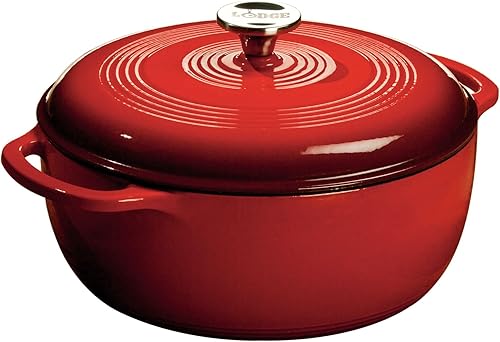
Lodge Essential Enamel Cast Iron Dutch Oven
Braiser vs Dutch oven: what is the main difference?
A braiser is wide and shallow, while a Dutch oven is deep and relatively narrow. The wide base gives a braiser more contact area for browning, and the taller walls of a Dutch oven provide room for liquid.
A braiser usually has a low profile, broad cooking surface, and fitted lid. Food can sit in a single layer with cooking liquid partway up the sides.
A Dutch oven is shaped more like a pot, with higher walls surrounding its base. That gives it headroom for ingredients and liquid, which can be helpful for stews and soups.
For another shallow, broad vessel, see What Is a Rondeau Pan Used for in a Home Kitchen?. A rondeau has its own shape and use cases, so compare its depth and handles with your recipes before choosing.
Which vessel is better for braising?
Either can braise; choose based on how much food you want spread across the base. A braiser suits a few pieces laid in one layer, while a Dutch oven gives you more depth for added liquid and ingredients.
Braising starts with browning, then continues with covered cooking in liquid. A broad base can make it easier to brown meat without piling pieces on top of each other.
A Dutch oven can work well when the recipe calls for substantial liquid or a larger batch. Its height also helps contain splashes as you stir.
Is a braiser better for browning?
A braiser's broad cooking surface gives separated pieces more contact with the hot base. That can help you brown in fewer batches, depending on the pan size and the amount of food.
If you want a shallower pan for stovetop-to-oven cooking, browse our best braiser pan options. Check the dimensions and capacity against your burners and storage space.
Can you cook the same recipes in both?
Many recipes can move between the two shapes, but the result depends on fit. A recipe that depends on a broad layer of vegetables or meat may be easier to arrange in a braiser.
A Dutch oven can be more convenient if the recipe has broth, sauce, or ingredients that need space above the base. Don't fill either vessel past a safe working level, and follow the cookware's care and temperature instructions.
Which shape gives you more usable capacity?
A Dutch oven usually offers more depth for liquid, while a braiser uses more of its space across the base. Compare the stated quart capacity, but also consider the food's shape and the cooking surface you need.
The products here range from 5 to 7.5 quarts. The 7.5-quart JANSKA MUELLER HOME model has the largest stated capacity in this group, while the HexClad braiser Dutch oven is 5 quarts.
Capacity alone doesn't tell you how many pieces will fit in one layer. A broad vessel may offer more room for browning even if it holds less total volume.
If height and capacity are your main concerns, compare a Dutch oven with a stockpot in What Is the Difference Between a Stockpot and a Dutch Oven?. Stockpots are another option when you need a tall vessel for larger amounts of liquid.
Which one works better for soup, stew, and bread?
Choose a Dutch oven for soup, stew, and recipes that need vertical room. Its taller sides make it easier to stir liquid-heavy dishes and keep ingredients below the rim.
A 6-quart Lodge Essential Enamel Dutch Oven can suit everyday simmering, baking, and braising. The JANSKA MUELLER HOME Dutch oven offers a stated 7.5-quart capacity for larger batches.
For bread, a Dutch oven's enclosed depth can provide room for a loaf to expand. Follow the recipe and the cookware's temperature limits, especially when using a lid.
A braiser can still cook a smaller stew or shallow one-pot meal. Its lower sides may be less comfortable for vigorous stirring or recipes with a high liquid level.
Does a Dutch oven replace a braiser?
A Dutch oven can replace a braiser for many braises, especially if the recipe doesn't depend on a wide, single layer. It may take more batches to brown the same amount of food if the base is narrower.
The reverse is less straightforward. A braiser's shallower walls limit how much soup or broth it can hold, so it may not replace a Dutch oven for recipes that need depth.
How does each vessel fit into a kitchen routine?
Pick the vessel that matches your regular recipes and your available storage space. A braiser is often lower and wider, while a Dutch oven takes more vertical room but can cover more kinds of liquid-heavy cooking.
Measure cabinet shelves before you buy. A wide braiser can be harder to store in a narrow cabinet, while a tall Dutch oven may not fit beneath a low shelf.
Consider handling too. Filled cast iron can be heavy, and moving a full vessel from stovetop to oven or table may take both hands.
The HexClad 5-quart hybrid braiser Dutch oven is about 3 lb and has tri-ply construction with an aluminum core. The Lodge Dutch ovens listed here are cast iron and weigh 13.5 lb and 14.9 lb, while the 7.5-quart JANSKA model weighs 15.5 lb.
What materials and care should you compare?
Compare the cooking surface, weight, and care instructions before choosing between specific models. Vessel shape doesn't tell you whether cookware is enameled, coated, or safe for a particular heat source.
The JANSKA and Lodge options here are enameled cast iron. The HexClad is a hybrid design with stainless steel and ceramic coating, an aluminum core, and induction compatibility.
Care differs by model. The JANSKA is dishwasher-safe but recommends hand washing, the Lodge models recommend hand washing, and HexClad says its cookware is dishwasher-friendly.
Oven limits also vary. The JANSKA and Lodge Dutch ovens are listed as oven-safe up to 500°F; HexClad says its steel-lid cookware is oven-safe up to 900°F, while its tempered glass lids are safe to 400°F.
Which should you choose for your cooking style?
Choose a braiser if you often brown food in a broad layer and finish it covered with modest liquid. Choose a Dutch oven if you make soups, stews, bread, or larger batches.
A dedicated braiser makes sense when its low sides suit your regular meals and you have room to store a wide pan. Our guide to how to cook in a braiser explains how to use its shape for browning and covered cooking.
Choose a Dutch oven if one pot needs to cover several jobs, from simmering to baking. If slow unattended cooking is your priority, compare that approach with a Dutch oven vs crock pot guide.
For oven roasting, a Dutch oven can handle some covered recipes, but a roasting pan is better suited to broad, open roasting. See our best roasting pans with racks for that task, or compare best Staub Dutch ovens if you're focused on that brand.
A braiser and a Dutch oven can both be useful, but you don't need both unless your recipes call for their distinct shapes. Let the meals you cook most often decide which one earns cabinet space.
Frequently asked questions
Is a braiser the same as a Dutch oven?
No. A braiser is generally wide and shallow, while a Dutch oven is deeper with taller sides.
Both can move from stovetop cooking to oven braising, but the braiser gives food more room across the base and the Dutch oven holds more liquid above it.
Can you braise in a Dutch oven?
Yes. A Dutch oven can sear food on the stovetop and then hold it with liquid for slow cooking, provided its material and handles are oven-safe for the recipe.
Its depth is useful for stews and larger amounts of liquid, though food may be less spread out across the base.
Can you use a braiser for soup?
You can use a braiser for a modest amount of soup, but its shallow sides limit liquid capacity and can make stirring or simmering a full batch awkward. For soups, stock, or a large amount of sauce, a deeper Dutch oven or stockpot is usually easier to manage.
Which is better for searing meat?
A braiser's broad base can give pieces more room to sit apart while searing, which helps avoid crowding. A Dutch oven can also sear, but its smaller base may mean working in batches, depending on the pot's diameter and the amount of food.
Can a braiser replace a Dutch oven?
A braiser can replace a Dutch oven for many shallow braises, pan-roasted dishes, and moderate one-pot meals. It won't match a deeper pot for a large soup, tall loaf, or a recipe that needs extra liquid capacity, so consider the meals you cook most often.