What Is an 8-Inch Chef Knife Used For?
An 8-inch chef knife is used for everyday prep such as chopping vegetables, slicing meat, mincing herbs, and cutting large foods. Its blade gives you a useful balance of reach, control, and cutting-board space.
On this page (9 sections)
- What is an 8 inch chef knife used for?
- Why is 8 inches a common chef knife size?
- How should you use an 8 inch chef knife safely?
- When should you use a smaller knife?
- When is a boning knife better than a chef knife?
- What should you use to sharpen an 8 inch chef knife?
- How do you choose the right 8 inch chef knife?
- What can an 8 inch chef knife not do?
- Is an 8 inch chef knife right for your kitchen?
An 8-inch chef knife is used for chopping vegetables, slicing meat, mincing herbs, dicing onions, and handling most daily cutting-board work. Its size gives you enough blade length for larger ingredients while keeping the knife manageable for home cooking.
The best use depends on the blade shape, sharpness, grip, and the food in front of you. An 8-inch chef knife is a general-purpose tool, not a replacement for every knife in the kitchen.
What is an 8 inch chef knife used for?
An 8-inch chef knife is mainly used for rock chopping, push cutting, slicing, and portioning food. You can use it on onions, carrots, celery, potatoes, herbs, boneless meat, fruit, and many other ingredients.
The broad blade also gives you space to scoop chopped food from the board. Keep the edge sharp and use a stable cutting surface so the knife moves through food with less force.
Common tasks include:
- Chopping vegetables for soups and stews
- Dicing onions, peppers, and tomatoes
- Slicing boneless meat and poultry
- Mincing garlic, parsley, and other herbs
- Cutting fruit and larger vegetables
- Portioning sandwiches, cooked meat, and other prepared foods
- Crushing garlic with the flat side when the blade design allows it
A chef knife can handle many foods, but it should not be used to cut bones, frozen food, or hard objects. Those tasks can damage the edge or make the knife harder to control.
For a wider overview of blade shapes and specialized tools, see our guide to types of kitchen knives.
Why is 8 inches a common chef knife size?
An 8-inch chef knife balances cutting reach and control for many home cooks. A shorter blade can feel nimble but may require more strokes on large ingredients, while a longer blade needs more board space and may feel less comfortable to some users.
The stated size usually refers to blade length, not the full knife from tip to handle. Check the maker's measurements when storage space matters, since handle length and overall balance also affect how the knife feels.
An 8-inch blade suits readers who want one main knife for regular meal prep. If you have smaller hands or limited board space, a shorter chef knife may feel easier.
If you often cut large vegetables, melons, or wide roasts, a longer chef knife may cover more food in one pass.
How should you use an 8 inch chef knife safely?
Use an 8-inch chef knife with your guide hand curled inward and your cutting board held steady. Move the blade with controlled strokes instead of forcing it through food.
Keep the knife edge pointed away from your fingers. Place a damp towel beneath the board if it slides, and clear scraps from the cutting area before they interfere with your grip.
Use the cutting method that suits the food. A rocking motion works well for mincing herbs, while a straight push or pull cut can suit vegetables and boneless meat.
Avoid twisting the blade inside hard food.
Wash and dry the knife according to its care instructions. Store it in a block, sheath, or other holder that protects the edge and keeps the blade from moving loose in a drawer.
When should you use a smaller knife?
Use a smaller knife when the food is small, the cuts are detailed, or you need to work in your hand. Paring knives are useful for peeling apples, trimming vegetables, removing small blemishes, and making controlled cuts on small ingredients.
An 8-inch chef knife can do some of these jobs, but its longer blade may feel awkward for detail work. Keep the chef knife on the board when possible, and choose a smaller knife for tasks that need short, precise movements.
The RADA Cutlery Paring Knife Galore Gift Set includes peeling, regular, and heavy duty paring knives with T420 high-carbon stainless steel blades and brushed aluminum handles.
The handles are silver cast aluminum with a satin finish and should be handwashed. The set is made in the USA and includes 3 knives, so it suits a kitchen that needs several small-blade options.
When is a boning knife better than a chef knife?
A boning knife is better for removing meat from bones and trimming close around joints. Its pointed tip and curved blade can reach areas where a broad chef knife is less precise.
The Victorinox Victorinox swiss army cutlery fibrox pro is a 6-inch boning knife with a curved, semi-stiff stainless steel blade. Its Fibrox Pro handle is made for a non-slip grip, including when the handle is wet.
This knife suits cooks who regularly prepare beef, pork, poultry, or other cuts that need close trimming. It is not an 8-inch chef knife, so it should be treated as a specialized companion rather than a substitute for broad chopping.
The handle is thermoplastic rubber, and the knife has a plain stainless steel edge. Handwashing and careful storage can help protect any kitchen knife, especially one used around bone and connective tissue.
What should you use to sharpen an 8 inch chef knife?
Use a sharpener that matches the knife's edge type and sharpening angle. A sharp edge usually gives you more control than a dull one, but sharpening too aggressively or using the wrong guide can damage the edge.
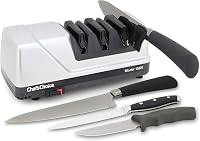
The Chef’sChoice 15XV EdgeSelect Professional Electric Knife Sharpener has a 3-stage system with 100-percent diamond abrasives and precision angle guides. It works with straight-edge and serrated knives and converts traditional 20-degree edges to 15-degree Trizor XV edges.
The sharpener measures about 10 x 4.25 x 4.25 inches and has a gray finish. Its stages sharpen, hone, and polish the edge, so follow the unit's instructions and avoid repeated sharpening when the knife only needs light maintenance.
An 8-inch chef knife may have a straight edge, but not every chef knife uses the same edge angle. Check the knife's care guidance before changing its edge profile.
How do you choose the right 8 inch chef knife?
Choose an 8-inch chef knife by considering blade shape, handle comfort, edge style, balance, and care needs. Compare chef knife sets if you want several options in one purchase.
The most useful knife is one you can control through your usual ingredients without gripping too tightly.
A broad, curved blade can suit rocking cuts and herb mincing. A flatter profile can suit cooks who prefer push cuts.
Compare chef knives and gyuto knives to see how blade profiles fit different cutting styles.
Handle material and shape affect grip, while blade thickness affects how the knife moves through food.
If you're comparing general-purpose options, start with our guide to the best 8 inch chef knife. Cooks who prefer thinner blades can also compare the best 8 inch Japanese chef knife.
For a familiar European-style option, see the best Victorinox chef knife 8 inch. If you want a heavier German-style knife, our guide to the best chef knife 8 inch Wusthof can help narrow the choices.
What can an 8 inch chef knife not do?
An 8-inch chef knife should not be used for cutting bones, frozen food, or very hard objects. It also is not the best tool for peeling small produce, removing meat from bones, or making tiny decorative cuts.
Use a serrated knife for foods with a firm crust and soft interior when a straight edge may slide. Use kitchen shears for tasks that are safer with a controlled snip, and use a cleaver or other purpose-built tool when the recipe calls for chopping through bones.
A knife block can keep your main knife and smaller tools separated. If you want a storage solution with built-in maintenance, see our guide to the best knife block set with sharpener.
Is an 8 inch chef knife right for your kitchen?
An 8-inch chef knife is right for you if one versatile blade needs to handle most board-based prep. It can chop vegetables, slice boneless foods, mince herbs, and prepare ingredients for everyday meals.
Choose a smaller knife for peeling and detail work, a boning knife for close trimming around bones, and a guided sharpener for edge maintenance. The best setup is usually a main chef knife supported by a few specialized tools, not one blade forced into every task.
For most home cooks, the decision rule is simple: choose an 8-inch chef knife for broad daily prep, then add smaller or specialized knives when the food or cutting motion calls for them.
Frequently asked questions
What is an 8 inch chef knife best for?
An 8 inch chef knife is best for common prep tasks, including chopping vegetables, slicing boneless meat, mincing herbs, and dicing onions. The size gives you more cutting length than a paring knife while remaining easier to control than a longer blade for many home cooks.
Can you use an 8 inch chef knife to cut meat?
Yes, an 8 inch chef knife can slice boneless meat, cut poultry into portions, and trim many everyday ingredients. Use a specialized boning knife for close work around bones, and choose a heavier tool when the task involves joints, bones, or very dense food.
Is an 8 inch chef knife good for beginners?
An 8 inch chef knife is often a practical beginner size because it offers useful reach without taking up excessive board space. Beginners should focus on a comfortable grip, a stable cutting board, careful finger placement, and slow controlled cuts.
How is an 8 inch chef knife different from a paring knife?
An 8 inch chef knife has a longer blade for board work such as chopping, slicing, and dicing. A paring knife is smaller and better suited to peeling, trimming, and detailed hand work on fruits and vegetables.