What Cookware Measurements Matter for Storage in a Small Cabinet?
On this page (9 sections)
Quick answer: Measure the cookware’s total width, total length, height, and nested stack height—not just the advertised diameter.
Then measure the cabinet opening, usable shelf depth, hinge clearance, and space needed to lift each piece out safely. A pan can fit inside a cabinet yet still fail to pass through its door.
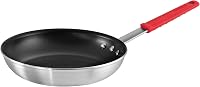
Cookware labels usually describe the cooking surface or rim diameter. That number says little about storage. For a skillet, see how to measure frying pan diameter. Handles, pouring lips, tall knobs, and flared walls can add several inches to the space a piece needs.
The simplest way to avoid a return is to make a four-number storage profile for every pan and compare it with the smallest opening along its path into the cabinet.
The Measurements That Actually Matter
| Measurement | How to measure it | Why it matters |
|---|---|---|
| Total width | Across the rim, including side handles and pouring lips | Determines whether the pan clears the door and hinges |
| Total length | From the far rim to the end of the longest handle | Long handles often exceed shelf depth |
| Assembled height | Base to the top of the lid knob | Shows whether the lidded pan fits between shelves |
| Nested stack height | Stack pans with protectors exactly as they will be stored | Reveals the real vertical space a set consumes |
Measure rigid protrusions. A helper handle, rivet housing, lid knob, or fixed long handle cannot be compressed to fit. Removable handles are different, but they need their own accessible storage spot.
Measure the Cabinet, Not Just the Shelf
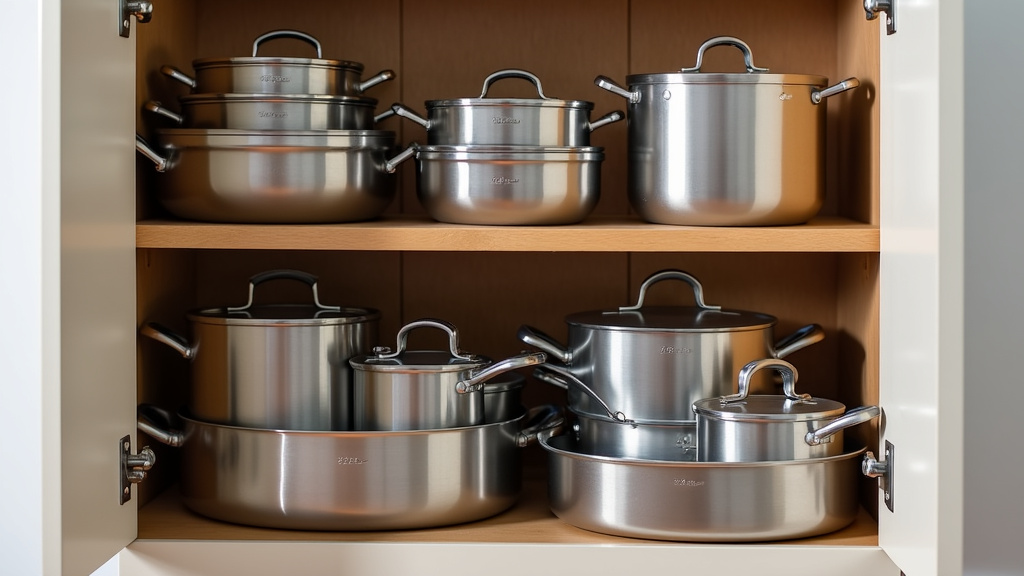
Start with the opening. Measure between the door frame and the nearest hinge, then measure the interior width, depth, and height. If the shelf is adjustable, record the available pin positions rather than assuming you can place it anywhere.
Also check the route into the cabinet. A wide saute pan may fit when held flat but require enough room to angle its handle through the opening. Deep lower cabinets can accept larger pieces, yet cookware pushed to the back may be difficult to retrieve.
Easy clearance rule: Leave roughly an inch of practical clearance where possible. Exact-fit storage looks efficient on paper but becomes frustrating when lids shift or neighboring pieces move.
How to Measure a Cookware Set Before Buying
- List the actual vessels. Separate pans, pots, lids, inserts, and accessories.
- Record outside dimensions. Manufacturer specifications may help, but verify whether they include handles and knobs.
- Estimate the stored arrangement. Decide which pieces will nest and which must stand separately.
- Add pan protectors. Felt or silicone separators add height but can protect coated or polished surfaces.
- Test a cardboard footprint. Cut or fold cardboard to the widest dimensions and pass it through the cabinet opening.
- Check lifting space. Make sure you can grip and remove a heavy pan without unloading the entire cabinet.
Nesting Can Save Space—With Limits
Nesting works best when pieces share a gradual change in diameter and their handles align. Deep pans with nearly identical diameters may not nest far enough to save much height.
Avoid letting bare metal, rough bases, or lid edges scrape a delicate cooking surface. Use approved protectors and make sure the stack remains stable. A shorter unstable stack is not better storage.
Where Should the Lids Go?
Lids are often the awkward part of a set. Measure their full diameter and the height of the handle or knob. A vertical rack can reduce their footprint, but it needs enough slot width and overhead clearance.
- Store frequently used lids near their matching pans.
- Keep glass lids where they cannot be struck by heavy cookware.
- Do not rely on a lid that only balances loosely inside a stack.
Choose Shapes That Work in Small Cabinets
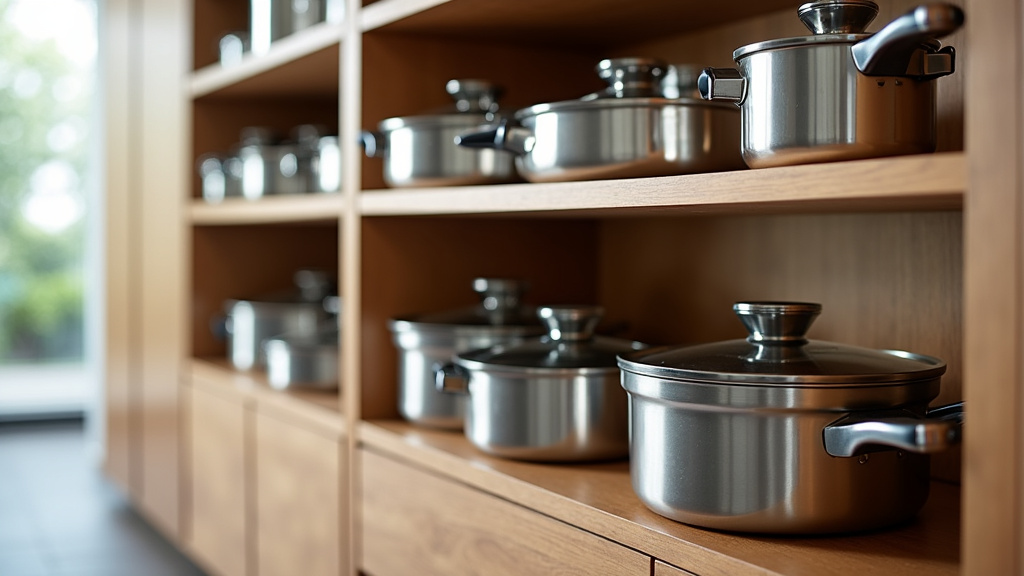
Two useful pans are usually easier to store than five overlapping sizes. Straight-sided pieces often nest less deeply than flared skillets, while two short side handles may fit a shallow cabinet better than one long handle.
Universal lids can reduce lid count only if they fit securely and are approved for the intended cookware and temperature. Detachable handles can help, but check how the locking mechanism is cleaned, maintained, and rated for oven use.
Best small-space buying strategy
Buy around recurring meals: one skillet, one saucepan, and one larger lidded vessel may cover more real cooking than a large set with near-duplicate sizes.
Storage Safety Matters
Store the heaviest cookware on a low, sturdy shelf. Avoid overhead storage for a vessel that is difficult to grip with one hand. Long handles should not block the cabinet door or catch on nearby items.
Confirm shelf and organizer load ratings. Cast iron, enameled cookware, and multiple nested pans can be surprisingly heavy. A rack that is adequate for lids may not support a stack of Dutch ovens.
The Bottom Line
For small-cabinet storage, the meaningful dimensions are outside width, handle-to-rim length, assembled height, and protected stack height. Compare those numbers with the cabinet opening and the space needed to remove each piece—not merely the shelf’s interior.
Choose fewer, more versatile vessels; plan lid storage separately; and prioritize safe access over a perfectly full cabinet.
Frequently Asked Questions
Does a 10-inch pan need only 10 inches of storage space?
No. The stated size often refers to the rim or cooking surface. The outside body, helper handle, and long handle may make the total footprint much larger.
Should cookware be stored with the lids on?
It depends on space and ventilation. Lids add height and may prevent nesting, so a separate rack is often more efficient. Store cookware dry and follow its manufacturer’s care guidance.
Can nonstick pans be nested?
They can be nested if the maker permits it and the cooking surfaces are protected from abrasion. Use suitable pan protectors and avoid unstable stacks.
Are removable handles better for small kitchens?
They can reduce stored length, but the connection, load limits, cleaning method, and oven restrictions vary. Review the exact product instructions.