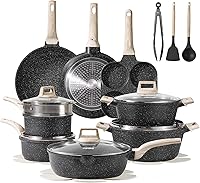
Is Stainless Steel Cookware Oven Safe?
Most uncoated stainless steel cookware can go in the oven, but the handle, lid, and any coating may have a lower heat limit. Check the maker's temperature guidance for every part before heating it.
On this page (7 sections)
- Is stainless steel cookware oven safe?
- Which part sets the oven limit?
- How do you check if stainless steel cookware is oven safe?
- What should you do before putting a pan in the oven?
- What if the cookware has a lower oven limit than your recipe?
- Which stainless steel cookware should you choose for oven use?
- How can you tell if stainless steel cookware is oven safe?
Most uncoated stainless steel cookware can go in the oven, but the handle, lid, and any coating may have a lower heat limit. Check the maker's temperature guidance for every part before moving a pan from the stove to the oven.
The metal body alone doesn't determine the safe temperature. A plastic grip, glass lid, or nonstick surface may set a lower limit than the stainless steel.
Is stainless steel cookware oven safe?
Usually, an all-metal stainless steel pan is oven safe if its maker allows it. Stainless steel cookware oven safe limits vary by construction and brand, so check the instructions for your exact pan and planned temperature.
Some pans combine stainless steel with other materials, such as an aluminum core, bonded layers, or a separate handle. For background on layered construction, see what triply stainless steel cookware is.
Look for a temperature rating in the care guide, on the maker's website, or on packaging you kept. If the pan has no clear rating, contact the maker or choose cookware with a confirmed limit instead of guessing.
Which part sets the oven limit?
Use the lowest oven limit given for any part of the cookware. The pan may tolerate more heat than its handle, lid, knob, or coating.
Can the handle go in the oven?
Check the handle material and its stated heat limit. Metal handles are often suitable for oven use, but that doesn't guarantee every handle or attachment is rated for your oven temperature.
Plastic and silicone parts can soften or become damaged at heat levels that the pan body tolerates. A removable handle should be taken off if the instructions require it, and the pan should be positioned so no part rests against an oven element.
Use a dry oven mitt when you take the pan out. Handles can become hot in the oven even if they stayed cool on the stovetop.
Can a stainless steel pan with a glass lid go in the oven?
Check the glass lid, rim, and knob separately from the pan. A lid may have a lower temperature limit than the cookware body, or it may not be approved for oven use at all.
If the lid rating is missing or unclear, bake without it. Use foil only if the cookware instructions allow it and keep it from touching heating elements.
Do coatings change the temperature limit?
Yes, a nonstick or ceramic coating can set the oven limit. Follow the rating for the coated cookware, even if its underlying body is stainless steel or another oven-tolerant metal.
Coatings can also affect how you use the pan. Compare oven-safe nonstick cookware if you need a coated pan, or see oven-safe ceramic cookware for ceramic-coated options.
How do you check if stainless steel cookware is oven safe?
Find the maker's temperature limit for the full pan, including its handle and lid. Then compare that limit with the recipe temperature and any broiler use.
- Identify the exact cookware line or model.
- Check the instructions for the pan body, handle, lid, and knob.
- Note the lowest stated oven temperature among those parts.
- Confirm whether the guidance covers broiling, if you plan to use the broiler.
- Remove detachable parts only as the maker directs.
Don't rely on a generic claim that stainless steel is oven safe. Cookware designs differ, and the exact limit matters.
What should you do before putting a pan in the oven?
Inspect the pan and set it up according to its care instructions. Remove any part that the maker says is not oven safe, and make sure the pan is dry and stable.
Avoid sudden temperature changes, such as moving a very hot pan directly onto a cold or wet surface. Set hot cookware on a dry, heat-safe trivet, and let it cool before washing.
Don't use a pan with a loose handle, damaged coating, or cracked lid. Damage can make handling less safe and may change how the cookware performs.
Does oven-safe mean broiler-safe?
No, an oven-safe label doesn't automatically mean broiler safe. Broiling exposes cookware to direct, intense heat, so use the broiler only when the maker specifically allows it.
Keep the handle and any lid within their stated limits. If the instructions don't mention broiling, use a regular oven setting or choose cookware with explicit broiler guidance.
What if the cookware has a lower oven limit than your recipe?
Use a different pan rated for the recipe temperature or finish the dish on the stovetop. Don't exceed the cookware's limit to save a transfer.
For a confirmed option, best oven safe cookware can help you compare cookware designed for oven use. Check each pan's full temperature guidance before choosing.
The T-Fal Signature set is oven and broiler safe up to 350°F, which suits recipes that stay within that limit.
The set has nonstick interiors, comfortable handles, and vented glass lids, so follow the 350°F limit for the complete cookware set. Its stated limit is not suitable for recipes requiring higher oven heat.
Redchef describes its ceramic cookware set as oven safe up to 842°F and says its removable handle lets the cookware move from stove to oven. Check the handle instructions and remove it if required before baking.
Astercook describes this aluminum cookware set as oven safe and has a removable handle. The available details don't give a specific temperature limit, so confirm the safe heat level before using it in a hot oven.
Which stainless steel cookware should you choose for oven use?
Choose a pan with a clear temperature limit that covers every part and your recipe. If you want to move a pan between stove and oven often, compare its handle, lid, and coating details before deciding.
For stainless steel options, see best tri-ply stainless steel cookware. If coating material is also part of your decision, read about whether stainless steel cookware is non toxic.
For a nonstick alternative, best Carote ceramic cookware may help you compare coated options. Learn the basics of how to use stainless steel cookware for stovetop cooking and care.
How can you tell if stainless steel cookware is oven safe?
For oven safe stainless steel cookware, trust the maker's rating for the complete pan, not the metal body alone. The handle, lid, knob, and coating can each lower the safe temperature.
Choose cookware with a clear limit if your recipe needs a specific oven heat. If the limit or broiler guidance is unclear, leave the pan out of the oven and use a confirmed alternative.
Frequently asked questions
Is stainless steel cookware oven safe?
Often, yes, but the safe temperature depends on the complete pan. Check the maker's guidance for the stainless body, handle, lid, and any coating, then use the lowest limit among those parts.
If you can't confirm a limit, don't assume the pan is oven safe.
Can stainless steel pans with plastic handles go in the oven?
Not unless the handle is specifically rated for oven use at your planned temperature. Plastic, silicone, and other handle materials can have different limits, and a detachable handle may need to come off.
Check the cookware instructions before putting the pan in the oven.
Can stainless steel cookware with glass lids go in the oven?
Only when the maker gives an oven limit for the lid as well as the pan. Glass lids may have different temperature limits from metal cookware, and a knob or rim can be the limiting part.
If the lid rating is unclear, bake with the lid off.
Is stainless steel cookware safe under the broiler?
Only if the maker says the complete pan is broiler safe. Broilers expose cookware to intense direct heat, so a general oven-safe label does not automatically cover broiling.
Check the handle, lid, and coating limits and keep the pan at the distance required by the instructions.