Ceramic Cookware vs Cast Iron: Which Should You Choose? (November 2026)
Choose ceramic cookware for lighter everyday handling and easy cleanup, or cast iron for strong heat retention and searing. Your cooking style and willingness to care for the pan matter more than the material name.
On this page (7 sections)
- Ceramic Cookware vs Cast Iron: Which Should You Choose?
- Ceramic cookware vs cast iron: what is the main difference?
- Which cookware handles heat better?
- Which is easier to lift and store?
- Which is simpler to clean and care for?
- Which suits different kitchens and cooking habits?
- What should you choose: ceramic or cast iron cookware?
Ceramic Cookware vs Cast Iron: Which Should You Choose?
Choose ceramic cookware for lighter everyday handling and easier cleanup, or cast iron for searing and heat retention. In a ceramic cookware vs cast iron comparison, the right choice depends on the foods you cook and how much care you want to give your pans.
Ceramic cookware sets often use an aluminum body with a ceramic coating. Cast iron is a heavier, uncoated cooking surface that can retain heat well and works across stovetop, oven and outdoor cooking.
Both can be useful in a home kitchen. Compare their weight, cooking strengths, cleanup and storage before choosing.
 Best for searing and oven use
Lodge Pre-Seasoned Cast Iron Skillet with Silicone
 Best for several skillet sizes
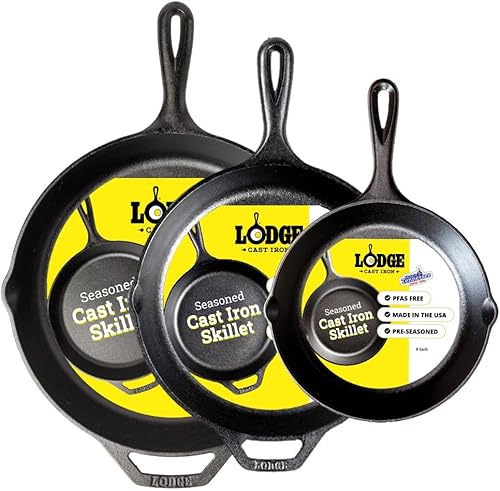
Lodge Pre-Seasoned Cast Iron Skillet 3-Piece Set
Ceramic cookware vs cast iron: what is the main difference?
Ceramic cookware is usually lighter and easier to clean, while cast iron holds heat and handles high-heat cooking well. Their different construction affects how each pan feels and what care it needs.
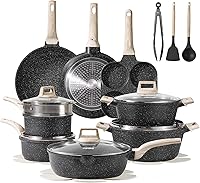
The CAROTE set combines an aluminum body with a ceramic coating. It includes frying pans, saucepans, stockpots, a sauté pan, utensils and pan protectors.
The Lodge skillet is cast iron, pre-seasoned with vegetable oil. At 12 inches, it weighs 7.5 pounds and comes with a silicone handle holder.
A ceramic-coated aluminum pan is a practical fit for regular meals that call for quick handling. Cast iron makes more sense when you want a pan for searing, baking or campfire cooking.
Which cookware handles heat better?
Cast iron is a strong choice for heat retention and searing; ceramic-coated cookware can work well for steady everyday cooking. Heat results still depend on the pan, burner, food and your technique.
Lodge describes its cast iron skillet as suitable for searing, sautéing, baking and frying. Its heavy construction retains heat, which can help keep the cooking surface hot when food is added.
The CAROTE set is described as delivering even, rapid heat across its aluminum construction. That can suit boiling, simmering and reheating, as well as routine frying.
Neither material guarantees that food will cook evenly in every situation. Match the burner to the pan base, preheat as the cookware instructions allow, and avoid crowding food into a small area.
Ceramic cookware or cast iron for searing?
Choose cast iron when searing is a regular part of your cooking. Its heat retention makes it a natural fit for browning steaks, vegetables and other foods that benefit from a hot cooking surface.
The Lodge skillet can also go into the oven, so you can start food on the stovetop and finish it with oven heat. For more options, see our guide to best cast iron cookware.
Ceramic cookware can brown food too, but follow the maker's heat guidance for the coating. If you often cook at high heat, check the exact pan instructions before using it that way.
Which is easier to lift and store?
Ceramic-coated aluminum is usually easier to handle than cast iron. If you often lift a pan with food in it or have limited cabinet space, weight may settle the choice quickly.
The Lodge 12 in skillet weighs 7.5 pounds. The 3-piece Lodge set weighs 17.4 pounds, so consider where you will store it and how often you'll move each skillet.
The CAROTE set weighs 10.1 kg and includes a broad mix of cookware and utensils. A larger set can cover more cooking tasks, but it also needs room for its pieces.
A detachable-handle set is another option for compact storage. The Astercook 21-piece set has a removable handle and is designed to stack, though it is aluminum cookware rather than cast iron.
Which is simpler to clean and care for?
Ceramic-coated cookware is often simpler to wipe clean, while cast iron needs prompt drying and ongoing attention to its seasoning. Good care helps you keep each surface in useful condition.
The Lodge skillets are marked for hand washing. After washing cast iron, dry it promptly and follow the care directions that come with the pan.
For more detail, read how to clean cast iron cookware. If you prefer the cooking style of cast iron but want an enameled surface, compare the options in our best enameled cast iron cookware guide.
Ceramic-coated cookware is designed for easier cleanup, but use the maker's care guidance. Avoid treating any nonstick surface as scratch-proof, and use utensils that won't damage the coating.
Which suits different kitchens and cooking habits?
Pick ceramic-coated cookware for lighter daily use and a broad mix of pots and pans; pick cast iron for focused, high-heat cooking and oven use. The best choice is the one that fits your routine.
Choose ceramic cookware if you want an everyday set
A multi-piece ceramic cookware set can cover frying, simmering and boiling with a coordinated group of pans. The CAROTE set includes 2 frying pans, saucepans, stockpots, a sauté pan, an egg pan and utensils.
Its aluminum construction is lighter than the Lodge cast iron options here. It is compatible with gas, electric coil and induction cooktops, so it can suit households that need to match more than one heat source.
The ceramic and steel honing rod comparison covers a different kitchen tool, but it shows how to compare materials by their intended use and care. For cookware, start with what you cook most and how often you want to clean or lift a pan.
Choose cast iron if you want a skillet for searing and baking
A cast iron skillet can handle several cooking methods in one pan. The Lodge 12 in skillet is suited to searing, sautéing, baking, frying and campfire meals.
For a smaller collection of skillet sizes, the Lodge 3-piece cast iron set includes 8, 10.25 and 12 in pans. Its different sizes can help you match the pan to a quick side dish or a larger meal.
If you cook outdoors, see our cast iron cookware for camping guide. The same weight that helps a cast iron pan retain heat can make it less convenient to pack or move.
What should you choose: ceramic or cast iron cookware?
Choose ceramic-coated cookware if you prioritize lighter handling, a range of pan shapes and simple cleanup. Choose cast iron if searing, heat retention, oven cooking or campfire use matters more.
For a set that covers daily cooking, the CAROTE ceramic cookware set offers a range of pots and pans. For a single versatile skillet, the Lodge cast iron pan suits cooking that moves between stovetop, oven and outdoor heat.
If lifting a heavy pan is uncomfortable, ceramic-coated aluminum may be the more practical choice. If you enjoy cooking with a heavy skillet and are willing to hand wash and dry it, cast iron can earn a regular place in your kitchen.
Our score weighs specs and features against what you're shopping for.
Frequently asked questions
Is ceramic or cast iron cookware better for everyday cooking?
Ceramic cookware often suits everyday cooking if you want lighter pans and easy cleanup. Cast iron is a better fit when you value heat retention and a pan that can move from stovetop to oven, but its weight and hand-wash care take more effort.
Can ceramic cookware sear as well as cast iron?
Ceramic cookware can brown food, but cast iron's heat retention makes it a common choice for searing. Preheat either pan as its care instructions allow, avoid crowding the cooking surface, and use the heat level recommended for that pan.
Is cast iron harder to clean than ceramic cookware?
Cast iron usually needs more deliberate care: wash by hand, dry it promptly and maintain its seasoning. Ceramic-coated cookware is often easier to wipe clean, though you should follow the maker's care guidance to protect the coating.
Can you use ceramic cookware on induction?
Some ceramic-coated cookware works on induction when its base is compatible. For example, the CAROTE 21-piece set is described as induction compatible.
Check cooktop compatibility for the exact set you are considering, since ceramic coating alone doesn't determine it.
Which is easier to lift, ceramic cookware or cast iron?
Ceramic-coated aluminum cookware is generally easier to lift than cast iron. The Lodge 12 in skillet weighs 7.5 pounds, so consider pan weight if you often move cookware while full or have limited storage space.