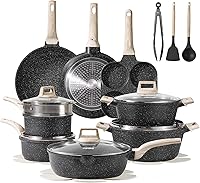
What Type of Cookware Is Best for Gas Stoves?
Stainless steel with an aluminum or copper core is the most versatile cookware for gas stoves. It responds to flame changes and handles searing, simmering and everyday cooking; cast iron and carbon steel suit cooks who want strong heat retention.
On this page (9 sections)
- What type of cookware is best for gas stoves?
- How do common cookware materials behave over a gas flame?
- Which cookware construction should you look for?
- What cookware shape and size suit gas burners?
- Which cookware fits different cooking routines?
- Which sets illustrate these material choices?
- Does cookware for gas also work on electric or glass top stoves?
- How should you use cookware safely on a gas stove?
- How do you choose cookware for gas stoves?
Stainless steel with an aluminum or copper core is the most versatile cookware for gas stoves. It spreads heat across the base and can respond quickly when you turn the flame down, making it useful for both searing and simmering.
Cast iron holds heat longer, while carbon steel offers a lighter pan for high-heat cooking. Nonstick works for eggs and other delicate foods when you use moderate heat and keep the flame beneath the pan.
What type of cookware is best for gas stoves?
Clad stainless steel is a strong all-purpose choice because its conductive core spreads heat while the stainless cooking surface handles a range of tasks. Gas lets you change heat quickly, so a pan that responds to burner adjustments gives you more control.
The burner flame heats the base directly. A flat, stable pan that covers the burner well helps avoid concentrated hot spots; keep the flame within the pan’s bottom rather than letting it climb the sides.
If you want a wider comparison of materials, shapes and set features, see our guide to best cookware for gas stoves.
How do common cookware materials behave over a gas flame?
The material affects how evenly a pan heats, how quickly it responds, and how much heat it holds. Consider those traits alongside weight, maintenance and the foods you cook most often.
| Material | How it behaves on gas | Good fit for |
|---|---|---|
| Clad stainless steel | Conductive core spreads heat; responds to burner changes | Everyday cooking, searing and sauces |
| Stainless steel with a layered base | Base spreads heat; pan sides may heat differently from fully clad cookware | General use at a range of price points |
| Cast iron | Heats slowly and holds heat well | Searing, frying and steady cooking |
| Carbon steel | Lighter than cast iron, with good heat retention | Stir-frying, searing and frequent high-heat use |
| Aluminum | Heats quickly; often paired with a coating or stainless steel | Lightweight cookware and quick heat changes |
| Nonstick | Supports easy food release; best used at lower to medium heat | Eggs, pancakes and delicate foods |
The table describes common material behavior, not a guarantee for every pan. Construction, base thickness and pan size also affect heating.
Is clad stainless steel a good choice for gas?
Clad stainless steel is a flexible choice if you want one material for many cooking tasks. A layer of aluminum or copper between stainless steel layers helps distribute heat through the base and sides.
A fully clad pan can respond when you adjust the flame, which helps when reducing a sauce or moving from a sear to a gentler cook. Stainless steel also tolerates browning and deglazing better than a coated nonstick surface.
Should you choose cast iron or carbon steel?
Choose cast iron when holding heat matters more than quick temperature changes. It can stay hot as you add food, which helps with searing, but it takes time to heat and is heavy to lift.
Carbon steel also holds heat, but it is generally lighter than cast iron. Either material can work over a gas flame; follow the maker’s care guidance and use a burner size that suits the pan.
Can nonstick cookware handle gas heat?
Nonstick cookware can work on gas when you use moderate heat and keep the flame under the base. High heat can stress a coated surface, and flames around the sides can overheat handles or coating.
For eggs, pancakes and other foods that release easily, nonstick can be convenient. Compare options in our guides to best nonstick cookware for gas stoves and best ceramic cookware for gas stove.
Which cookware construction should you look for?
Look for a flat, stable base and a construction that spreads heat for your usual cooking. A pan’s material name alone does not tell you how it will perform; base thickness and cladding matter too.
Fully clad stainless steel carries its conductive core up the sides. A disc-bottom pan concentrates that layered base at the bottom, which can still suit everyday cooking but may heat differently from rim-to-rim cladding.
An aluminum pan heats quickly and weighs less than many cast iron pans. For a cooking surface that is not bare aluminum, some cookware uses an aluminum core under stainless steel or a nonstick coating.
What cookware shape and size suit gas burners?
Choose a pan that sits securely on the grate and matches the burner’s usable heat area. A base that is much smaller than the burner can receive concentrated heat, while oversized cookware may heat unevenly at the edges.
Flames should stay beneath the cookware base. If they rise along the sides, lower the burner or move to a pan with a base that better matches it.
A wide pan gives food room to brown, while a smaller saucepan can be easier to control over a smaller burner. Check that handles remain clear of neighboring flames and that the pan feels stable on the grate.
Which cookware fits different cooking routines?
Let your most common tasks guide the material choice. You do not need a single material for every dish; a stainless steel set plus one specialty pan may fit your kitchen better.
- Daily mixed cooking: Choose clad stainless steel for a flexible mix of browning, simmering and sauce work.
- Eggs and delicate foods: Use nonstick on low or medium heat, with the flame contained beneath the base.
- Steaks and high-heat browning: Consider cast iron, carbon steel or stainless steel that suits your lifting and cleaning preferences.
- Long, steady frying: Cast iron retains heat well, though it takes longer to warm up.
- Quick heat changes: Consider a pan with a conductive core and avoid an overly large burner for the base.
For a stainless-focused comparison, see best stainless steel cookware for gas stove.
Which sets illustrate these material choices?
These sets cover nonstick and two stainless steel constructions. Use them as examples of how surface and base design affect the kind of cooking each set suits.
The T-Fal Signature set includes fry pans, saucepans, a Dutch oven and a griddle. Its nonstick interior supports food release and cleanup, while the maker describes its base as even heating; its stated oven limit is 350°F.
The Cuisinart MultiClad Pro set pairs a pure aluminum core with stainless steel inside and out. Its construction is a useful example of clad cookware for cooks who want heat spread and responsiveness across the pan body.
The Cuisinart Chef’s Classic set uses an encapsulated aluminum base rather than full cladding up the sidewalls. It offers another stainless option if you want a layered base and an uncoated cooking surface.
Does cookware for gas also work on electric or glass top stoves?
Often, but check the cookware’s stated cooktop compatibility and base condition. Gas compatibility does not automatically mean a pan is the best fit for every electric surface.
On a coil electric stove, a flat base helps make steady contact. On a glass top, a smooth, clean base is important to reduce the risk of scratches, and heavy pans should be set down gently.
See our guides to best cookware for electric stoves, best nonstick cookware for electric stove, best stainless steel cookware for electric stove and best cookware for glass top stoves.
How should you use cookware safely on a gas stove?
Keep the flame at or below the base and use handles with care. This helps limit side heating and keeps flames away from nearby items.
- Center the pan over the burner before lighting or adjusting the flame.
- Lower the heat if flames extend around the sides.
- Use oven mitts or potholders for cookware that has been in the oven.
- Keep towels, packaging and other items away from open flames.
- Follow the cookware maker’s instructions for heat limits and cleaning.
A pan that feels unstable on the grate or has a damaged handle should not be used until the issue is resolved.
How do you choose cookware for gas stoves?
Choose clad stainless steel for broad everyday use, cast iron for heat retention, and nonstick for delicate foods cooked at moderate heat. Match the pan’s base to the burner and keep flames beneath it.
If quick flame control is central to your cooking, start with stainless steel that has an aluminum or copper core. Pick cast iron or carbon steel for heat retention, and choose nonstick when easy release matters most.
Frequently asked questions
What type of cookware is best for gas stoves?
Clad stainless steel with an aluminum or copper core is a versatile choice for gas because it spreads heat and responds to burner changes. Cast iron and carbon steel are good when heat retention or high-heat searing matters more.
Match the material to your cooking habits and keep the flame under the pan base.
Is stainless steel good for a gas stove?
Yes. Stainless steel works well on gas, especially when it has an aluminum or copper core to improve heat spread.
Clad pans can respond quickly when you adjust the flame, while a thick base can reduce uneven heating.
Preheat the pan, add oil, and avoid letting flames climb the sides.
Can you use nonstick cookware on a gas stove?
Yes, if the cookware is labeled for gas or all cooktops. Use low or medium heat, keep the flame within the pan base, and follow the maker's temperature limits.
A nonstick pan suits eggs and delicate foods, but it is less suited to very high-heat searing.
Is cast iron or stainless steel better for gas?
Cast iron holds heat well and suits steady frying or searing, while stainless steel usually changes temperature faster when you adjust the gas flame. Cast iron is heavier and takes longer to heat.
Choose stainless for flexible daily cooking and cast iron when heat retention is a priority.
Does cookware shape matter on a gas stove?
Yes. A flat, stable base helps cookware sit securely over the grate, and a base close to the burner size helps the flame heat the pan evenly.
Avoid letting flames extend around the sides, where they can heat handles and waste energy.
Check that the pan fits your stove's grate.