What Do the Pieces in a Cookware Set Actually Do?
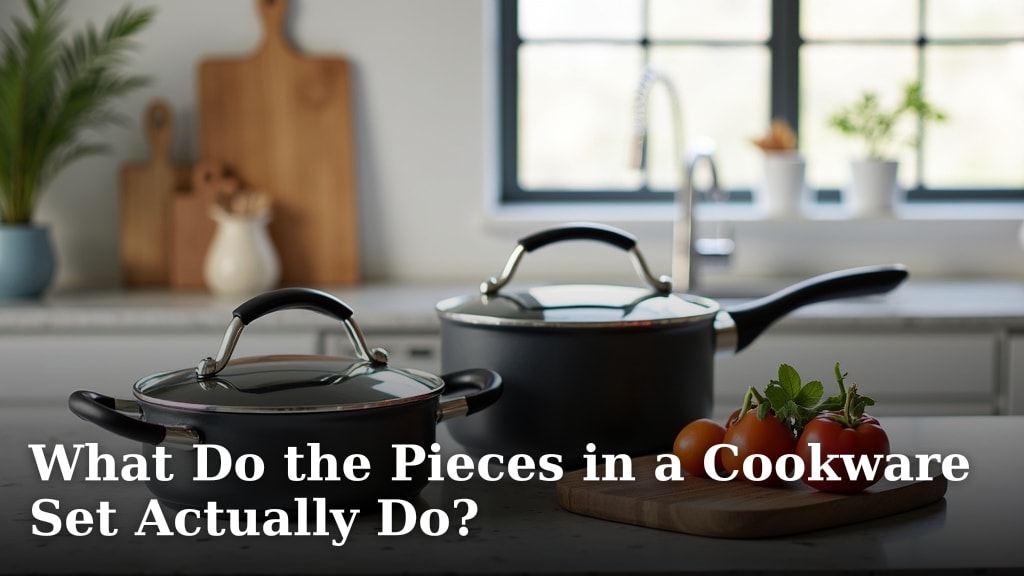
Quick answer: The pieces in a cookware set are designed around four things: surface area, depth, access, and moisture control.
A skillet is best for browning and turning. A saucepan controls smaller liquid jobs. A saute pan combines a wide base with taller sides. A stockpot handles volume, while a Dutch oven favors steady covered cooking.
A bigger piece count does not automatically mean a more useful set. Some brands count every lid, insert, and utensil as a separate piece. The better question is: How many actual cooking vessels will you use?
This guide explains what each common piece does, where it performs best, and when another pan may be the smarter choice.
Cookware Pieces at a Glance
| Piece | Best for | What makes it different |
|---|---|---|
| Skillet | Browning, frying, eggs, pancakes | Low, flared sides improve access and evaporation |
| Saucepan | Sauces, grains, reheating, small soups | Tall sides contain modest liquid batches |
| Saute pan | Searing, pan sauces, shallow frying | Wide flat base plus straight sides and usually a lid |
| Stockpot | Stock, soup, pasta, blanching | Deep body prioritizes liquid capacity |
| Dutch oven | Braising, stews, roasting | Heavy body and close-fitting lid retain heat |
| Steamer insert | Vegetables, dumplings, seafood | Keeps food above simmering water |
Shape matters more than the product name. A wide opening releases moisture. Tall walls contain liquid. Curved corners make whisking easier. Straight sides create more usable floor area.
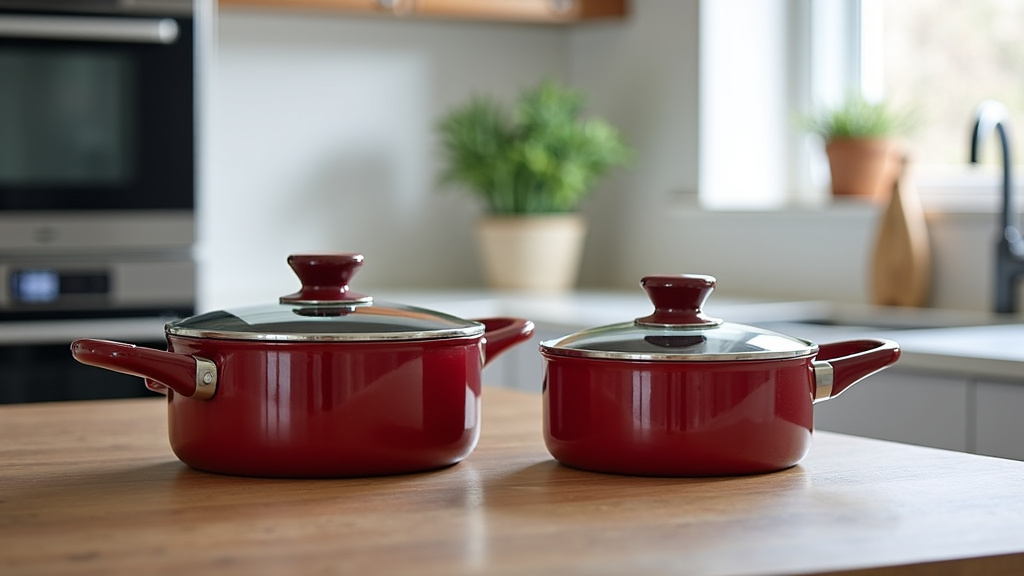
The Core Pieces Most Kitchens Use
Skillet or Frying Pan
A skillet has a broad base and low, flared sides. That shape gives a spatula easy access and lets steam escape quickly, which supports browning.
Use it for: eggs, pancakes, burgers, cutlets, vegetables, and foods that need frequent turning.
Choose something else when: the recipe contains a generous amount of sauce or oil. A straight-sided saute pan will contain those ingredients more securely.
Saucepan
A saucepan is narrower and deeper than a skillet. It normally has one long handle and a lid, making it convenient for controlled liquid cooking and pouring.
Use it for: oatmeal, rice, sauces, reheating soup, boiling eggs, and small portions of pasta.
For many households, one medium saucepan covers most everyday jobs. A second size is valuable only when you regularly cook two small dishes at the same time.
Saute Pan
A saute pan combines a wide, flat cooking surface with straight walls. It often includes a lid and a helper handle.
Use it when a meal begins with browning and ends with liquid. For example, you can sear chicken, add aromatics and broth, then cover the pan to finish cooking.
Compared with a skillet, it contains splatter and sauce more effectively. The tradeoff is extra weight and less convenient tossing.
Skillet vs. saute pan: Pick the skillet for easy turning and fast evaporation. Pick the saute pan for greater flat floor area, a lid, and better liquid control.
Large Pots: Stockpot vs. Dutch Oven
Stockpot
A stockpot is tall and deep, with two short side handles. Its main advantage is large liquid capacity, not access to the cooking surface.
Use it for: stock, soup, pasta water, corn, blanching vegetables, and batch cooking.
Check the filled weight before buying an oversized model. A large pot may be easy to store while empty but difficult to lift or drain safely when full.
Dutch Oven
A Dutch oven is a deep, heavy pot with a close-fitting lid. Its mass helps it hold heat steadily during braising, stewing, and other covered cooking.
Use it for: pot roast, chili, stew, braised vegetables, and stovetop-to-oven recipes when the exact model is approved for both.
The same weight that makes a Dutch oven stable also makes it slower to respond when you lower the burner.
Safety check: Never assume a pan is oven- or broiler-safe because of its name. The body, lid, knob, handles, and coating may have different temperature limits.
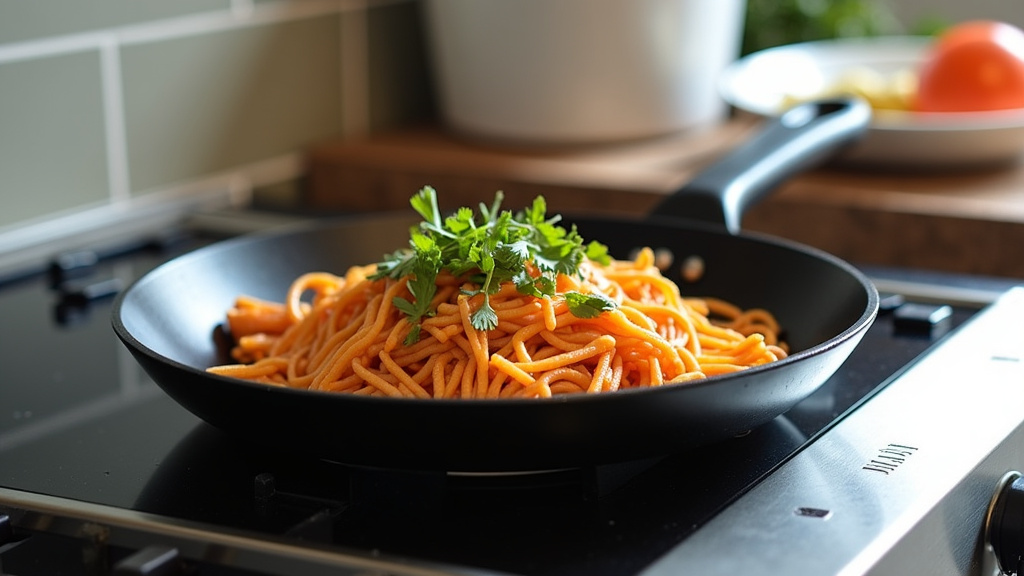
What Do Inserts and Specialty Pieces Add?
Steamer Insert
A perforated steamer insert holds food above simmering water. It lets rising steam cook vegetables, dumplings, seafood, and other suitable foods without submerging them.
Fit is essential. The insert should sit securely in the matching pot, remain above the water, and work with the intended lid.
Double-Boiler Insert
A double boiler heats an upper vessel indirectly over simmering water. The gentler heat is useful for chocolate, custards, and delicate sauces.
Keep the upper vessel above the water and lift it carefully—escaping steam can burn even when the food is heating gently.
Griddle and Other Specialty Pans
A griddle provides a broad surface with very low edges, making pancakes, eggs, and grilled sandwiches easy to turn.
Woks, grill pans, crepe pans, roasters, and similar pieces can be worthwhile when you use their shape regularly. If they duplicate work your skillet or Dutch oven already handles, they may only add clutter.
Why the Advertised Piece Count Can Be Misleading
A lid is useful, but it is not another cooking vessel. A “10-piece” set might contain six pans and four lids. Some packages also count utensils or removable inserts.
Before comparing sets, separate the contents into three groups:
- Cooking vessels: skillets, saucepans, saute pans, and pots
- Functional accessories: lids, steamers, and double-boiler inserts
- Extras: utensils, protectors, or storage pieces
This gives you a more honest picture of the set’s practical value.
How to Choose the Right Combination
Start with your real meals, not an imagined collection. A compact set that covers your weekly cooking is more valuable than a crowded cabinet of overlapping sizes.
- List five meals you cook often. Identify the main vessel each meal needs.
- Count the actual pans. Separate lids, inserts, and utensils from cooking vessels.
- Check burner fit. Compare the flat base diameter with your burner sizes.
- Confirm compatibility. Verify induction, oven, broiler, lid, and utensil limits.
- Measure storage space. Include handles, lid height, and safe stacking room.
- Remove unnecessary overlap. Similar pan sizes are useful only if you need them simultaneously.
A practical three-piece starting point
For many kitchens, a skillet, medium saucepan, and larger lidded pot cover the widest range of everyday meals. Add a specialty piece later when it solves a repeated problem.
The Bottom Line
Each cookware shape solves a different problem. Skillets favor access and browning, saucepans control smaller liquid jobs, saute pans combine surface area with containment, and large pots handle volume or steady covered cooking.
Ignore the biggest number on the box. Count the real vessels, match them to your meals, and confirm that they fit your cooktop and storage space.
Frequently Asked Questions
Is a frying pan the same as a skillet?
The terms are commonly used for the same general shape: a broad cooking surface with low, flared sides. Exact depth, wall angle, handles, and materials can still vary.
Do lids count as pieces in a cookware set?
They often do. Read the itemized contents and count pan bodies separately so you know how many actual cooking vessels are included.
Can a saute pan replace a skillet?
It can handle many of the same foods. A skillet remains easier for turning and tossing, while a saute pan is better at containing sauce and splatter.
Does every kitchen need a Dutch oven?
No. It is useful for braises, stews, roasting, and other covered dishes, but it may duplicate cookware you already own.
What should I add after buying a basic set?
Add the single piece that solves a recurring problem. That might be a larger stockpot, a second saucepan, a steamer insert, or a specialty pan you will use regularly.